Limestone & Basalt
Soils
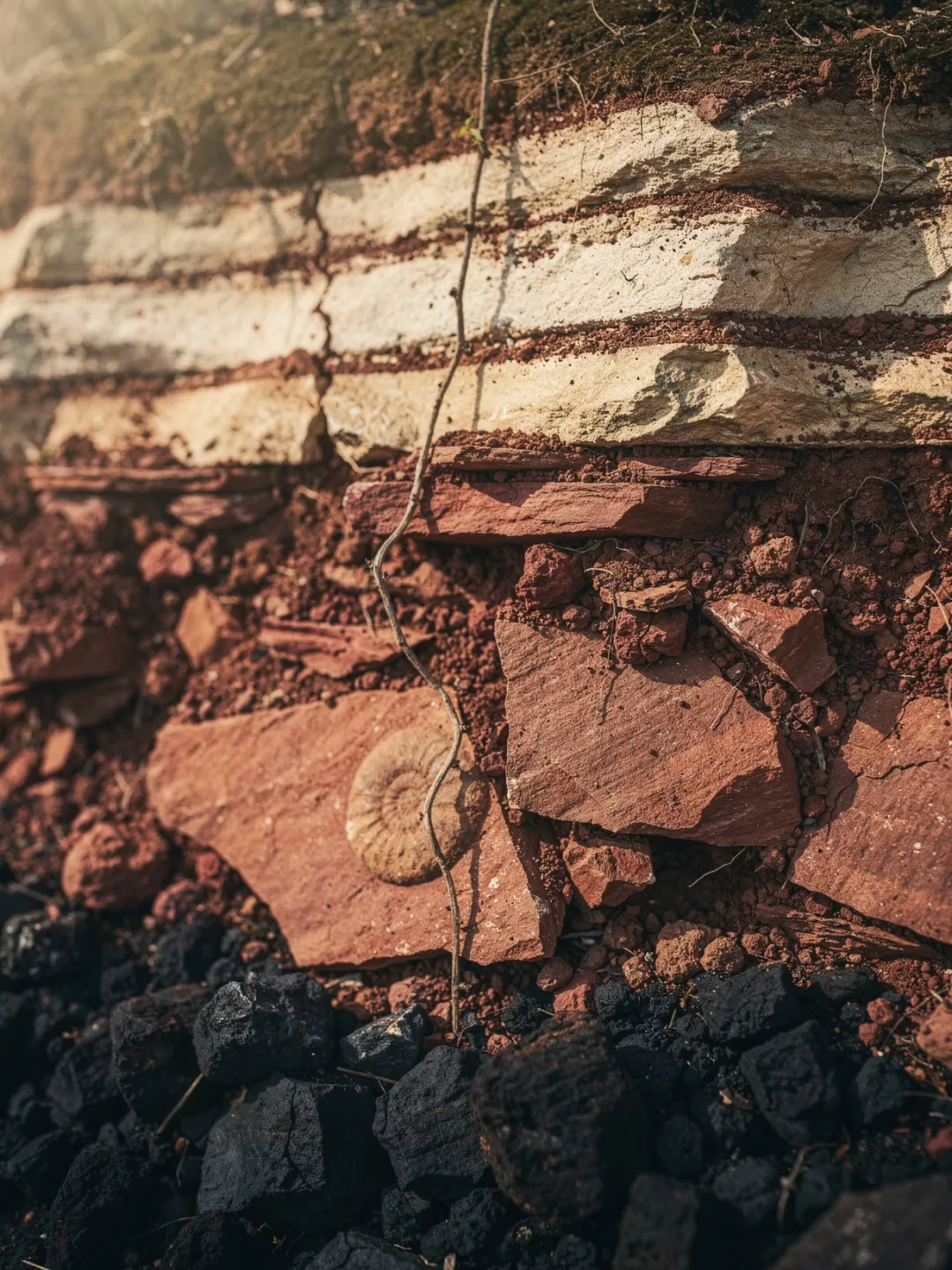
Dig a hole in a Valpolicella vineyard and you'll first hit reddish, crumbly soil. It comes from the weathering of red Jurassic limestone known here as Rosso Ammonitico. It's named after ammonites, spiral-shaped cephalopod fossils still found today when the slabs are broken open.
Below that, the rock grows harder. The Rosso Ammonitico itself lies in thin, easily fractured layers, interspersed with paler, almost white limestone bands called Biancone and Scaglia. Water drains through the cracks, and roots follow it downward. This very struggle is what makes the berries in such lean sites smaller and thicker-skinned than they could ever become in the deep, rich valley floor.
Deeper still, especially along the eastern edges of the Lessinia, you encounter something entirely different: black basalt. It originated from undersea volcanic activity roughly fifty million years ago, long before the Alps reached their current height. The same volcanic layer continues beneath the hills of Soave, where it gives the white wines their dense, almost saline structure.
Both types of rock work through the same underlying mechanism found in every vineyard: water, warmth, and the depth to which they force the roots. Limestone stores moisture in its cracks and releases it slowly, while basalt mainly stores heat and radiates it back out at night. No mineral travels directly from the rock into the glass.
What makes the difference is root depth. On lean limestone in the upper sites of the Valpolicella, Corvina roots drive down four to five meters, producing small, concentrated berries. These are the best grapes for Amarone. Down on the rich alluvial valley floor, where water and nutrients are abundant, the same vines grow lush but their wine stays thinner. Between mountain and valley, often only a few hundred meters lie in between.
Reddish, crumbly weathered soil from red Jurassic limestone. Loose and well-draining, with little organic matter.
The root: Fine roots absorb whatever rain brings — in dry spells, this layer is the first to run dry.