Acidity versus Sweetness
Tasting
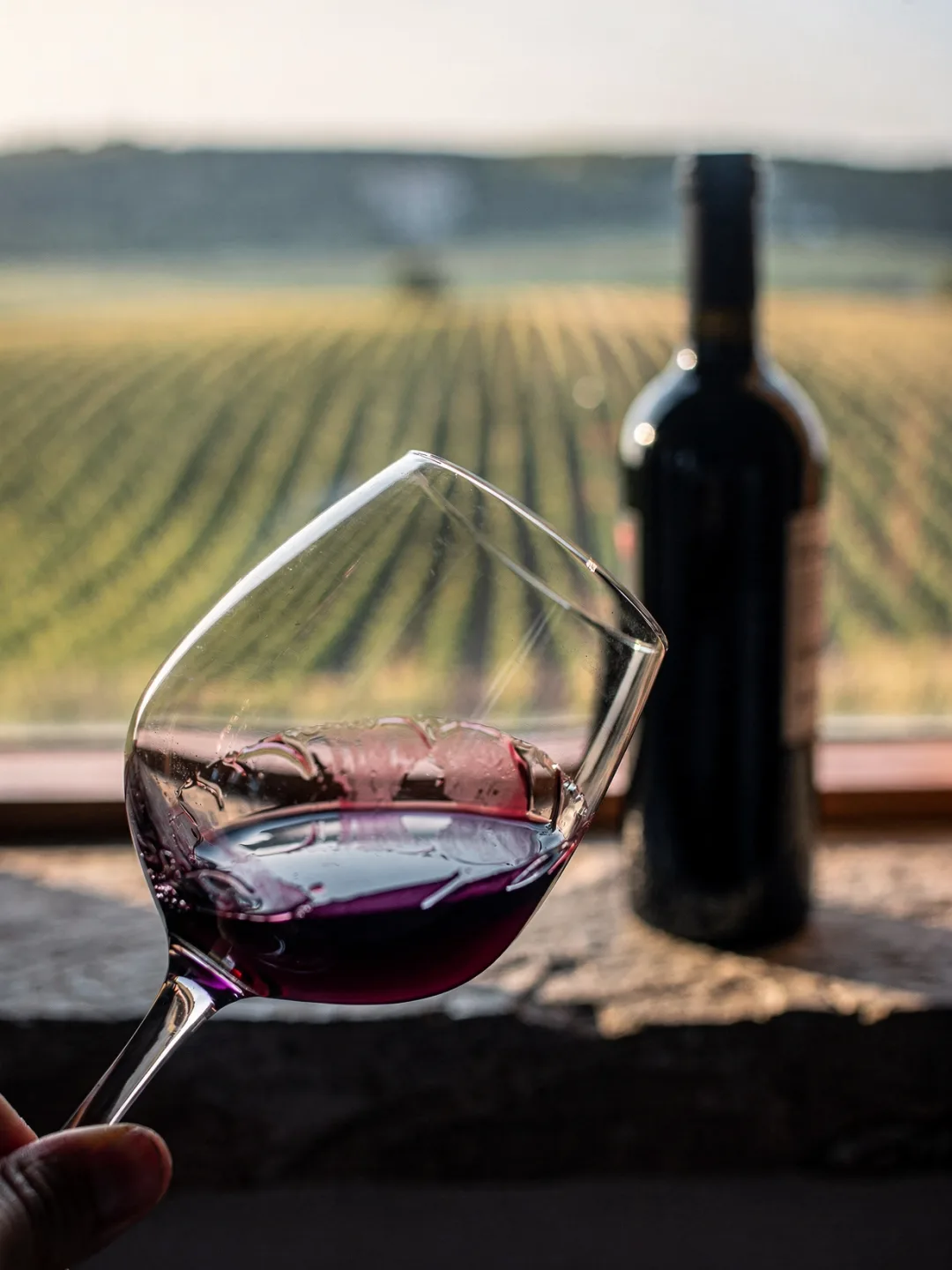
A Cabernet Franc from the Beamsville Bench shows deep ruby red in the glass with a hint of violet at the rim, lighter than a Cabernet Sauvignon but denser than a Pinot Noir. Hold the glass to the light. Tilt it slightly and watch how sluggishly the wine runs down the glass wall — with ice wine, distinct streaks remain, a clear sign of high sugar content.
With Cabernet Franc, you first notice blackcurrant, then something green reminiscent of freshly cut bell pepper, a hallmark of the variety that softens as the grapes ripen further. A Vidal ice wine smells entirely different: apricot, honey, and sometimes pineapple, aromas that only become this intense through the concentration of freezing. Both scents tell of the same region, but of two very different paths there.
On the palate, the Cabernet Franc shows fine, almost silky tannin — the rough sensation on the gums familiar from strong tea — carried by an acidity that keeps the wine fresh. With ice wine, a different balance applies. The sweetness is immense. But the acidity from the cool nights cuts right through it, so the wine never feels heavy but stays lively instead.
In the end, length is what counts. A good Cabernet Franc from the bench holds its flavor for ten to fifteen seconds. A concentrated ice wine often holds it for a full minute or longer, because so much extract lingers on the palate. Anyone who tastes both wines back to back understands a great deal. Taut freshness on one side, concentrated sweetness on the other: two glasses, one region.