Frost as a Tool
Winemaking
Elsewhere, wine begins just as it does here. Grapes are pressed, the juice ferments under controlled cool conditions so the fruit aromas don't cook off, and Cabernet Franc gets two to three weeks of skin contact for color and tannin. But one specialty makes the region world-famous. It only begins once winter arrives.
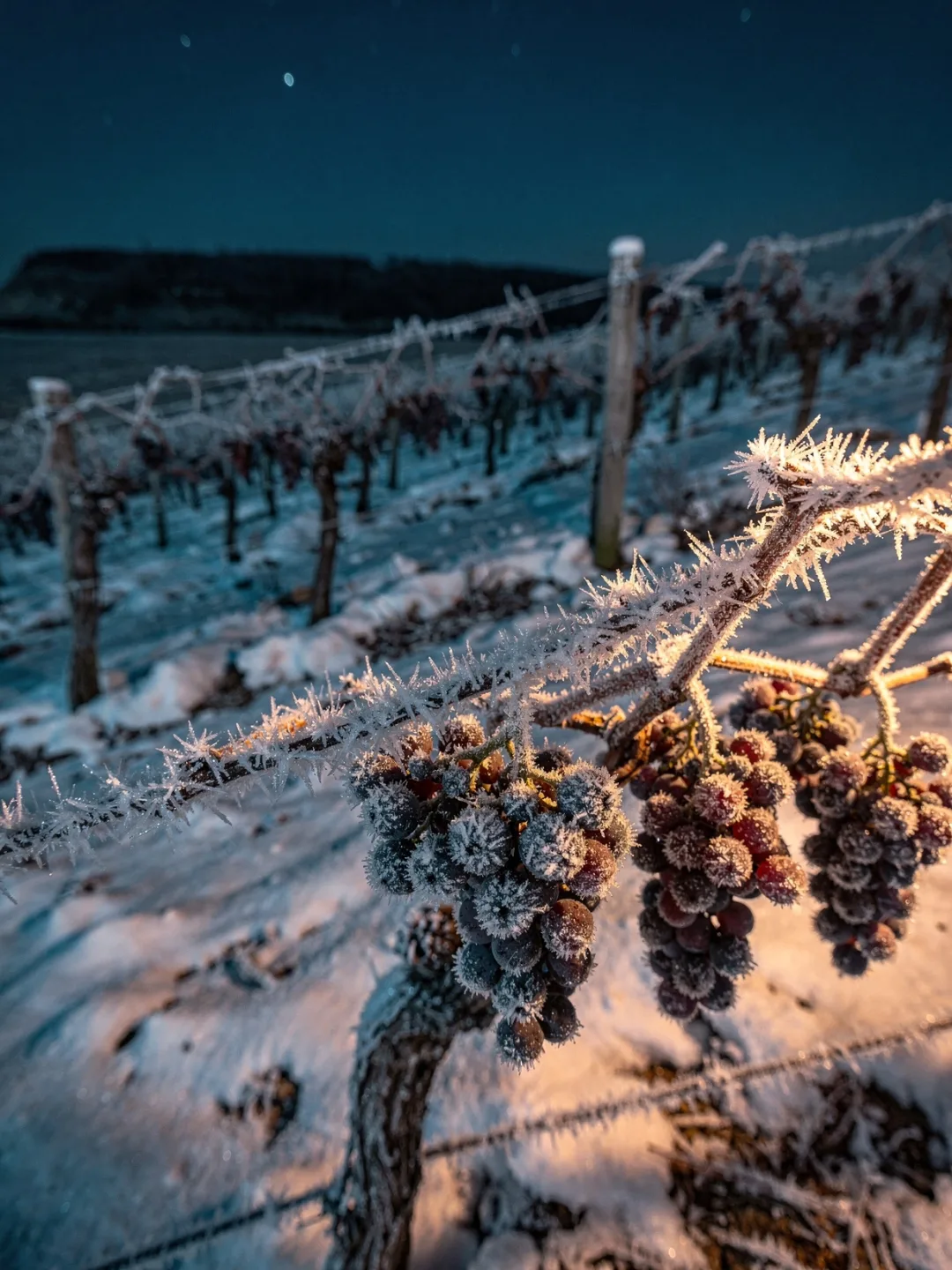
For ice wine, Riesling or Vidal grapes are deliberately left hanging, far beyond the normal harvest, often into December or January. Only a cold snap sets the harvest in motion. When the overnight temperature drops to at least minus eight degrees Celsius, the harvest crew heads out, usually in the middle of the night, since the sun would immediately thaw the frozen berries again. Hand-picked while still frozen, the grapes go straight into the press.
During pressing, the ice remains in the fruit as solid crystals, while only a few drops of concentrated, sticky-sweet juice run out. The VQA prescribes a minimum value: thirty-five degrees Brix, a measure of sugar content that ripe grape juice normally never reaches. A bottle of three hundred seventy-five milliliters requires about three kilograms of Vidal grapes or three and a half kilograms of Riesling — six to seven times as much as for ordinary wine from the same vineyard area.
Fermentation then takes weeks instead of days. So much sugar slows down every yeast. In the end, what remains is a wine with tremendous sweetness, but also an acidity that keeps it from feeling as cloying as simple syrup. Without that acidity, held in place by the cool nights on the escarpment, the concentrated juice would be nothing more than sugary water.