From Pandosy to Ice Wine
Region & History
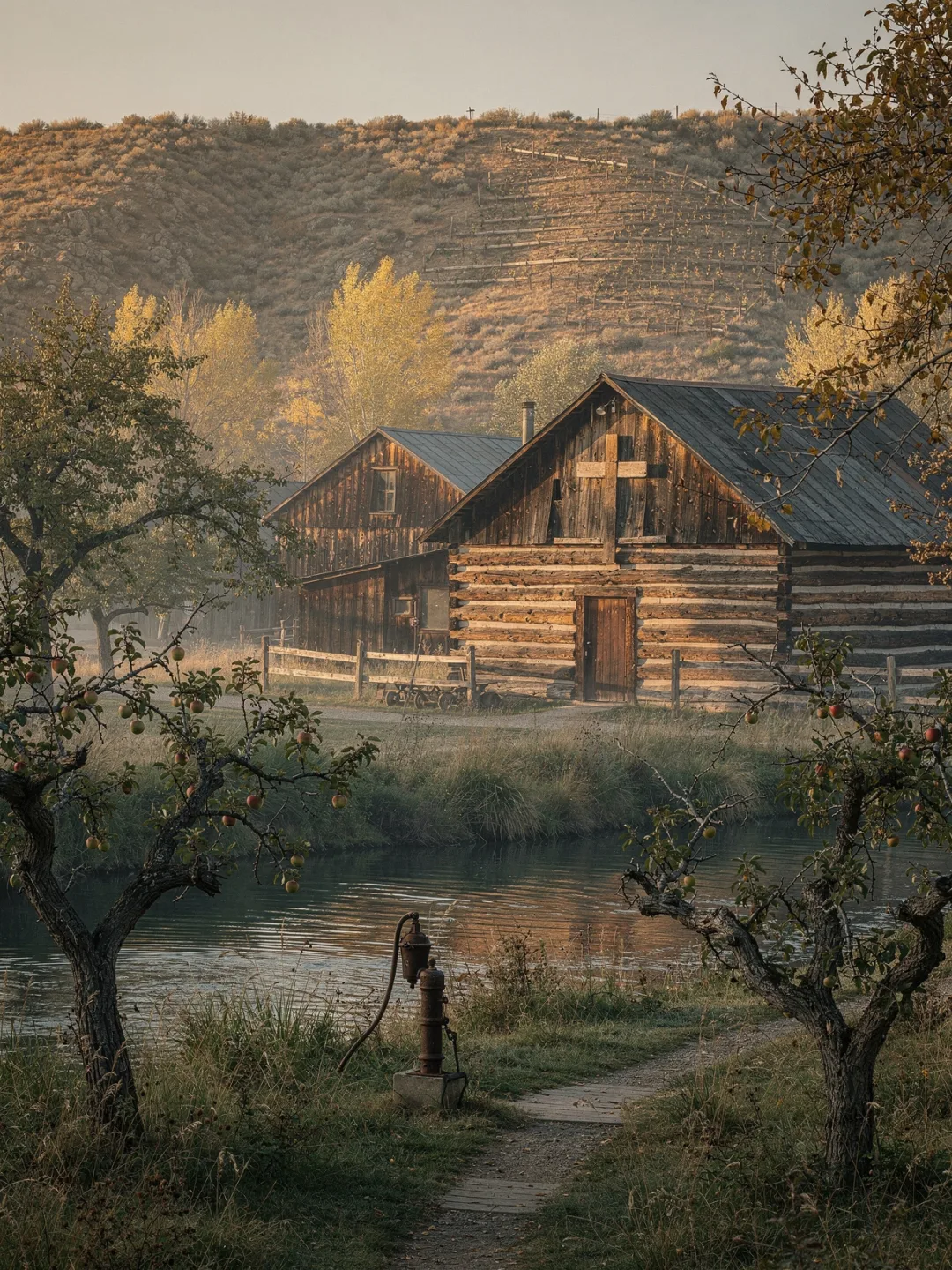
Long before a single vine grew here, the Syilx people lived along Okanagan Lake, and the valley's name comes from their language. Wine only arrived with a French missionary. Father Charles Pandosy planted the first vines at his mission near present-day Kelowna in 1859, right on the banks of Mission Creek. He didn't need them for pleasure but for Mass: no wine, no Eucharist.
For a century, this amounted to little more than sacramental wine and a bit of table grape. From the 1930s onward, farmers around Kelowna planted mostly winter-hardy hybrid vines and Labrusca varieties. They survived frosty nights but yielded little more than sweet grape juice in the glass. As a result, Canadian wine had a poor reputation for decades, both at home and abroad.
Everything changed at once in 1988. The free trade agreement with the United States opened the Canadian market to cheap Californian wine, against which the native hybrid vines stood no chance. The government of British Columbia paid growers around 8,100 Canadian dollars per acre to pull out their old vines and replace them with Vitis vinifera. Vitis vinifera is the European vine species from which nearly every well-known wine in the world descends. Two-thirds of all vines in the Okanagan Valley fell to the grubbing-up, within just a few months of the 1988 harvest.
In 1990, the BC Wine Institute founded the Vintners Quality Alliance, known as VQA. The quality seal is reserved for genuine noble-vine wine and still tests every bottle bearing an origin designation today. Leading the way had been the Osoyoos Indian Band of the Syilx, who were among the first in the valley to plant pure Vitis vinifera as early as 1968. In 2002, the Band opened Nk'Mip Cellars in Osoyoos, North America's first Indigenous-owned and -operated winery.
Since 2015, the Okanagan Valley has officially been splitting into ever smaller appellations. Golden Mile Bench led the way, followed by Okanagan Falls, Naramata Bench, Skaha Bench, and six further sub-zones, until eleven had been officially recognized. The most recent chapter is a bitter one. On the nights of January 11 to 15, 2024, temperatures across the entire valley dropped below minus twenty degrees Celsius, and the industry subsequently reported a crop loss of 97 to 99 percent.