Tasting an Ice Wine
Tasting
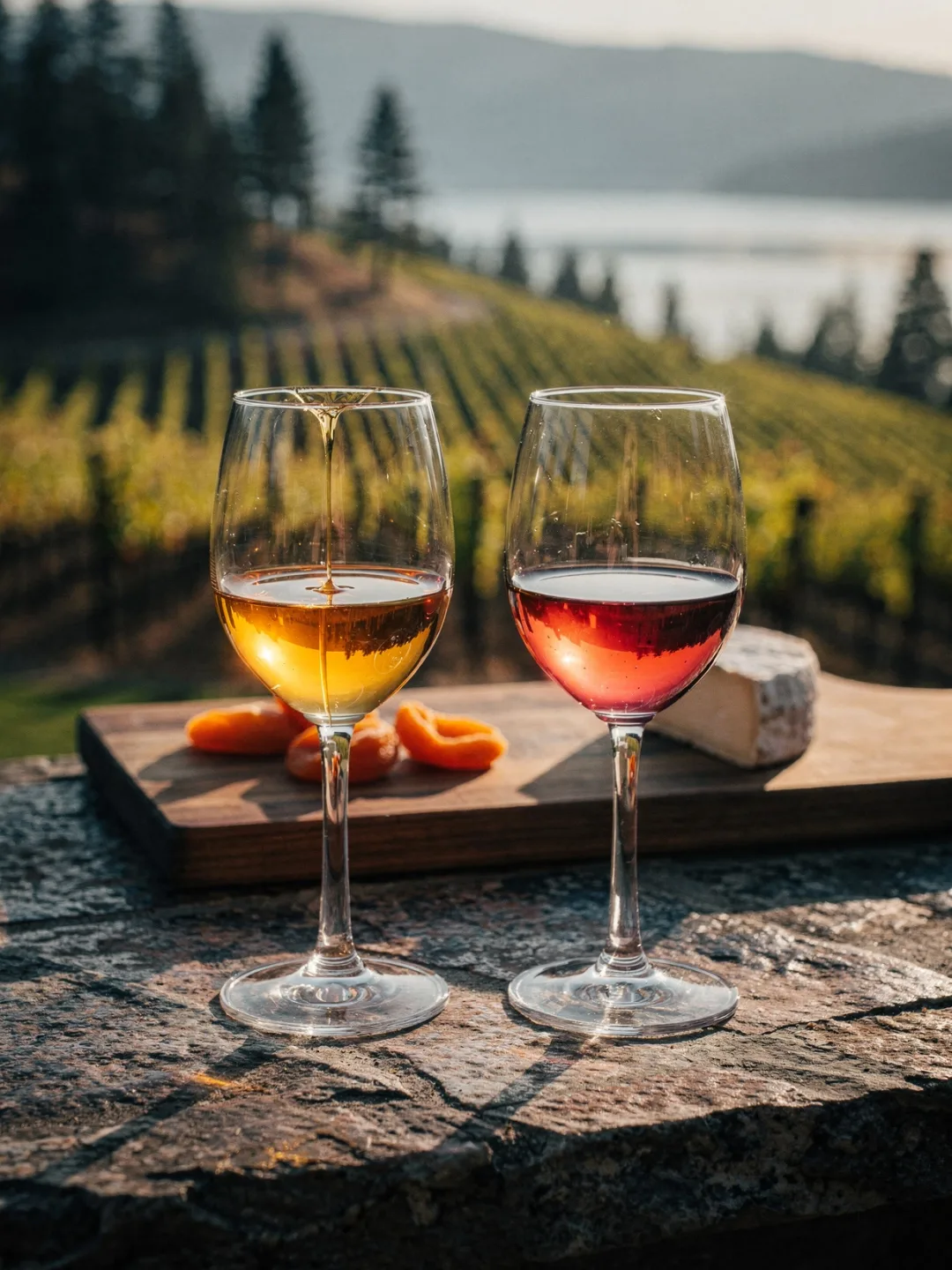
With an ice wine from Osoyoos, the tasting begins before the first sip, with the color in the glass. In a Vidal or Riesling, it glows golden to amber, far more intense than a dry white wine of the same vintage. The reason is simple: without dilution from ordinary juice, every drop retains more of everything the grape brought with it in terms of color. That's exactly the point.
Next, smell it, carefully. The sweetness can feel almost overwhelming on the nose. Typical notes include apricot, honey, and dried pineapple; with Ehrenfelser, there's often a hint of lychee too. If you smell closely, you'll also find a fine, almost metallic freshness that comes from the high acidity, keeping the aroma from feeling merely cloyingly sweet.
In the mouth, the wine's real trick unfolds. Sweetness alone isn't enough. The sweetness meets an acidity at least as powerful as the sweetness itself, and this balance determines quality far more than sugar content alone. Without that acidity, an ice wine quickly tastes like syrup. With it, the same wine feels refreshing, almost like a very sweet, very concentrated grape juice with real bite.
Time plays a role too. The finish stretches out unusually long, often a minute or more, shifting direction several times along the way: first fruit, then honey, and finally that mineral freshness that lingers at the very end. In an ordinary wine, such a long finish alone would already signal quality. In ice wine, it's almost the rule, since so much extract and acidity simply take a long time to fade.
Taste a Pinot Noir from the Naramata Bench in the same sitting, and the contrast is immediate. There, bright cherry and earth dominate, the acidity is present but never sweet, and the finish ends after just ten or fifteen seconds. Two wines from the same valley, less than a hundred kilometers apart, and yet two entirely different languages in the glass.