Peka, Pršut, Pašticada
Wine & Food
Dalmatian cuisine knows little restraint, and neither does the wine that goes with it. Fat, salt, and smoke define many dishes, since fishermen and farmers have had to preserve food for long voyages or dry summers for centuries: curing, drying, and smoking instead of refrigeration.
Pršut, the air-dried ham, hangs for months in the wind of the Bura, which draws out its moisture and gives it its intense flavor. Its saltiness calls above all for acidity. Since Plavac Mali brings little of that, many reach instead for a young, fresh Pošip. Or they pour a glass of Prošek, whose sweetness balances out the salt.
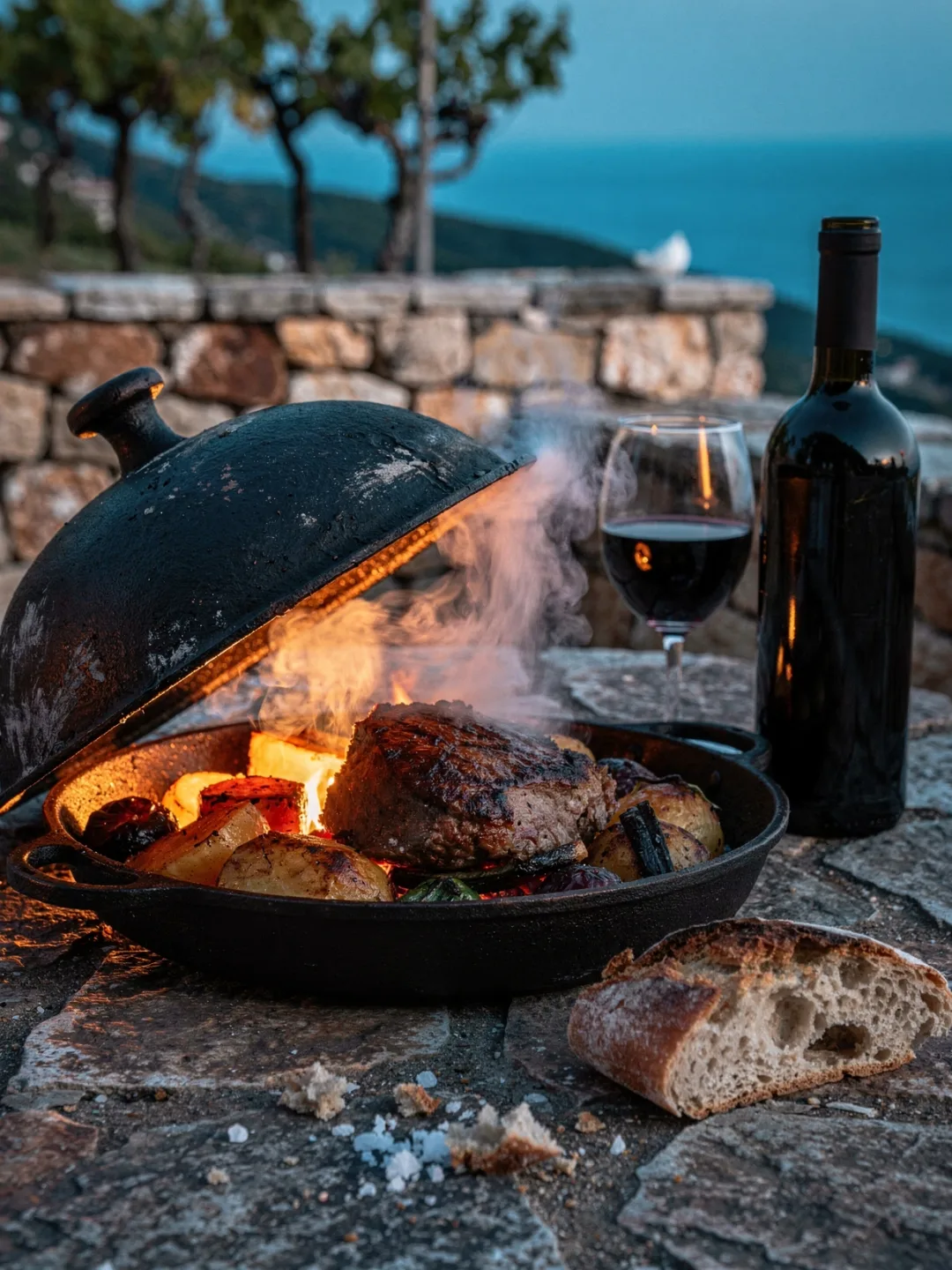
It's different with Peka: meat or octopus cooks for hours under a glowing iron bell, covered in ash and embers. This makes them butter-tender, with an intense smoky flavor. This is exactly what a powerful Dingač is made for, its tannin and alcohol needed to stand up to that much fat and roasted flavor without seeming clumsy.
Pašticada, the braised beef served on festive occasions, simmers for hours in a sauce of prunes, root vegetables, and a splash of Prošek. It's served with homemade gnocchi. The glass alongside it often holds the very same wine that went into the sauce: a mature Plavac Mali.
A heavy red wine, on the other hand, doesn't suit Brudet, the fish stew. Tomatoes, onions, and the day's catch simmer in it for hours. A chilled Pošip or a Vugava from Vis lets the fish take center stage instead of overwhelming it with tannin. The rule behind it all is simple: the richer and smokier the dish, the more the wine from the coast is allowed to push back.