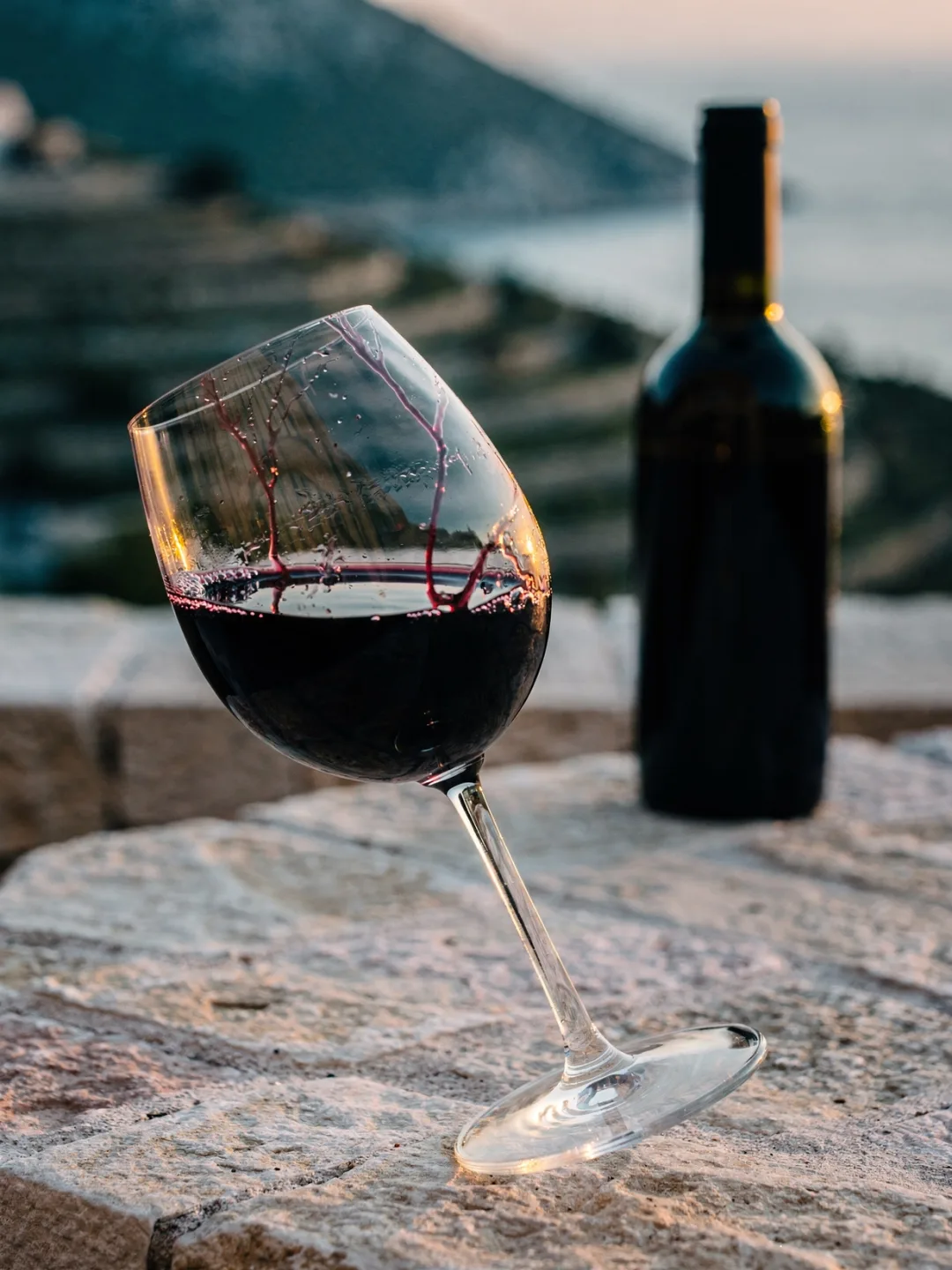
Facing a Dingač
Tasting
Hold a Dingač up to the light, and you can barely see through it. The color ranges from deep ruby to almost black, with a violet sheen at the rim while the wine is still young, a sign of the thick skins on small, concentrated berries.
On the nose, dark fruit comes first: ripe cherry, sometimes blackberry, followed by a sweetish note of carob, the dried fruit of the locust bean tree. Swirl the glass, and herbs of the macchia emerge, along with pepper and a hint of raisin, a side effect of the overripe berries that almost always end up in the vat.
In the mouth, warmth strikes first. Alcohol can exceed sixteen percent in some vintages, and acidity has already broken down considerably at this ripeness, which is why a Dingač feels broader and rounder than, say, a Sangiovese. The tannin, by contrast, is powerful and dry, gripping the palate roughly.
The finish lingers long, often with a slightly bitter edge of carob and pepper. This exact imbalance of high alcohol, high tannin, and low acidity is what makes Dingač a wine that tires quickly without food and suddenly makes perfect sense with the right dish.
Anyone tasting a Pošip alongside notices the difference immediately. Pale straw yellow, citrus peel, almond, noticeable acidity, no tannin. Both wines come from the same coast. Yet neither explains the other. Two entirely different answers to the same sun and the same karst.