Truffles and Boškarin
Wine & Food
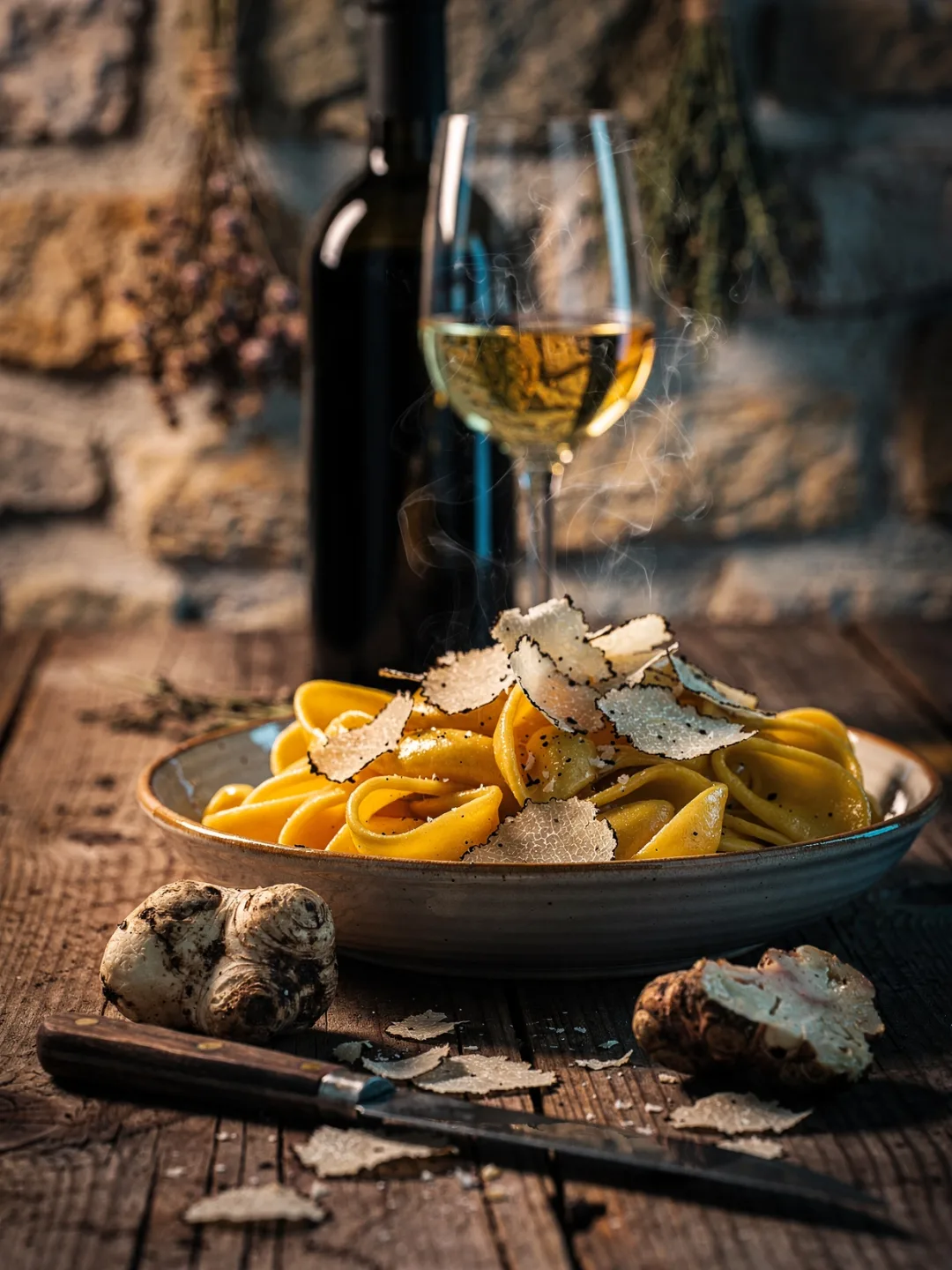
Istria's cuisine and its wine grew up at the same table. Nowhere is this clearer than with the white truffle from the forest of Motovun. From September to January, dog handlers search there for Tuber magnatum, the world's most expensive truffle. To this day it cannot be cultivated — every find comes from the wild — and shaved paper-thin over fuži, a hand-rolled pasta from Istrian farmhouse kitchens, it unfolds its full aroma.
Malvazija suits this dish better than any red wine. The reason is simple: its acidity and salty note stand up to the heavy truffle aroma without overwhelming it, whereas a powerful red would bury the whole truffle beneath it. A macerated Malvazija aged in wood, with a bit more structure, pairs even better than the very young, tank-fermented version.
When it comes to meat, Boškarin takes over, a robust Istrian breed of cattle. Long considered nearly extinct, it now grazes across the peninsula again in a population of around two thousand five hundred. Its meat usually reaches the table as a slow-braised stew. Lean, dark, and full of flavor, it carries just enough fat that it truly calls for Teran. The wine's high tannin cuts through the fiber. Its robust acidity keeps the braised flavor fresh rather than heavy.
An Istrian meal almost always begins with Istarski pršut, air-dried and unsmoked ham, salty and mild at once. A young, cool-served Malvazija suits it far better than any heavy red wine. At the end of some long evenings, istarska supa still makes an appearance on the table—especially in winter. It consists of toasted bread soaked in hot Teran with olive oil, sugar, and coarse pepper, served in the bukaleta, which is passed from hand to hand. No dessert in the world ends a meal as directly as this one glass, which isn't really a glass at all.