Salt, Acid, Bitter
Tasting
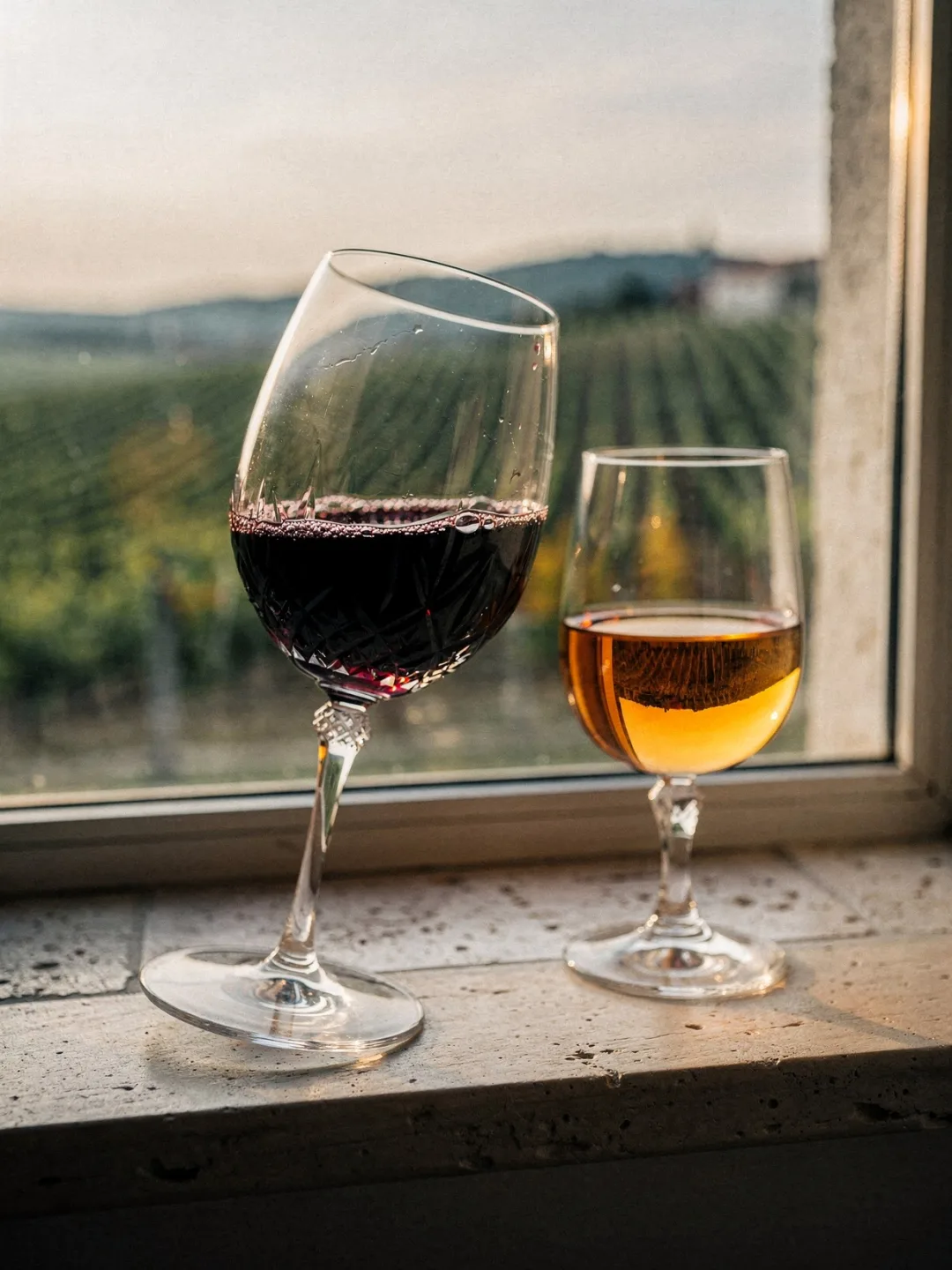
Take a glass of Malvazija and hold it up to the light. The color ranges from pale straw yellow to a rich gold, depending on how long the grapes stayed on their skins. An orange wine made from the same variety can even look amber. So the color alone reveals half the winemaking method before a single drop reaches the tongue.
On the nose, acacia blossom comes first, then green apple. With a bit of practice, you'll also find a slightly salty note that many tasters call salinity — a hint at the vineyards' proximity to the sea, not a literal explanation. In a macerated Malvazija, honey, nuts, and sometimes a touch of sherry join in, aromas a short tank fermentation could never achieve.
Teran smells completely different: of wild berries, sour cherry, and often an earthy note. Some connect this directly to the red crljenica soil, though the link isn't scientifically proven, and on the palate, you notice the acidity first, along the sides of the tongue, then the tannin as a rough coating on the gums. A hint of bitterness often lingers at the end. That's not a flaw — it's the variety's signature.
If you taste both wines one after another, start with Malvazija and finish with Teran, never the other way around. Otherwise the red's tannin will smother every fine nuance of the white that follows. At the end, count how many seconds the flavor lingers after you swallow. For a simple Malvazija, it's barely five. For a mature Teran from old vines, it's often twenty or more. That length is exactly what separates an everyday wine from one that can carry an entire meal.