Meze by the Berdawni
Wine & Food
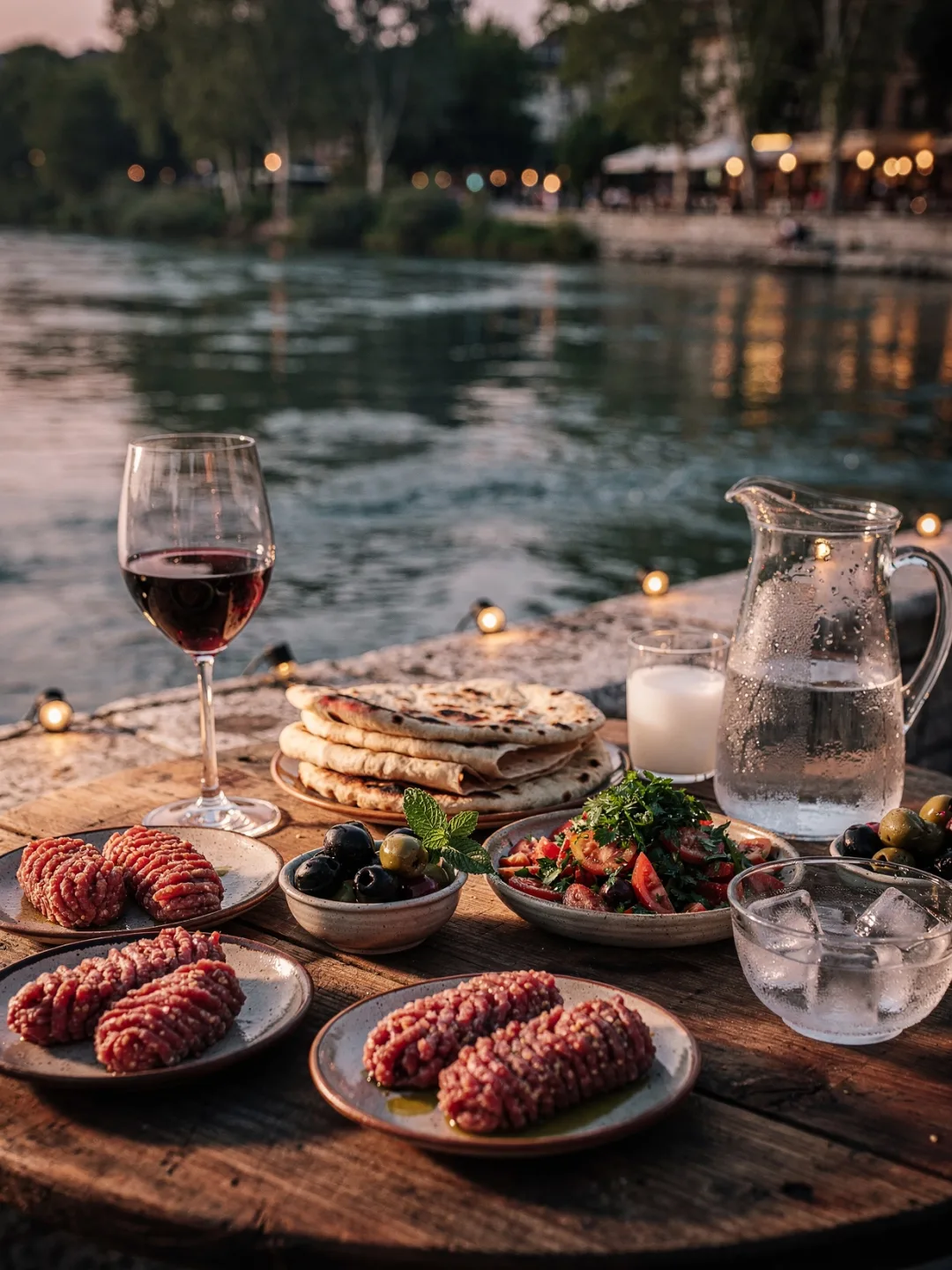
In Zahle, the best restaurants sit right above the river. The Berdawni flows straight through town, lined by a good three-hundred-meter promenade crowded with tables. In summer, the tables push right up to the water's edge. Families have come here for generations for meze — the Lebanese way of building an entire meal out of many small plates.
Kibbeh nayyeh opens almost every table: raw, finely minced lamb with bulgur, onions and spices, eaten with olive oil and fresh mint. No heavy red wine suits this — instead, a cool, light Cinsault or a glass of arak heavily cut with water. Both carry enough acidity or anise freshness to avoid overwhelming the raw meat, and the same holds for tabbouleh, the parsley salad with little bulgur and plenty of lemon: acid meets acid, and the wine stays in the background.
Kafta looks quite different: grilled skewers of minced meat with onion and parsley. Here you need weight — a robust blend of Cabernet Sauvignon, Syrah or Carignan. As bottled by Château Kefraya or Château Musar, it stands up to the charred, smoky notes off the grill. Arak occupies roughly the position at this table that grappa holds in Italy, a digestif after the meal. Except here, unlike grappa, it's drunk throughout the entire meze, not just at the end.
Once a year, in September, Zahle celebrates this with its own festival: the Festival of the Vine, with concerts and readings spread across several weeks. Wine and poetry belong together here. The city carries the nickname City of Wine and Poetry, and not without reason.