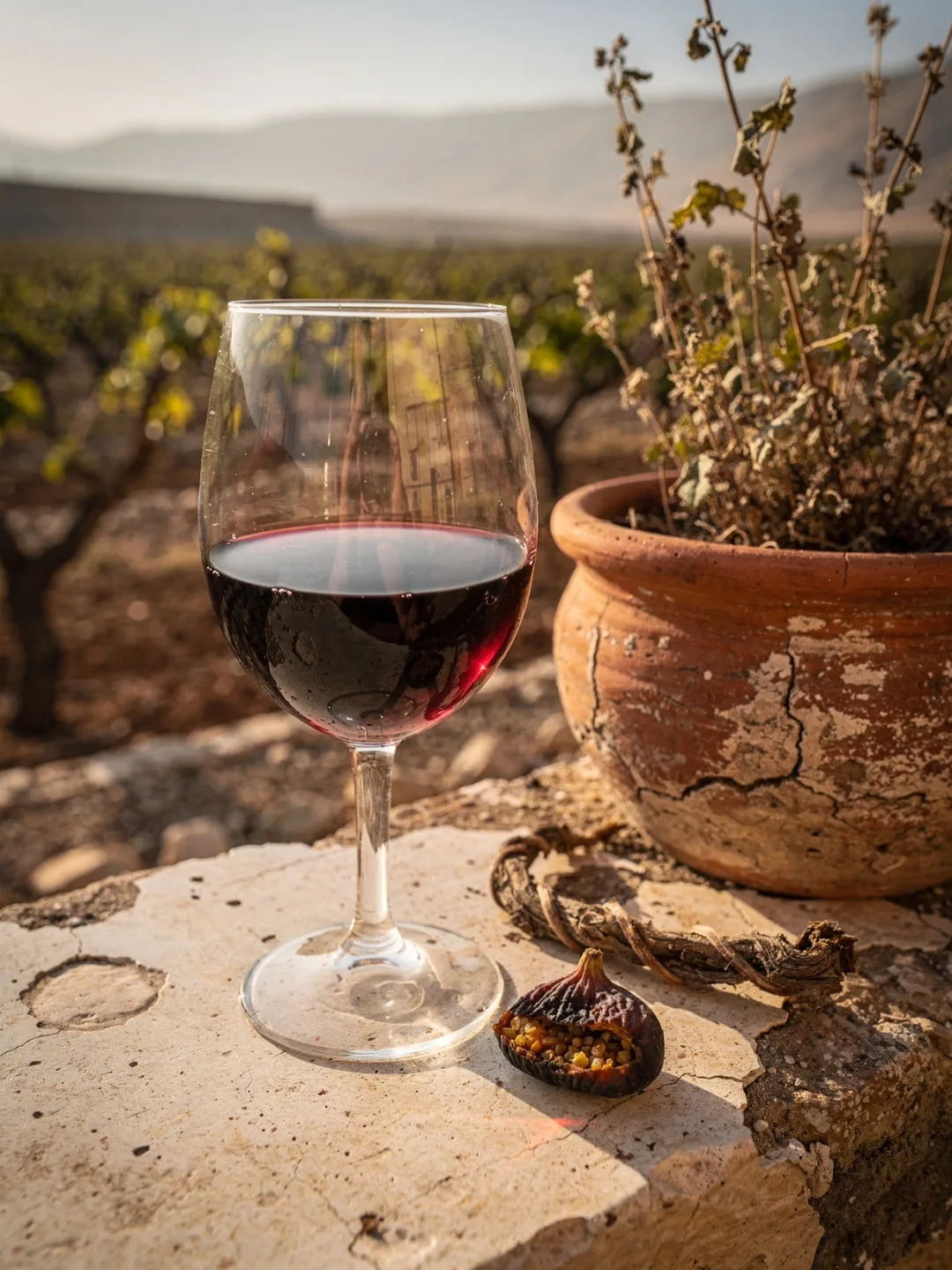
A Glass of Musar
Tasting
Hold a glass of Musar up against a sheet of white paper. After seven years spent between barrel, concrete and bottle, the color is long past the deep ruby of a young wine. By now it shows a garnet tone with a brick-colored rim. This isn't a flaw of aging. It's exactly what the wine was made to become.
On the nose, dried fruit comes forward first, fig and raisin, alongside leather and a whiff of tobacco. These are aromas that elsewhere only emerge after decades of bottle age, but here arrive much earlier. Some bottles show an additional earthy, almost animal note reminiscent of a barnyard. Wine critics have argued for decades over whether this is a flaw or the house's true character. For the Hochar family, this so-called Brettanomyces note, named after a strain of yeast, was never a fault but part of the signature that made Musar famous.
On the palate, the freshness comes as a surprise. Despite its age, the wine still carries noticeable acidity — a legacy of the cool Bekaa nights, which preserved the Cinsault's acidity out in the vineyard long before any cellar could do anything about it. The tannin from the Cabernet and Carignan has long since softened after seven years, without the wine losing any structure as a result.
At the end, count: how long does the flavor linger after you swallow? In a successful Musar, it's twenty seconds or more, and it's exactly this length that separates a great vintage from a merely interesting one.