Cricova & Mileștii Mici
Region & History
A crumb of clay gave it away. Near the village of Rusești Noi in the Ialoveni district, right in the middle of what is now called Codru, archaeologists found a shard of pottery bearing the imprint of a grape seed from the fourth millennium BC. Grape culture here, then, is no marketing invention, but older than any writing that could tell of it.
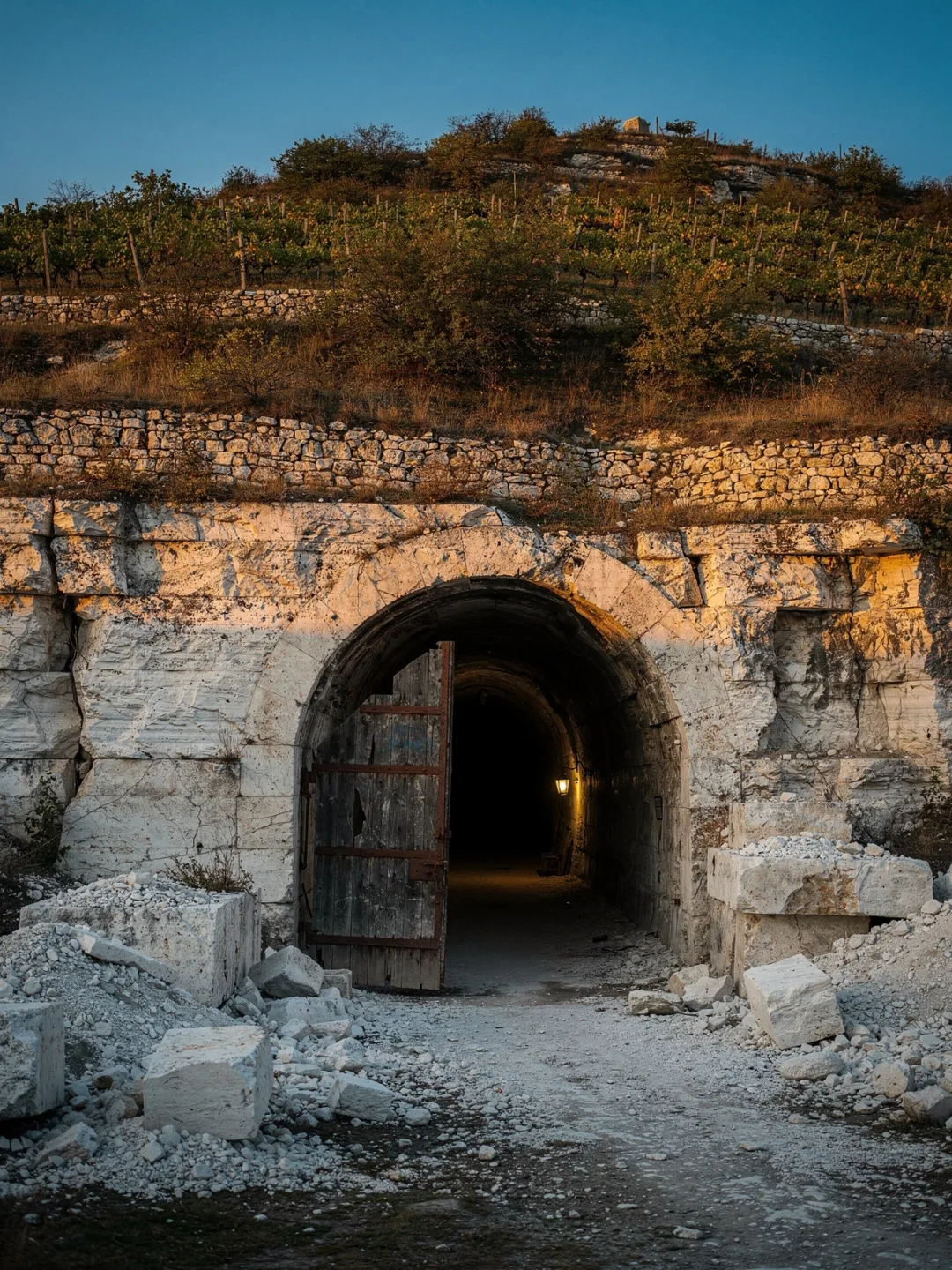
Beneath the hills of Codru lies limestone, and people have been quarrying it since the fifteenth century to build Chișinău. Over the centuries, the tunnels near Cricova grew into a labyrinth spanning one hundred twenty kilometres. In 1952, the state converted the first galleries to wine storage. At Mileștii Mici, also in the Ialoveni district, the same happened in 1969. Two hundred fifty kilometres of tunnels lie underground there, of which around one hundred twenty are in use today.
During the Soviet era, Moldova became the wine cellar of an entire empire, and quantity mattered more than character. That changed abruptly: in 2006 Russia imposed an import ban, and a second followed in 2013, and both times the country's most important export market disappeared virtually overnight. Before 2013, around thirty percent of Moldovan wine exports still went to Russia. Today it's under three percent, while over two-thirds go to the European Union. Producers had to ferment cooler, work cleaner, and plant varieties that could stand on their own without relying on sweetness.
A symbol of the fresh start stands near Orhei. Château Vartely was founded starting in 1996, took on its current name in 2004, and opened in 2008 as a complete estate with views over the hills. It's far from the only address worth visiting, but it shows how quickly a former collective farm can become a destination for wine tourists. The black limestone beneath Codru thus carries two stories: the country's oldest traces of grapes and the most recent chapter of its reinvention. Both remain visible.