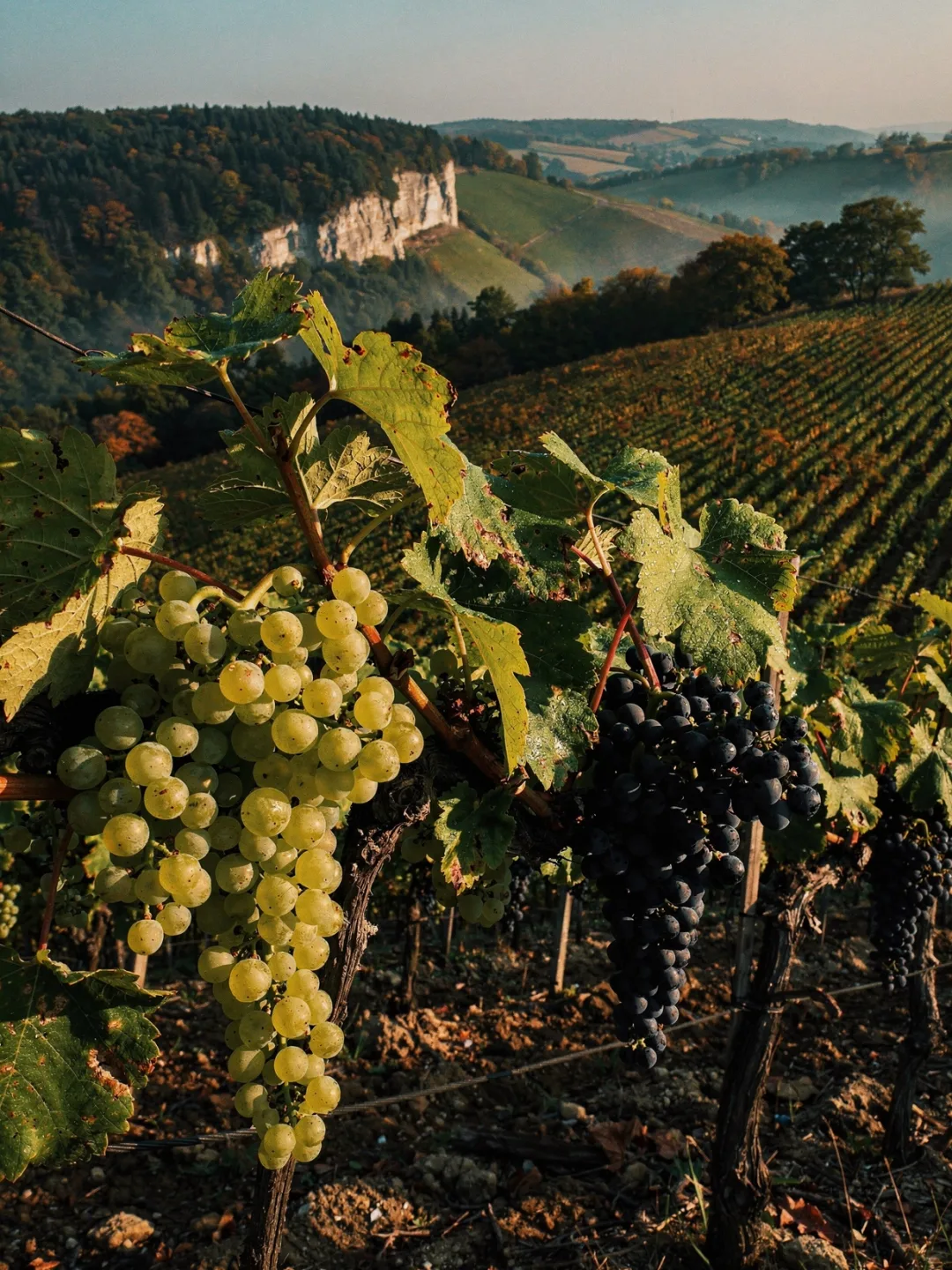
Fetească & Chardonnay
Grape Varieties
In Codru, it's not a single variety that sets the tone, but a ratio: three to two in favour of white over red. Around sixty-three percent of the vineyard area is planted with white grapes, led by Chardonnay. Behind it follow Sauvignon Blanc, Aligoté, Muscat Ottonel, Rkatsiteli, and the native Fetească Albă. White clearly leads here.
Fetească Albă is the old native variety, and its name translates roughly to "white girl." It yields pale, floral wines with notes of apple and hawthorn, moderate acidity, and rarely more than twelve percent alcohol by volume. Aligoté, by contrast, is the workhorse among varieties: uncomplicated, high-yielding, and with a crisp acidity that provides a solid base for sparkling wine, such as the kind Cricova ferments in its tunnels. Two characters, one climate.
Red is in the minority, but by no means an afterthought. Cabernet Sauvignon, Merlot, and Spätburgunder, as Pinot Noir is often called here, ripen on the more open slopes between patches of forest. They produce wines with dark fruit and a freshness rarely found in more southern countries, since nights remain cool even at the height of summer. You can taste it immediately in the glass.
What matters is the blend. Chardonnay provides structure for the sparkling wine, Fetească Albă the local accent, Aligoté the volume, and Cabernet Sauvignon delivers wines that can be cellared for a few years. None of these varieties alone would define Codru. Only together do they form the picture of a region that has never had to fully choose between forest and vineyard. This also explains why Chardonnay from Codru often shows more acidity than comparable wines from warmer countries.