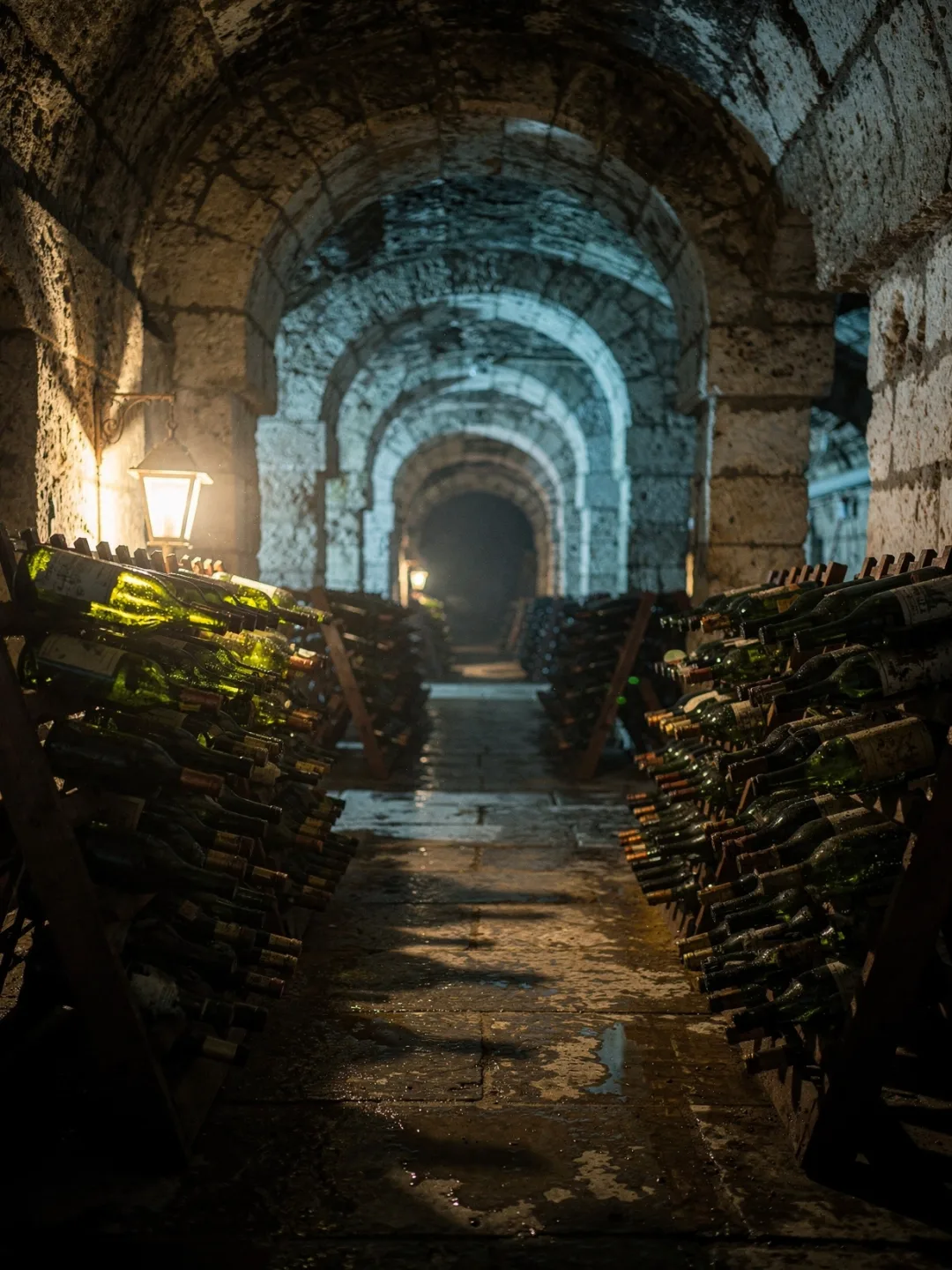
Steel Tank and Limestone Tunnel
Production
Harvest in Codru begins in late August with the early white varieties and continues into October for the red wine cuvées. After that, the paths diverge considerably.
Fetească Albă and Aligoté are usually pressed gently. They ferment in temperature-controlled steel tanks, often at just under fourteen degrees Celsius, to keep the delicate fruit aromas from cooking off. This cool fermentation was one of the most important technical changes following the Russian embargoes of 2006 and 2013. Moldovan producers invested heavily in new cellar technology at that time.
Sparkling wine follows a different path. Cricova produces its best cuvées using the classic method of bottle fermentation. Base wine, yeast, and sugar undergo a second fermentation within the same bottle, which is where the carbon dioxide comes from. The bottles then age for months lying down in the tunnels, at a constant twelve to fourteen degrees and nearly one hundred percent humidity. Only then does someone riddle them by hand to move the yeast toward the neck of the bottle.
For the red cuvées made from Cabernet Sauvignon, Merlot, and Spätburgunder, maceration takes longer, often two to three weeks on the skins, giving colour and tannin enough time to transfer into the wine. Some producers then age it in oak barrels. Others deliberately choose steel to keep the fruit clean rather than hiding it under oak flavours.
In the end, two philosophies exist side by side. The large tunnel winery processes grapes from across the region into reliable, well-made cuvées, while smaller estates, such as the one near Orhei, focus on single vineyards and pursue greater concentration through lower yields. Both need the same cool cellar; only the ambition differs.