Cold and Concentrated
Tasting
A glass of Fetească Albă from Codru looks unassuming: pale, almost water-clear, with a hint of green at the rim. The first impression is deceptive. On the nose, green apple appears immediately, along with hawthorn and sometimes a hint of freshly mown grass. None of it is forceful.
On the palate, you can see why winemakers place so much emphasis on cool fermentation: the acidity is direct, almost cutting, without ever coming across as sour. Sip after sip, the wine stays light, rarely above twelve and a half percent alcohol by volume, and that's exactly what makes it a food companion rather than a solo performer. It never pushes itself into the foreground.
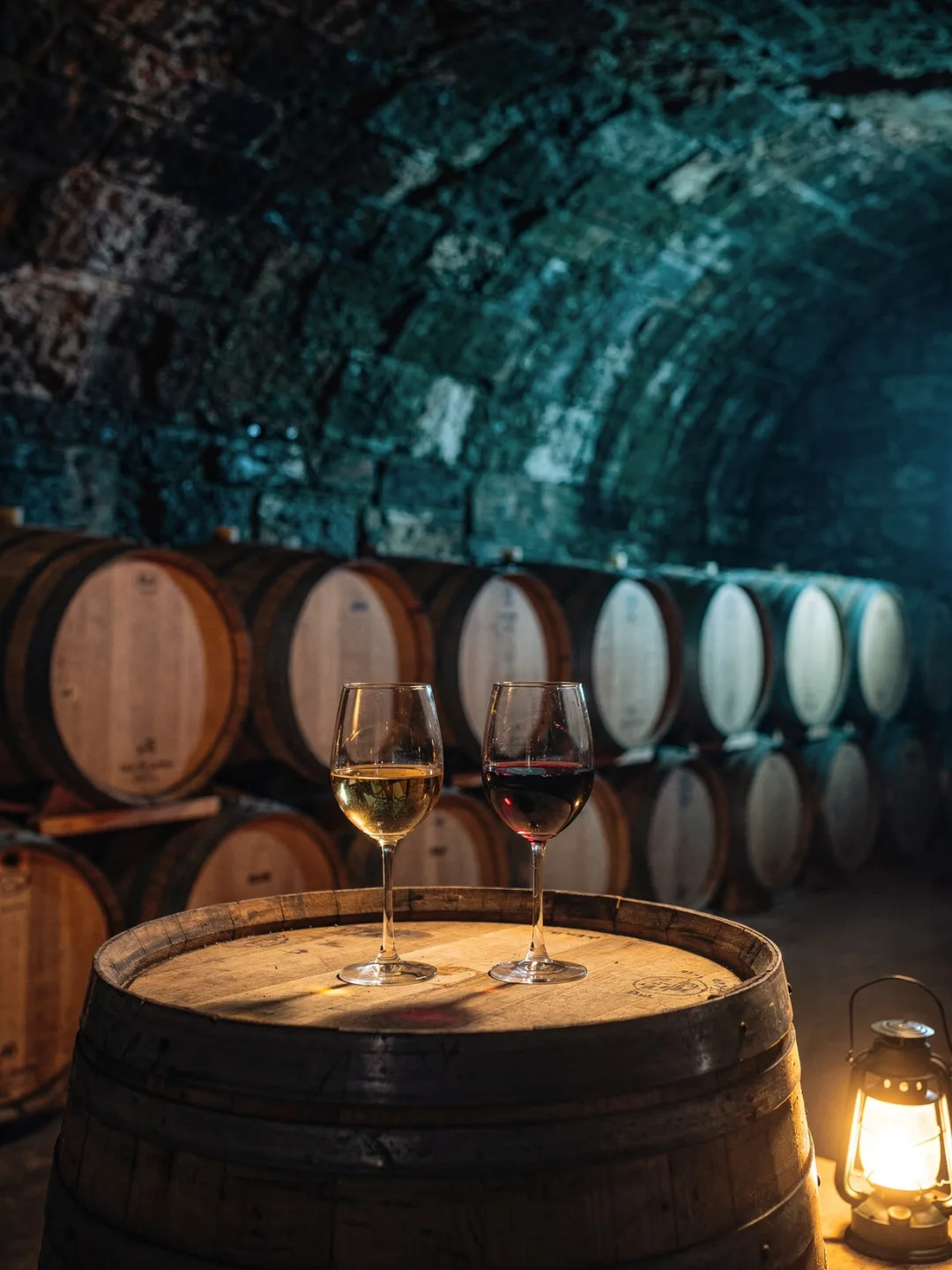
A tasting in the tunnels themselves unfolds quite differently. At twelve degrees and near-total darkness, a young sparkling wine from Cricova smells of apple and bread crust at once, the bread note coming from extended time on the lees, much like with Champagne. The perlage is fine and long-lasting.
A red blend of Cabernet Sauvignon and Merlot, by contrast, needs time in the glass. Freshly poured, it seems closed off, almost hard. After ten minutes of air, it opens up into dark cherry, plum, and a hint of forest floor that isn't far removed from the surrounding oak woods. Patience pays off here. Anyone who tastes both extremes in one afternoon, the pale Fetească Albă at the start and the dark Cabernet blend at the end, gets a good sense of the full range Codru has to offer.