Purcari and the Tsars
Region & History
The town of Ștefan Vodă has only carried its current name since 1990. It was founded in 1909 as the German colony of Chizil, right in the middle of the steppe along the Nistru. The Soviets first renamed it Biruința, then Suvorov, after a Russian general who had never actually lived there. After independence, people looked for a name with a genuine connection to the country and found it in Ștefan cel Mare, the fifteenth-century Moldavian prince. Vodă is his old title, the Moldavian word for prince.
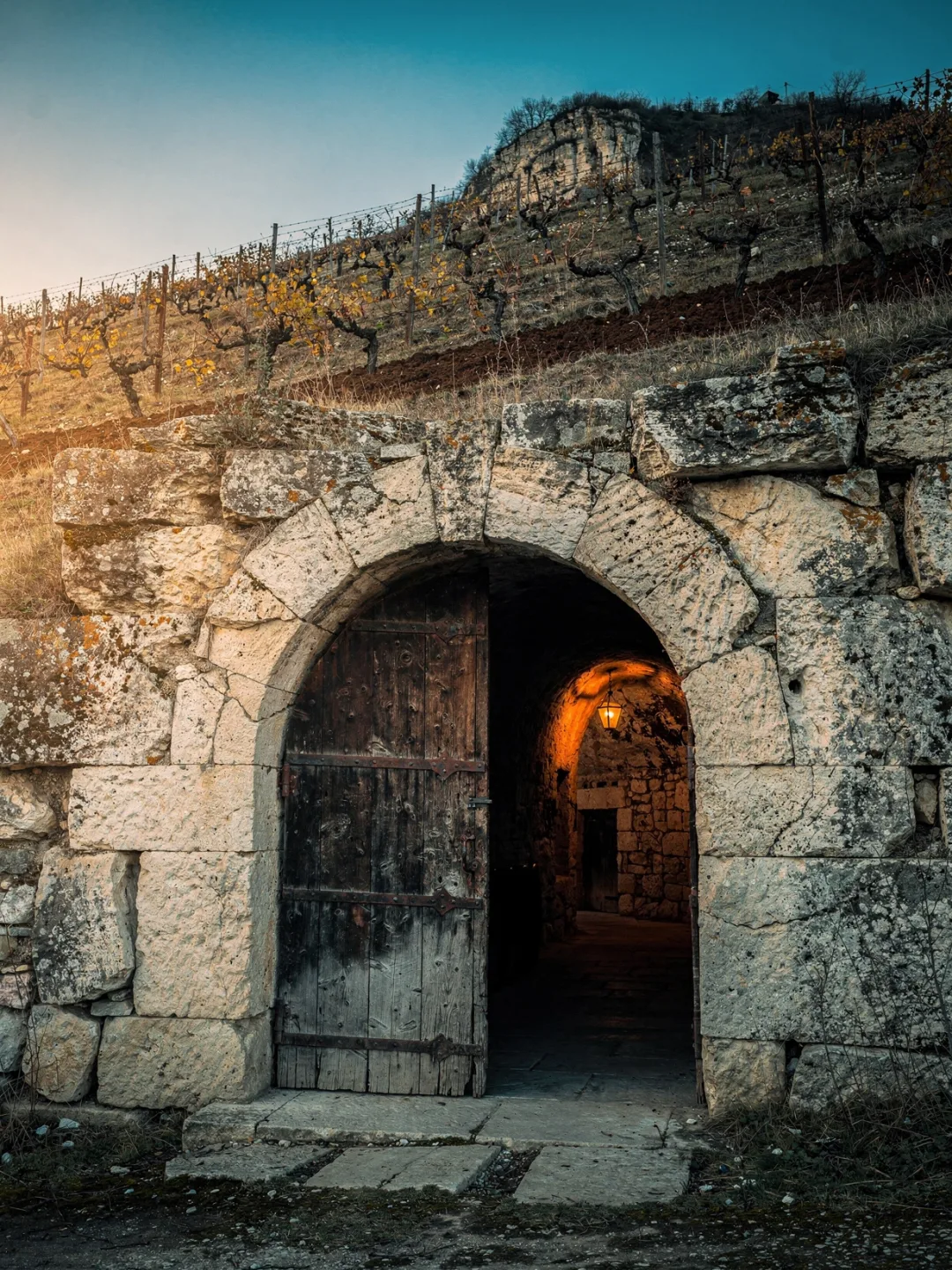
Wine had grown along this river long before it had any name at all. But the leap from farming to a proper winery only came in 1827, with a decree from Tsar Nicholas I. It officially made the Purcari estate the first specialized winery in Bessarabia, as southeastern Moldova was known under Russian rule. The monks in the area had already shown how to build cellars: cross-shaped, cool, driven deep into the limestone. Purcari adopted exactly this layout, and part of it still stands today.
Fame came quickly. At the Bessarabian Agricultural Festival, Negru de Purcari won a gold medal as early as 1847. In 1878 it claimed the first international gold medal ever awarded to a wine from this stretch of land at the World's Fair in Paris. From then on it appeared at the tables of Tsar Nicholas II and at the British royal court, a peasant wine from the Nistru, served alongside Champagne.
The Soviet era was not a good chapter for Purcari. The vines weren't uprooted as they were elsewhere, but the old recipe fell into obscurity, until the enologist Pimen Cupcea reconstructed it from old records in the 1950s. Fresh capital only arrived in 2003, the cellars were renovated, and in 2012 the whole region got its current legal framework: the Indicație Geografică Protejată Ștefan Vodă, named after the same prince as the town itself. Since 2016 the EU has also recognized this designation of origin under the Association Agreement. Moldova still isn't a member.