Chernozem & Loess
Soils
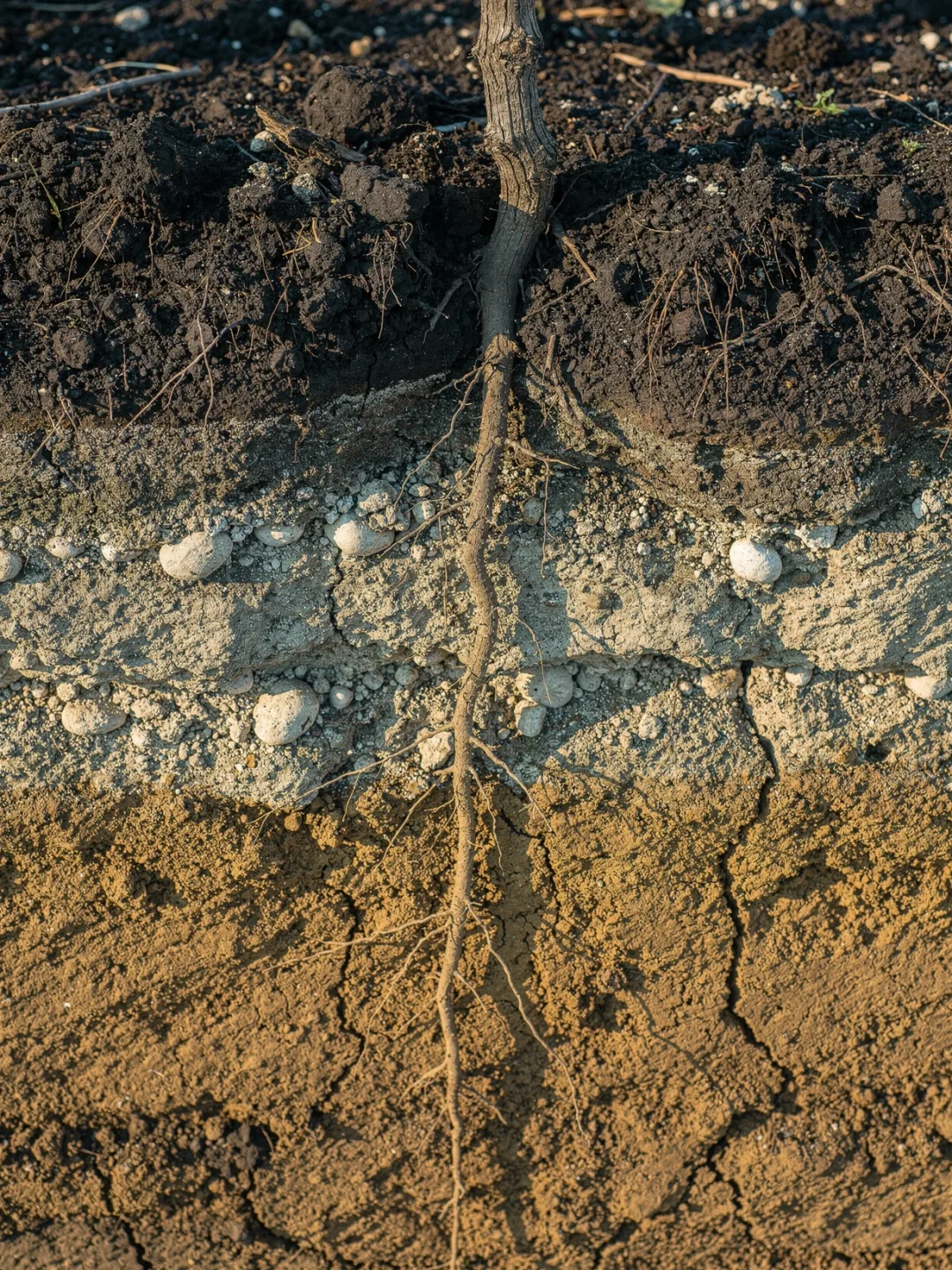
Dig a hole in a vineyard on the Bugeac steppe. After just a few spadefuls you'll hit black, chernozem, literally black earth, named for its deep, almost coal-dark color. Nearly eighty percent of Valul lui Traian's area consists of this one soil type. That's more than anywhere else in Moldova's three wine regions.
Chernozem owes its color to thousands of years of steppe grass. The roots die off every autumn and rot into the soil, layer by layer, year after year, until a deep, nutrient-rich humus layer forms, the kind only a few regions in the world ever see. For grain, this is a blessing. For vines, it's at first a trap.
Too many nutrients and too much stored water push the vine toward growth rather than ripening. The result is plenty of leaves, plenty of grapes, and little concentration in the juice. That's why, in Valul lui Traian, it matters which subtype of chernozem lies in the vineyard. Carbonate chernozem, the most common variant at 38 percent, is somewhat leaner and warmer, because the limestone in the subsoil stores heat. Ordinary chernozem, at 31 percent nearly as widespread, holds more water and produces fuller, softer wines.
Almost half the soils are also clay-loam, compacted and hard for roots to penetrate. This forces the vine downward. It searches there for water that has long since evaporated from the surface during the dry summer. Where the chernozem has been leached out, just six percent of the area, the soil turns lighter and more acidic, and that's where white varieties tend to grow. Between the Bugeac steppe and the terraces along the Prut, these soil types often shift within a single vineyard.
A jet-black, crumbly humus layer built up over millennia of rotted steppe grass, one of the most powerful humus layers in Europe.
The root: Here the vine finds nutrients in abundance, but that's exactly what slows ripening unless the roots dig deeper.