Steppe Sun & Drought
Climate
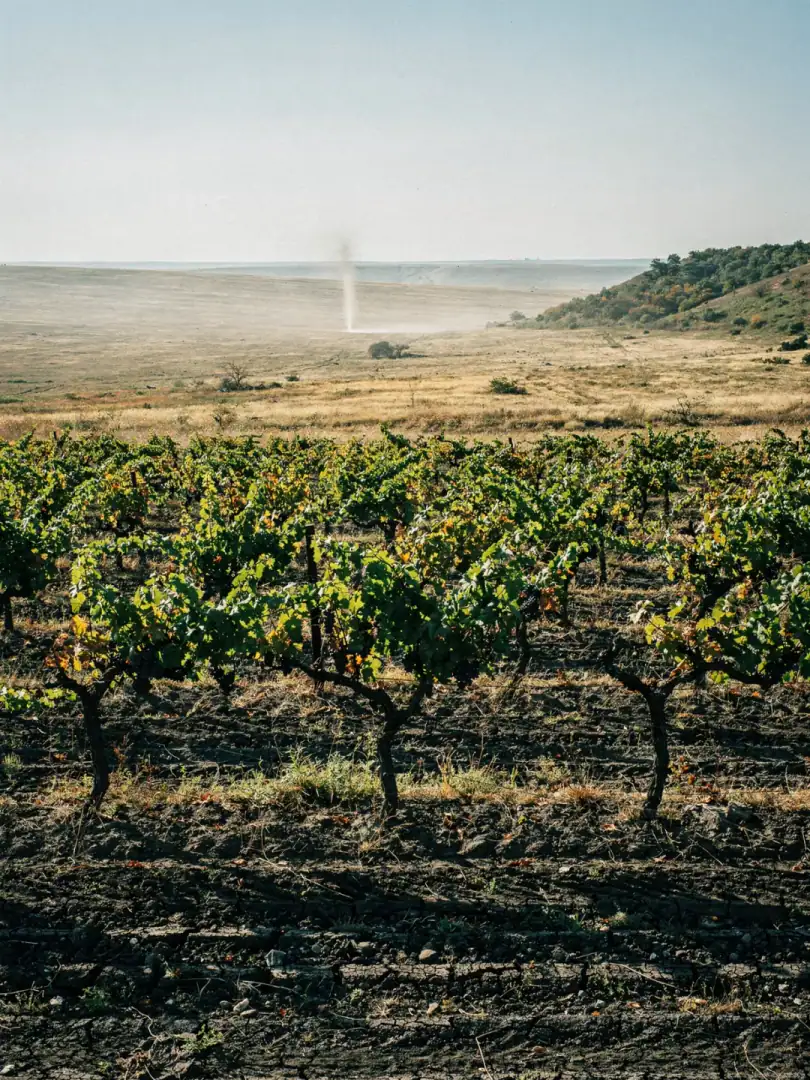
Sunshine is rarely the problem here. Between 310 and 320 days a year, the sun shines over the Bugeac steppe. That's more than almost anywhere else in Moldova, making Valul lui Traian the sunniest of the country's three wine regions. The bigger problem is the rain that's missing: on average only 450 to 550 millimeters fall each year, sparsely distributed across the often agonizingly long growing season.
Experts measure the warmth of a wine year in the sum of active temperatures, so-called degree-days, added up from all days above ten degrees Celsius. In Valul lui Traian this adds up to 3,000 to 3,450 degree-days, more than in any other Moldovan wine region. The growing season itself lasts 179 to 187 days. That's enough even for late, powerful red varieties like Cabernet Sauvignon, which barely ripen elsewhere in the country.
Elevation moderates the heat somewhat. The vineyards lie between 5 and 311 meters above sea level, from the flat banks of the Prut to the hills of the Tigheci forests, a difference the vine feels distinctly. Where forest replaces open plain, more rain falls. The days are then cooler. That's why white and aromatic varieties like Viorica tend to grow there. Out on the open Bugeac steppe, by contrast, the sun beats down almost unchecked, and that's exactly what drives the red grapes toward fullness and high sugar content.
Drought is nonetheless the winemakers' biggest worry. A summer without real weeks of rain is no exception on the steppe, it's practically the rule. The vines therefore root deep, searching for moisture still left in the lower soil. It's exactly this depth that later shapes the taste of the wine, as the next stop will show.