Tank, Barrel & Raisin
Production
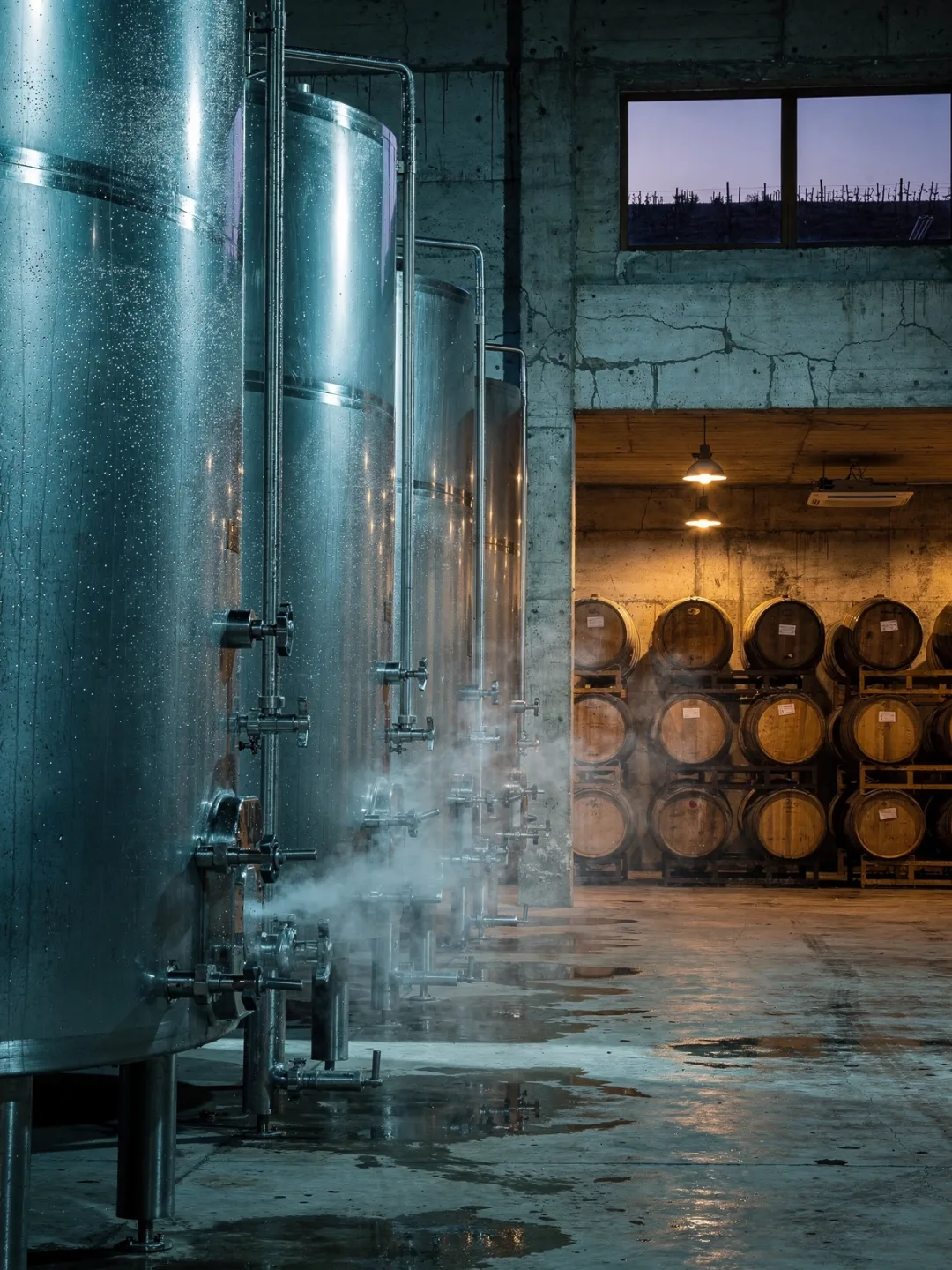
Stainless steel has today pushed out the old concrete almost everywhere. In Soviet times, concrete still filled the large wineries like Vinia Traian near Cahul. Temperature-controlled tanks now keep white wine fermentation at cool temperatures. This protects the delicate aromas of Viorica or Sauvignon Blanc, since even brief heat during fermentation destroys exactly the fragrant compounds that define the finished wine.
The red cuvées made from Cabernet Sauvignon, Merlot, and Fetească Neagră, by contrast, often age in oak barrels. Some come from native Moldovan oak, others from France. The wood contributes toasted and vanilla notes and lets tiny amounts of oxygen seep in over many months, gradually rounding out the initially rough, harsh tannin. The more powerful the grape coming off the Bugeac steppe, the longer it stays in the barrel.
A good portion of the annual harvest is turned into sparkling wine, and some producers rely on the classic method of bottle fermentation. The second fermentation takes place right inside the sealed bottle and creates a fine, long-lasting perlage, meaning delicate bubbles. Others ferment in pressurized tanks, faster and cheaper.
Some grapes in Valul lui Traian are allowed to hang longer than usual. Others are dried on mats in the sun after harvest. The water evaporates, and the sugar concentrates with every passing day. Over time, this produces dense, honey-sweet wines. If pure alcohol is added as well, the result is fortified wine, a sweet wine strengthened with alcohol, a category Moldovan wine law still lists separately to this day.