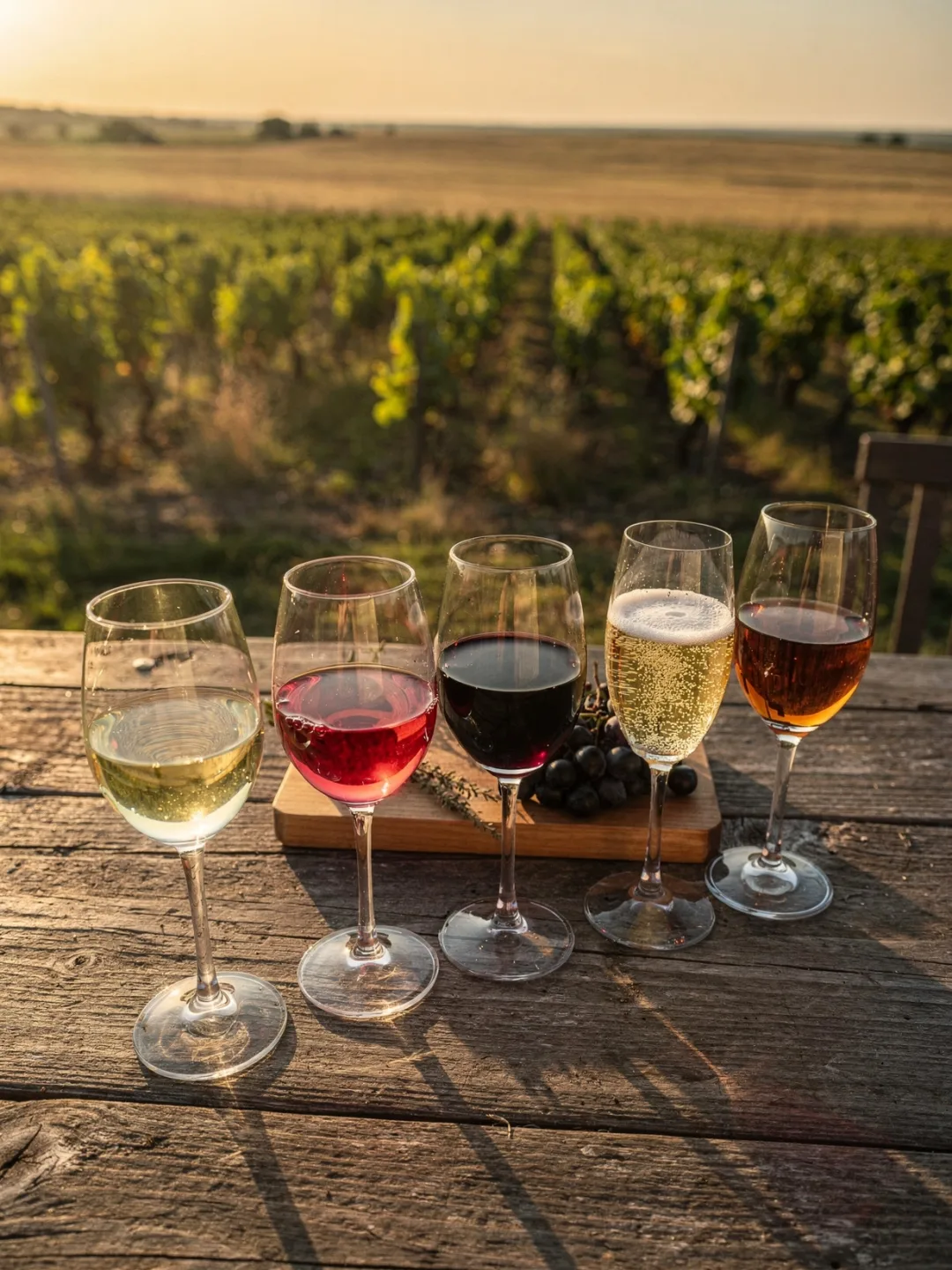
Dry to Fortified Sweet Wine
Tasting
Anyone traveling here is best off tasting across the board. Start pale and end dark and sweet. That's exactly the range the whole Valul lui Traian region covers. It stretches from bone-dry white wines all the way to dense, sweet fortified wine at the end of a long evening. In between come cool rosé, powerful red wine, and sparkling wine, nearly the entire spectrum that Moldovan wine law officially recognizes with all its categories.
Sauvignon Blanc almost always tastes dry. It smells of gooseberry and slightly green apple. Its acidity crackles almost audibly in the mouth, a clear contrast to the soft fruit beneath it. Viorica alongside it smells strikingly of jasmine, acacia, and ripe grapefruit, yet stays surprisingly slender on the palate. Its own acidity reliably keeps the sweetish aromas in check, so that in the end not a single wine here comes across as heavy or cloyingly sweet.
Rosé drinks cool and fruity. Cabernet Sauvignon or Merlot bring strawberry and redcurrant into the glass here. The great red wines, by contrast, need a bit more time before they reveal their full picture. Dark fruit comes first, blackberry and cherry, often contributed by Fetească Neagră. Then follow toasted notes from the barrel, and only right at the end does the ripe tannin take over, carrying the long, dry finish.
In the end, the sweetest wines surprise the most, and they come from raisined, overripe grapes of the region. Their color ranges from pale amber to dark copper. The nose recalls dried apricot, honey, walnut, and a hint of caramel underneath. Despite the high sweetness, an acidity always lingers in the background, keeping the wine from turning cloying, and a fortified wine ultimately tastes of raisin, nut, and the warmth of the added alcohol in the finish.