One Continental Climate
Climate
Stand in a vineyard near Alexandra at noon in January and you'll easily see the thermometer clear thirty degrees Celsius. By four in the morning, in that same season, it can drop to just a few degrees above freezing. Nowhere else in New Zealand wine country does the temperature swing so dramatically within a single day. A difference of fifteen to twenty degrees Celsius is normal here, not the exception.
The reason lies in the ring of mountains surrounding the region. Almost everywhere else in the country, the ocean moderates temperatures. Central Otago, by contrast, sits behind peaks reaching up to 3,700 meters that block out the sea's influence entirely. The result is the only true continental climate in New Zealand viticulture: hot, dry summers, cold winters with snow, and barely a gentle transition in between.
For the vine, this daily temperature plunge is no drawback at all. It's precisely why Pinot Noir thrives here in the first place. During the day the berry builds sugar; at night the cold locks in the acidity that would otherwise break down quickly in the heat. Without these cool nights, the wine would taste flat and alcoholic. With them, it stays taut and smells of fresh fruit rather than cooked fruit.
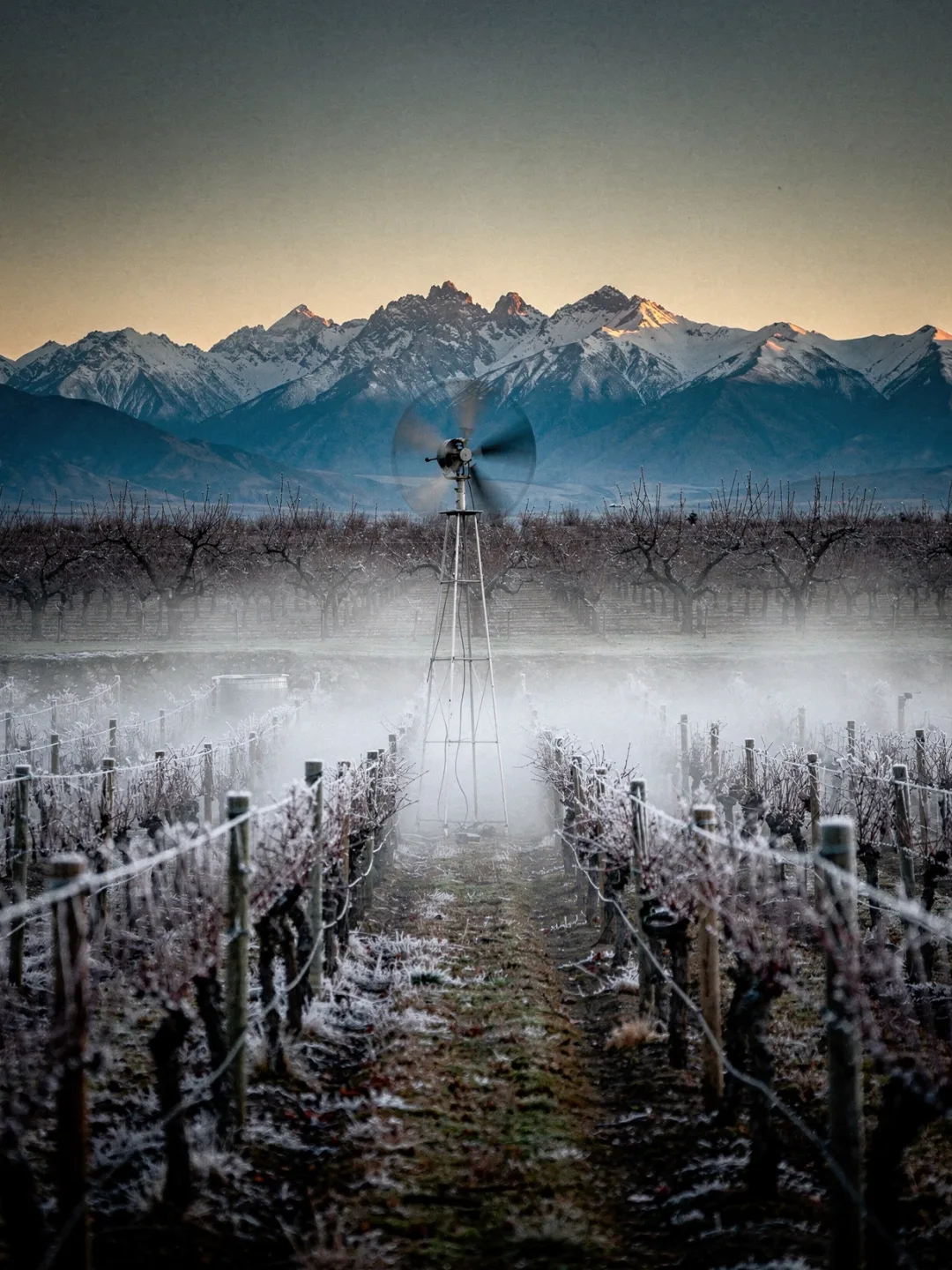
Rain is scarce. On average, only 375 to 600 millimeters fall per year, less than almost any other wine region in New Zealand. That's why virtually every vineyard here relies on irrigation. The Nor'wester, a warm downslope wind off the mountains, dries the grapes further and keeps fungal disease at bay. Frost is the bigger danger. It can strike anytime from March to November, right in the middle of budburst or during ripening, and growers fight back with wind machines or by sending helicopters over the rows at night to mix the cold air pooling at ground level with warmer air above.
Harvest comes correspondingly late, usually not until mid to late April, six to seven weeks behind the warmer regions of the North Island. At roughly forty-five degrees south latitude, Central Otago ranks among the southernmost wine regions in the world with meaningful commercial production. Drive through the vineyards in May and you'll often already see snow on the surrounding mountain ranges, while the last late grapes still hang below.