Schist & Loess
Soils
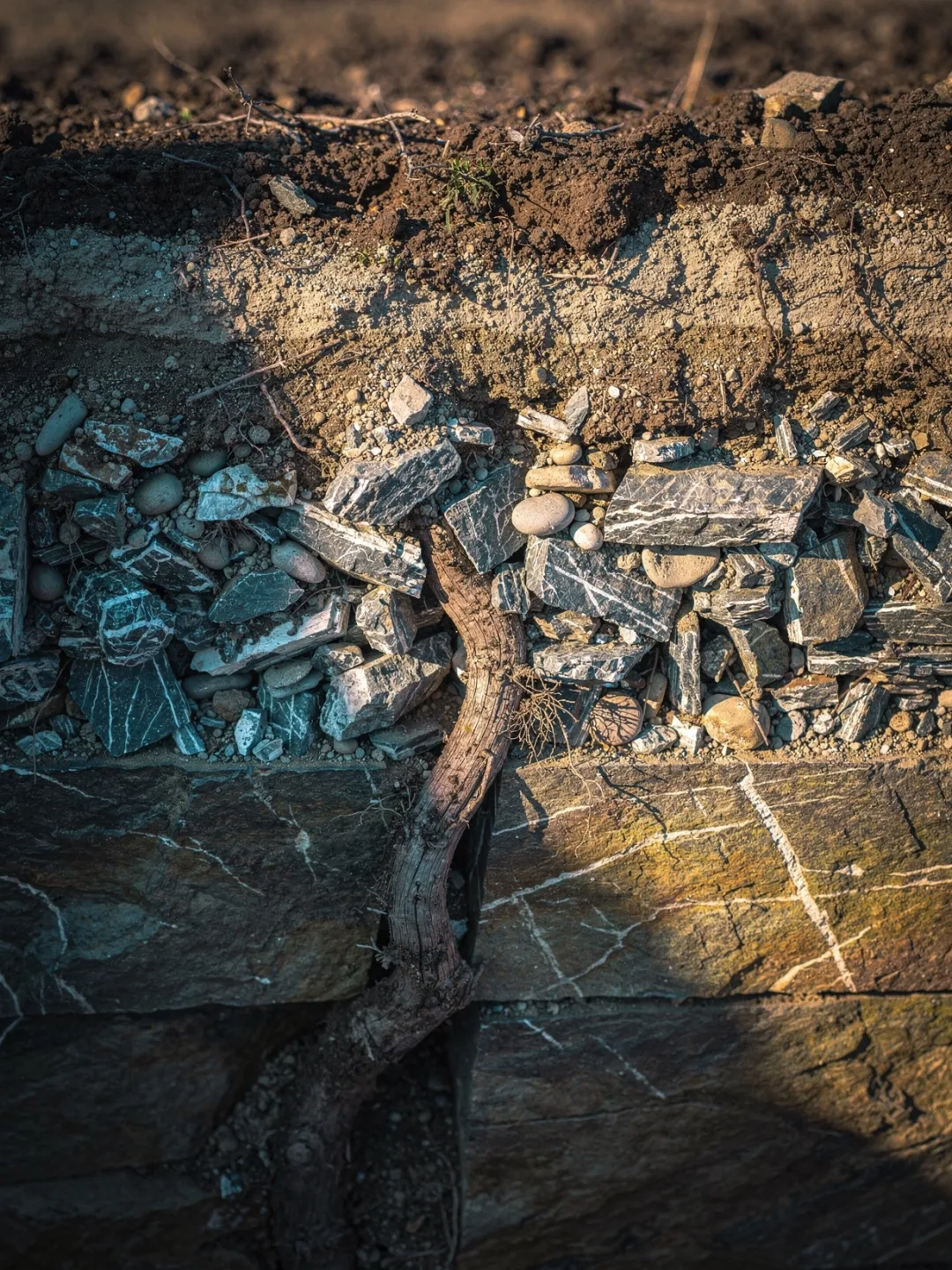
Dig a spade's depth into a vineyard near Bannockburn and you'll barely get through. After a hand's width of soil, the spade hits loose, pale grey rubble that glints in the light. This is fractured mica schist, known simply as schist in the English-speaking wine world, and it's the bedrock beneath a good half of all vineyards in Central Otago.
Its story begins deep below today's sea level. Hundreds of millions of years ago, heat and pressure compressed sediment from the ocean floor into rock. The same forces that later folded New Zealand upward lifted this rock into the mountain ranges visible today. Ice ages then ground it into two forms: coarse, sharp-edged rubble on the slopes, and fine, wind-blown dust that settled as a layer of loess across much of the Cromwell Basin.
For a vine's root, this is meager fare. The rubble holds hardly any nutrients and little water. So the root drives downward rather than spreading wide, often several meters deep, until it reaches moister rock below. This slows the vine's growth and shrinks the berries. A small berry has proportionally more skin than juice, and it's the skin that holds the color, tannin, and most of the aromatic compounds.
A second discovery in the schist even explains a winery's name. Veins of pure quartz run through the rock near Bendigo. Gold prospectors of the 1860s dug along these veins once the river gravel ran dry. They called this technique quartz reef mining: vein mining in hard rock rather than panning in river gravel. The winery Quartz Reef, located there today, still carries that name, though these days it pulls grapes rather than gold from the ground.
One misconception persists stubbornly, though: that a wine tastes 'mineral' because the vine absorbs minerals from the rock and passes them straight along. That's not quite how it works. What comes in through the root are dissolved salts, in quantities far too small for any palate to actually taste. Instead, the soil acts indirectly, through the water it holds or releases, the warmth its stones store, and the depth to which it forces the root to grow.
Fine, wind-blown dust from the ice ages, pale brown and loose. Holds a bit of moisture briefly but is poor in nutrients.
The root: This is where the fine roots sit, absorbing the rare rainfall immediately and drying out first when it fails to come.