Pepper in the Glass
Tasting
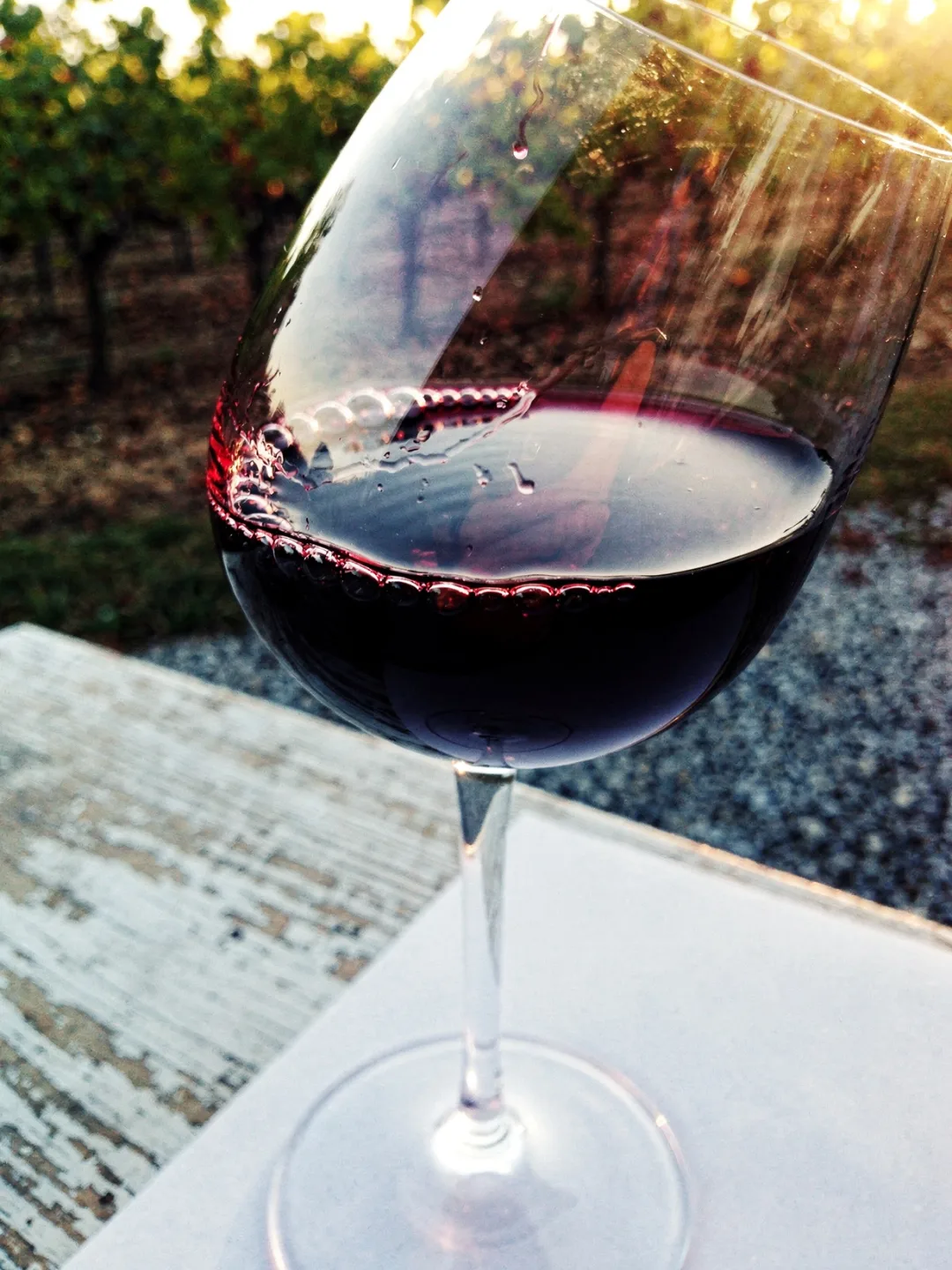
Hold a Hawke's Bay Syrah up against a bright background. The color comes out darker and denser than most other red wines, almost opaque violet at the core, with a narrow ruby rim. A Cabernet-Merlot blend from the Gimblett Gravels shows the same deep violet, often a shade darker still than the Syrah beside it.
The decisive moment comes on the nose. Many Hawke's Bay Syrahs show a distinct note of black pepper, traceable to a single molecule: rotundone. According to a 2008 study by the Australian Wine Research Institute, the perception threshold for this aroma compound lies between eight nanograms per liter in water and sixteen in red wine. Tiny amounts with outsized impact. Cooler vintages show the note more strongly. Too much ripeness burns the molecule away entirely.
With Cabernet Sauvignon from cooler vintages, you sometimes smell green bell pepper instead of black pepper, a sign the grape didn't fully ripen. A warmer summer, as on the Gimblett Gravels, all but eliminates this note. It makes room instead for cassis and dark cherry.
On the palate, both styles show firm tannin. The acidity, though, comes across milder than in cooler regions, since the warm days of the Gimblett Gravels break it down more. The cool nights save just enough of it to keep the wine from tasting flabby.
The finish on a good Coleraine or a concentrated Gimblett Gravels Syrah often lingers half a minute or longer, with toasty oak notes that only emerge right at the end. Swallow too soon and you'll miss exactly that part, which is half the reason these wines command the prices they do.