Gravel, Barrel, Screw Cap
Winemaking
Harvest in Hawke's Bay begins in March and, depending on the variety, stretches into May. Autumn here means warm days. It also brings cool nights, ideal for holding out for that last bit of ripeness without losing acidity.
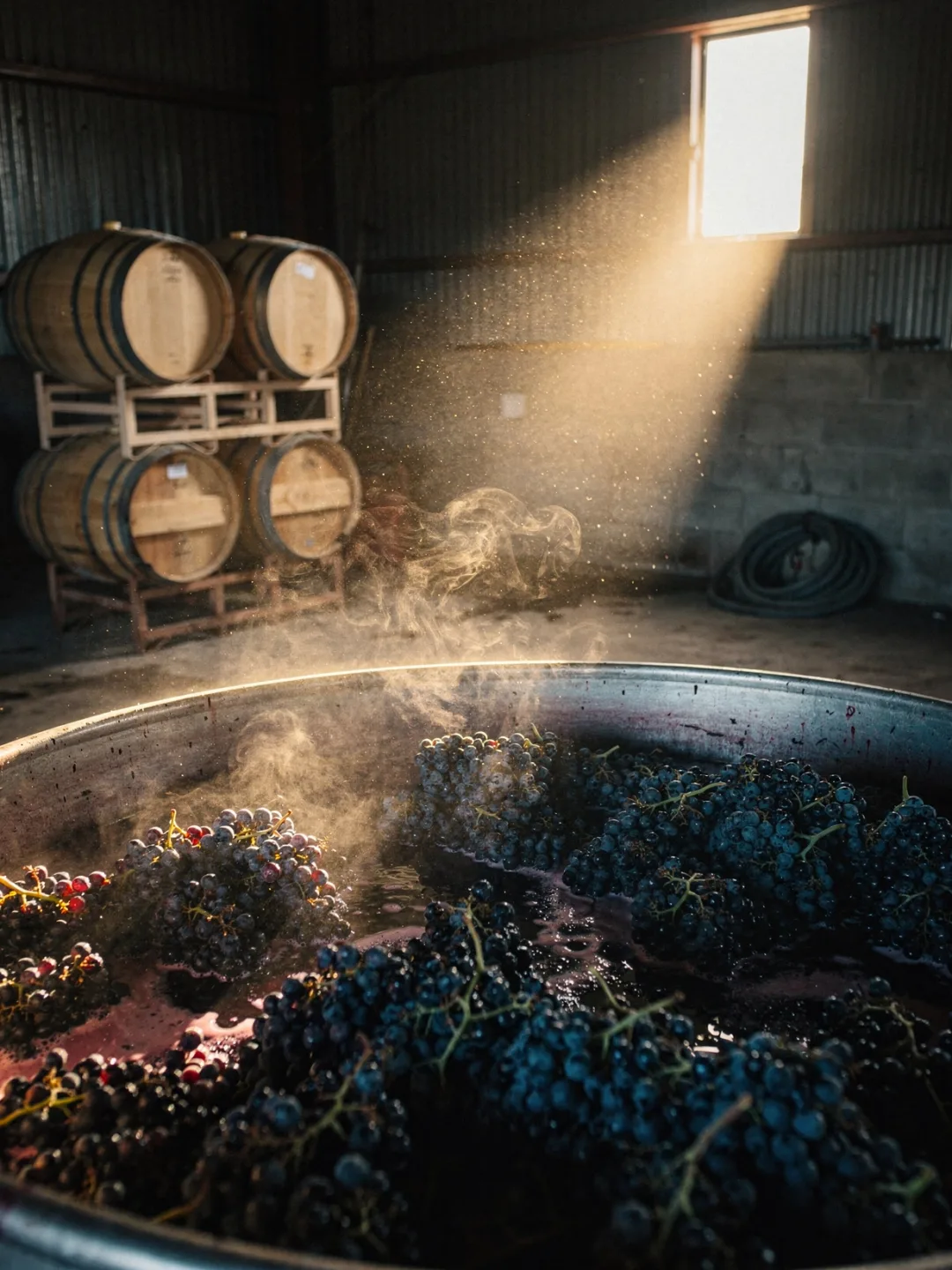
For Syrah, many estates ferment a portion of the grapes as whole clusters, stems and all, in open fermentation vats. This is a technique borrowed from the northern Rhône, and it gives the wine more floral perfume and less blunt fruitiness. The wine then ages in barrel. It spends twelve to eighteen months in French oak, usually with twenty to thirty-five percent new wood. The result comes in at a moderate thirteen to fourteen percent alcohol, notably less than comparable Australian Shiraz often reaches.
The Cabernet-Merlot blend is built the other way around. Each variety, often even each individual parcel, ferments and ages separately in barrique, and only shortly before bottling does the winemaker assemble the final blend. For Te Mata Estate's Coleraine, on the market since 1982, several plots within the Havelock Hills still come into consideration today. How much each parcel contributes is decided fresh each vintage.
Almost all New Zealand white wine now leaves the cellar under screw cap, along with a growing share of reds too. A group of winemakers, frustrated with cork taint, drove this change nationwide starting in 2001. Within three years, the share of screw-capped bottles rose from one to seventy percent; today it sits at nearly one hundred. Only the most expensive cuvées, like Coleraine, still come under natural cork as well.
The coastal Chardonnay from Te Awanga almost always ferments in barrel, often with wild yeast. It then rests on its fine lees for months, regularly stirred by the winemaker. This binds oxygen. It rounds off the acidity and gives the wine the creamy texture this stretch of coast has become known for.