Tank, screw cap, night
Production
At night, the big harvesting machines often move through the rows in the Wairau, while the grapes are still cool from the night air. Warmth would be a risk here. Pressing them immediately afterward keeps the must at low temperatures. It's exactly this coolness that later decides whether the delicate aromatic compounds survive the journey all the way into the bottle.
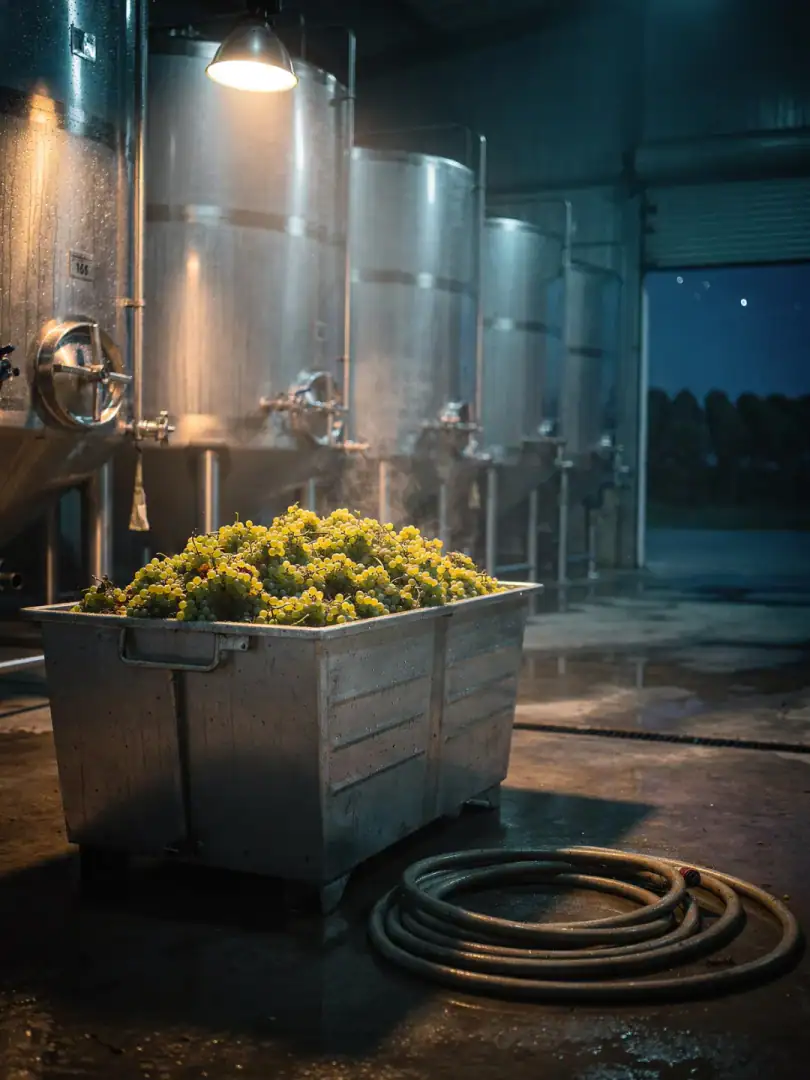
Fermentation mostly takes place in stainless steel tanks at controlled, cool temperatures, a simple, almost unromantic method that preserves the fruit aromas the way a refrigerator would. Because the acidity stays so high, many producers chill the finished wine down hard once more before bottling. This causes small tartrate crystals to precipitate out, which would otherwise later show up as an annoyance in the glass. Some estates now deliberately deviate from the standard path: using wild yeasts, extended lees contact, or a portion aged in used oak barrels.
How the wine is ultimately sealed changed faster in Marlborough than almost anywhere else. In 2001, several winemakers, including Ross Lawson of Lawson's Dry Hills, John Forrest of Forrest Estate, John Stichbury of Jackson Estate, and John Belsham of Foxes Island, founded the New Zealand Screwcap Wine Seal Initiative. Their goal was simple: put an end to cork taint. Winemaker Michael Brajkovich took over as chair. Within just three years, the share of screw caps across the whole country rose from one percent to seventy percent, one of the fastest transitions the wine world has ever seen.
Pinot Noir from the Awatere Valley calls for a different approach. Part of the grapes ferments as whole clusters, stems and all, in open vats, kick-started by the yeasts already present on the skins. The wine then ages for around ten months in French oak barrels, only a fifth of which are new. That's enough wood for structure, but not so much that it masks the delicate, cool-climate fruit.
For sparkling wine made by the classic bottle-fermentation method, an even stricter set of rules applies. Anyone wanting to call their product Méthode Marlborough must let the second fermentation take place in the very same bottle the wine will later be sold in. After that, it must rest on the lees for at least eighteen months. It's exactly this time that gives the simple grape juice the fine, bready complexity that makes a good sparkling wine.