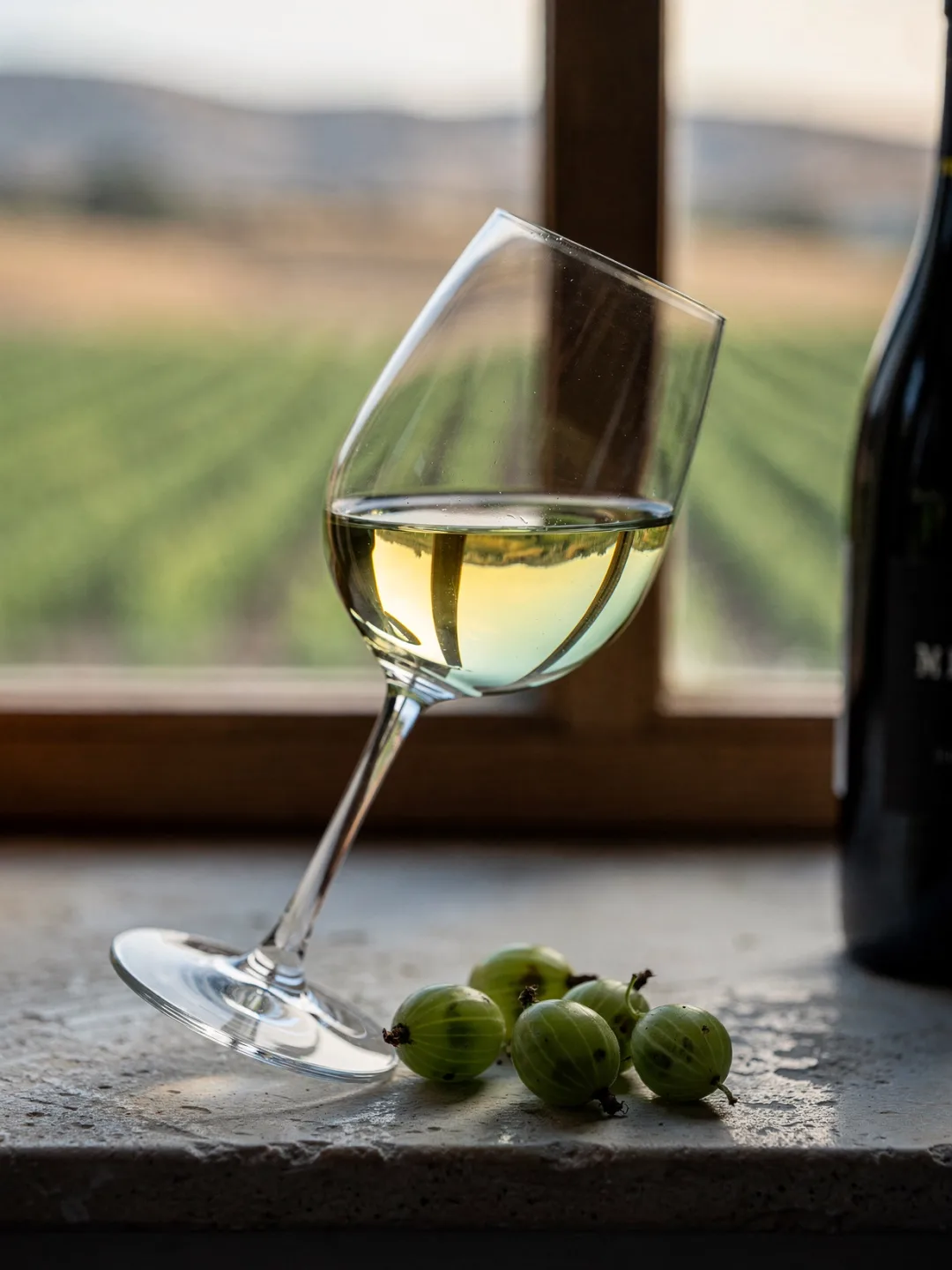
Passion fruit in the glass
Tasting
Hold a glass of Marlborough Sauvignon Blanc to your nose, and passion fruit is usually the first thing you'll notice. Gooseberry and ripe grapefruit follow, sometimes with a whisper of blackcurrant bud. Scientists who tasted New Zealand Sauvignon Blancs side by side with French and South African wines in 2009 described this profile clearly. It came across as tropical, sweet, reminiscent of sweaty passion fruit. The European wines, by contrast, struck them as more flinty and smoky.
Smell more closely, and you'll often find a green note too: freshly cut bell pepper or tomato leaf. Responsible for this are methoxypyrazines, aroma compounds that show up more strongly in cooler, windier sites like the Awatere Valley than in the warmer parts of the Wairau. A 2012 study comparing grapes from seven different Marlborough sub-regions confirmed exactly these differences between the valleys. None of it is coincidence.
On the palate, the acidity strikes first, sharp and direct, almost like biting into an unripe gooseberry. It's the reason these wines are so thirst-quenching and pair so well with food. Anyone expecting a white wine to taste round and soft will be surprised here: Marlborough Sauvignon Blanc is built for tension, not for gentleness.
A Pinot Noir from the same region, by contrast, speaks more quietly. It's pure restraint. Sour cherry and a hint of earthiness dominate, along with fine, sometimes still angular tannins. That's the velvety sensation on the gums that young cool-climate Pinots often haven't quite smoothed out yet. Leave it in the cellar for a few years, and that very edge softens.
In the end, what matters is how long both linger. In a good Sauvignon Blanc, the fruit stays on the palate for several seconds before the acidity alone remains. If nothing lingers at all, the wine was usually picked too early or served too cold, two mistakes that were especially easy to avoid in Marlborough.