Lamb and Crayfish
Wine & Food
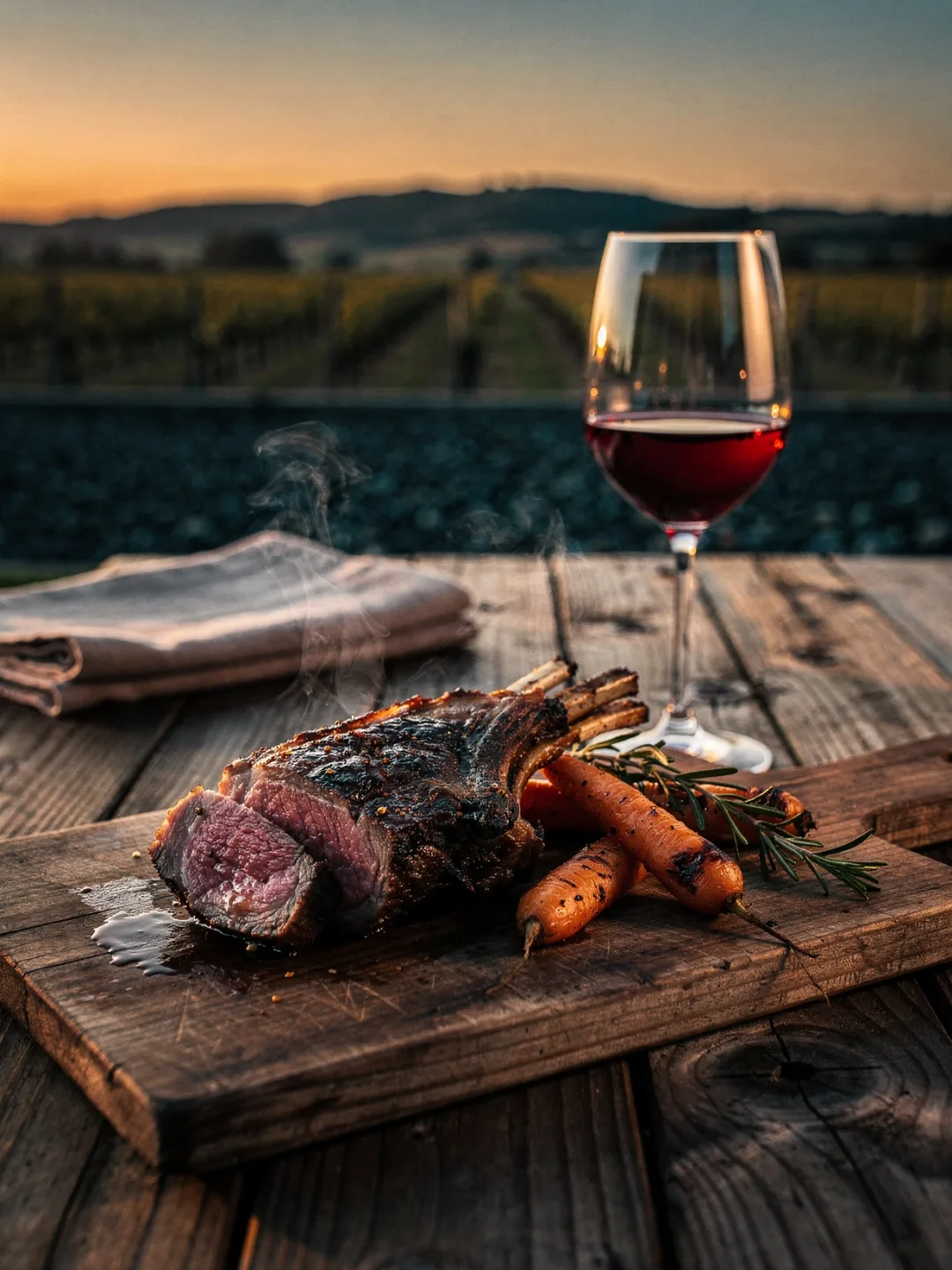
South Wairarapa has been sheep country since the 1840s. Lamb from the pastures around Martinborough is considered among the best in the country. A rack of lamb, seared hard and still pink inside, meets a Pinot Noir with enough acidity to cut through the fat. Alongside that comes enough tannin to stand up to the meat. The earthy, herbal notes in the glass — thyme, dried herbs — turn up almost identically on the plate. The reason: the sheep and the vines stand on the same dry, windswept pastures.
A brief hour's drive south, on the lonely coast near Cape Palliser, lies the fishing village of Ngawi. Lacking a harbor, boats are hauled through the surf by old tractors, and it's from here that crayfish comes—served in New Zealand most often simply boiled and with butter. No red wine suits this dish; instead, it calls for the region's other great wine: a dry Riesling or a cool-fermented Sauvignon Blanc. Their acidity brightens the sweet, firm flesh without overwhelming it.
Just how seriously this pairing of food and wine is taken here becomes clear every November, when the Toast Martinborough festival—running since 1992—takes place. For one day, the town's wineries open their grounds for live music and food stalls. Nearly every stall cooks with a particular wine in mind, rather than the other way around.
Two rules stick when pairing wine at home. Fat and salt in food make a firm, tannic wine more approachable—just as it works with lamb and Pinot Noir. And a wine should never try to taste heartier than it is. The crayfish doesn't get its wine because it's more powerful, but because it works differently: through acidity, not tannin.