Roast Goose and Paprika Chicken
Wine & Food
Burgenland's cuisine didn't come from Vienna, but from the east. Centuries as part of the Kingdom of Hungary left behind paprika, goulash, and hearty stews. Hungarian, Croatian, and Serbian influences mixed with alpine home cooking. The wine to go with it always had to be robust enough to stand up to paprika and richness — exactly what Blaufränkisch can do.
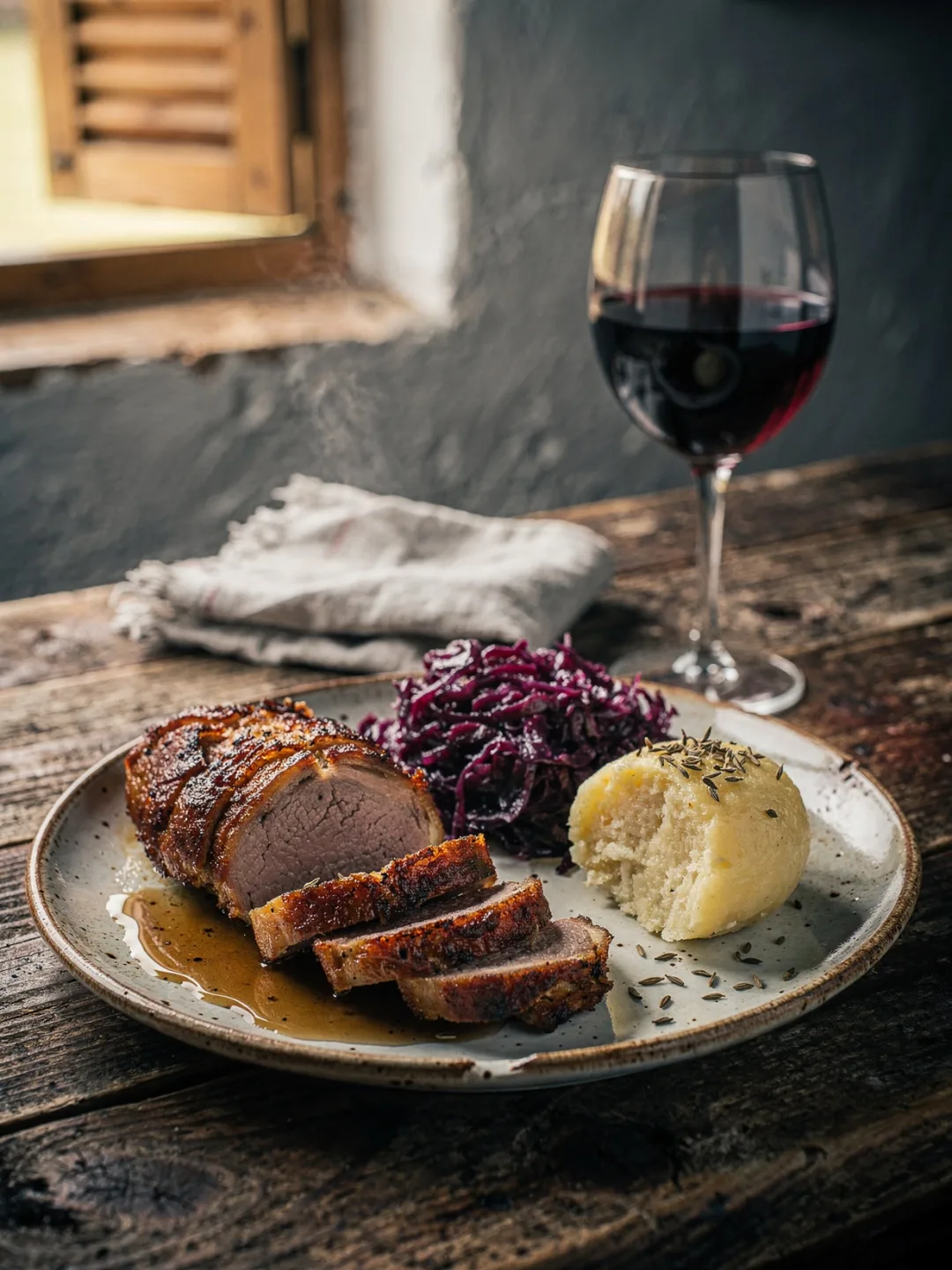
On the eleventh of November, St. Martin's Day, goose lands on the table almost everywhere in Burgenland. St. Martin is the region's patron saint. A young Blaufränkisch from Mittelburgenland or Rosalia pairs best with Martinigansl (roast goose) served with red cabbage and potato dumplings. Its acidity cuts through the goose's fat, and its tannin stands up to the robust seasoning without overwhelming the dish's fruitiness.
With paprika chicken, simmered in cream with plenty of red paprika powder, the same wine often comes across as too harsh. A dry Welschriesling works better here, its freshness absorbing the spice rather than competing with the paprika. With beef goulash, on the other hand — in Burgenland, goulash always means beef goulash — a mature Eisenberg DAC Reserve provides exactly the counterweight a piece of beef braised for two hours needs: its spice and tannin.
To finish, Ruster Ausbruch is a must — though rarely on its own. With a robust, aged cheese, sweetness softens the salt while the salt tones down the sweetness. With a poppy seed strudel or a palatschinke, though, restraint is called for. The wine must be sweeter than the dessert, or it will suddenly taste sour and thin next to it.
One rule of thumb holds true across all these dishes. Fat and richness in food call for a wine with just as much tannin and acidity, or it will seem thin beside the dish. Sweetness in food, on the other hand, always calls for a sweeter wine in the glass — otherwise even a good Ausbruch can tip into sourness.