Tasting a Blaufränkisch
Tasting
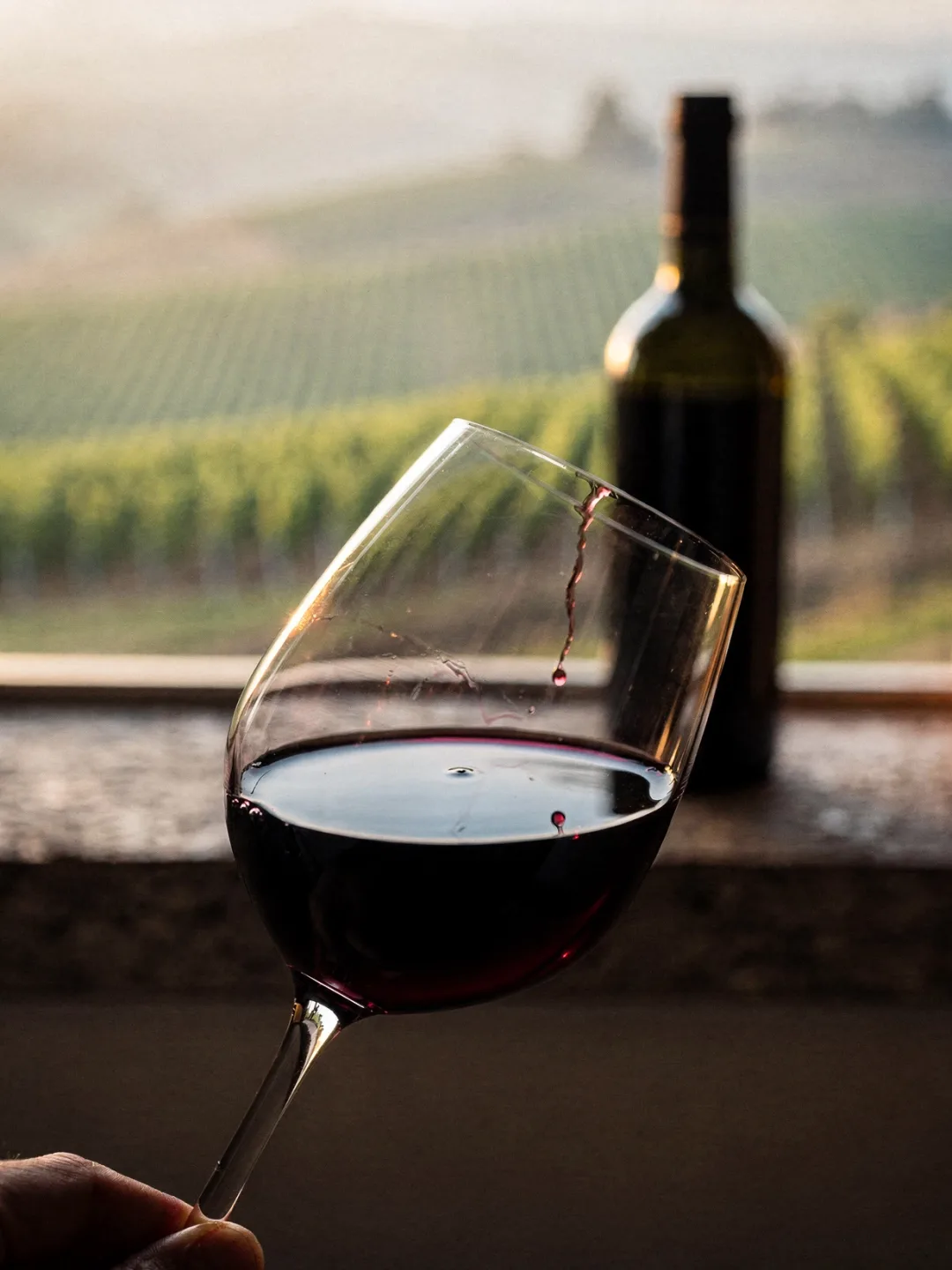
Tilt a glass of Blaufränkisch against a white background. The color is deep and dense, almost violet, quite different from the translucent ruby of some southern European red wines. This hints at the thick skin and the substantial tannin still to come. At the rim, a young wine often shows a bluish shimmer that shifts toward brick-red with age.
Smell the wine twice, once resting, once after swirling. In the resting glass, dark berry fruit usually comes first — blackberry and sour cherry. Only after swirling does the spice the variety is famous for emerge: black pepper, sometimes something smoky, which many tasters associate with the schist soils at Eisenberg.
On the palate, acidity separates from tannin if you pay close attention: acidity runs along the sides of the tongue and gets the saliva flowing. Tannin registers as a dry, gripping sensation on the gums and palate — noticeably firmer in Blaufränkisch than in most other Austrian red wines. A good wine carries both effortlessly, without one impression overwhelming the other.
At the end, count the seconds the flavor lingers. With a simple Neusiedlersee DAC Zweigelt, it's often only a few. With a mature Eisenberg DAC Reserve, twenty seconds or more, with a lingering finish of pepper and dark fruit. This very difference shows just how far the Blaufränkisch variety can go: from light everyday wine to top-tier wines capable of aging for decades.
A Ruster Ausbruch calls for a different way of smelling. In color it appears golden yellow to amber, on the nose apricot, honey, and sometimes saffron — typical aromas of botrytis, the noble rot. On the palate follows a sweetness carried by equally powerful acidity. Without this acidity, even the finest Ausbruch would come across as merely cloying.