Blaufränkisch and Furmint
Grape Varieties
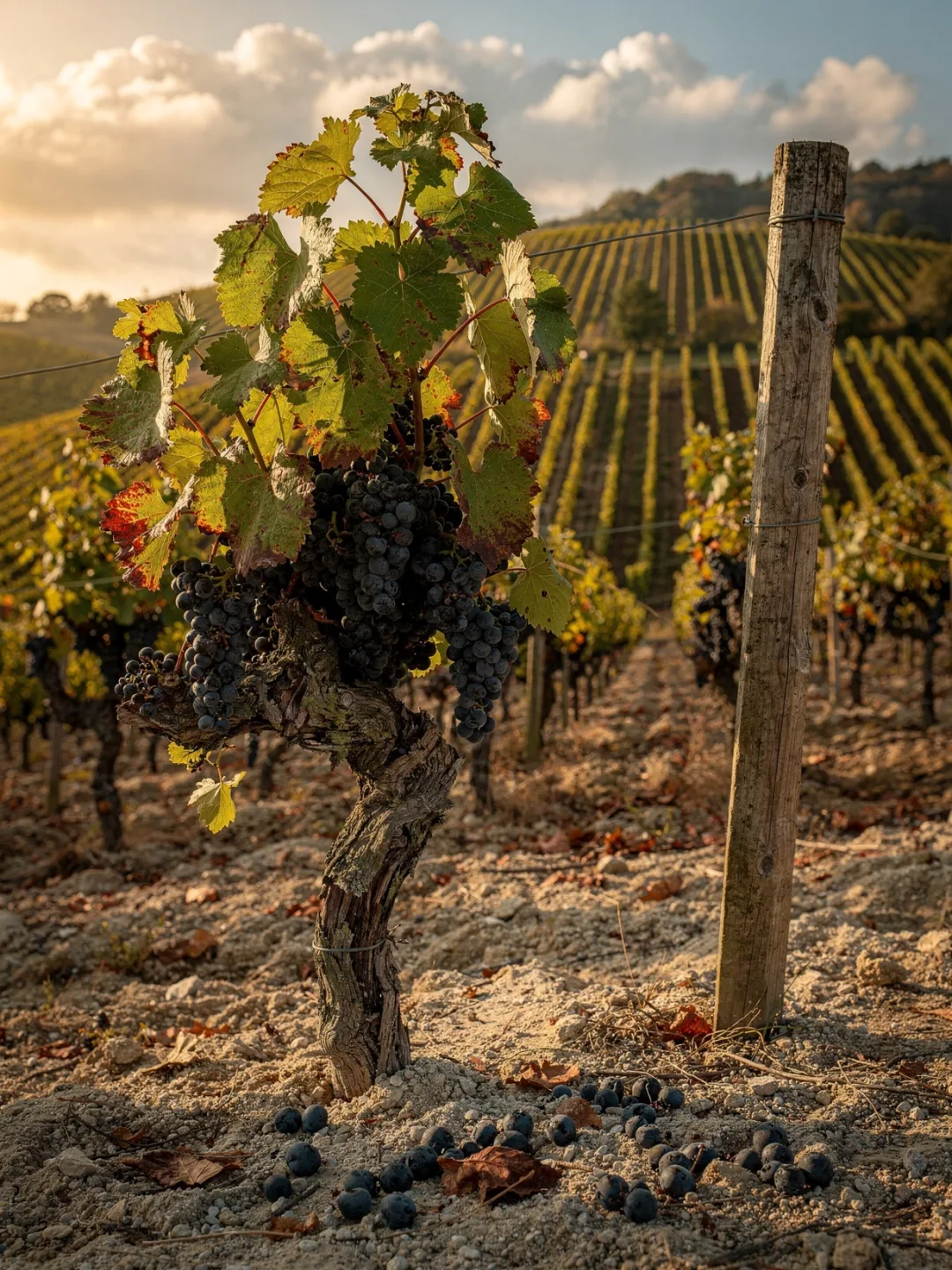
Blaufränkisch carries two names, and both tell the same story. When Napoleonic troops paid Hungarian winegrowers in blue francs instead of red French ones, the growers began selling their best wine only for the blue currency. Kék means blue in Hungarian, frankos stands for franc. That gave rise to Kékfrankos, and Kékfrankos in Burgenland became Blaufränkisch — in Württemberg, the same grape is instead called Lemberger, named after a town in what is now Slovenia. Nowhere, however, is it as central as here. In Mittelburgenland, which calls itself Blaufränkischland, it is almost the only red variety that matters.
In the glass, it shows ruby red to violet, with firm tannin — that furry sensation felt on the gums after a sip. Alongside comes an acidity that doesn't tire even in hot vintages. Typical notes include black pepper spice, dark cherry, and, depending on the soil, a smoky or mineral undertone. This blend of power and freshness gives Blaufränkisch real aging potential: good bottles from Mittelburgenland or Eisenberg easily last two decades.
Around the Neusiedlersee, a different, much younger variety dominates. Zweigelt was bred only in 1922 at the Klosterneuburg viticultural school, a cross of Sankt Laurent and Blaufränkisch, originally under the clunky name Rotburger. It ripens early, forgives less-than-perfect sites, and yields wines with juicy cherry fruit and soft tannin. That makes it less complex than its parent, but precisely for that reason it is Austria's most widely planted red variety and the backbone of the Neusiedlersee DAC.
The third variety belongs to sweet wine. When the Queen of Hungary granted Rust the right to its own brand in 1524, its vineyards were planted mainly with Furmint — the same grape behind Hungarian Tokaji. Today, Furmint has become rare in Rust. Its legacy now rests mainly with Welschriesling, whose thin skin readily takes on botrytis, the noble rot, in the autumn fog of the Seewinkel. Together with Weissburgunder and Chardonnay, it supplies the grapes for Ruster Ausbruch.