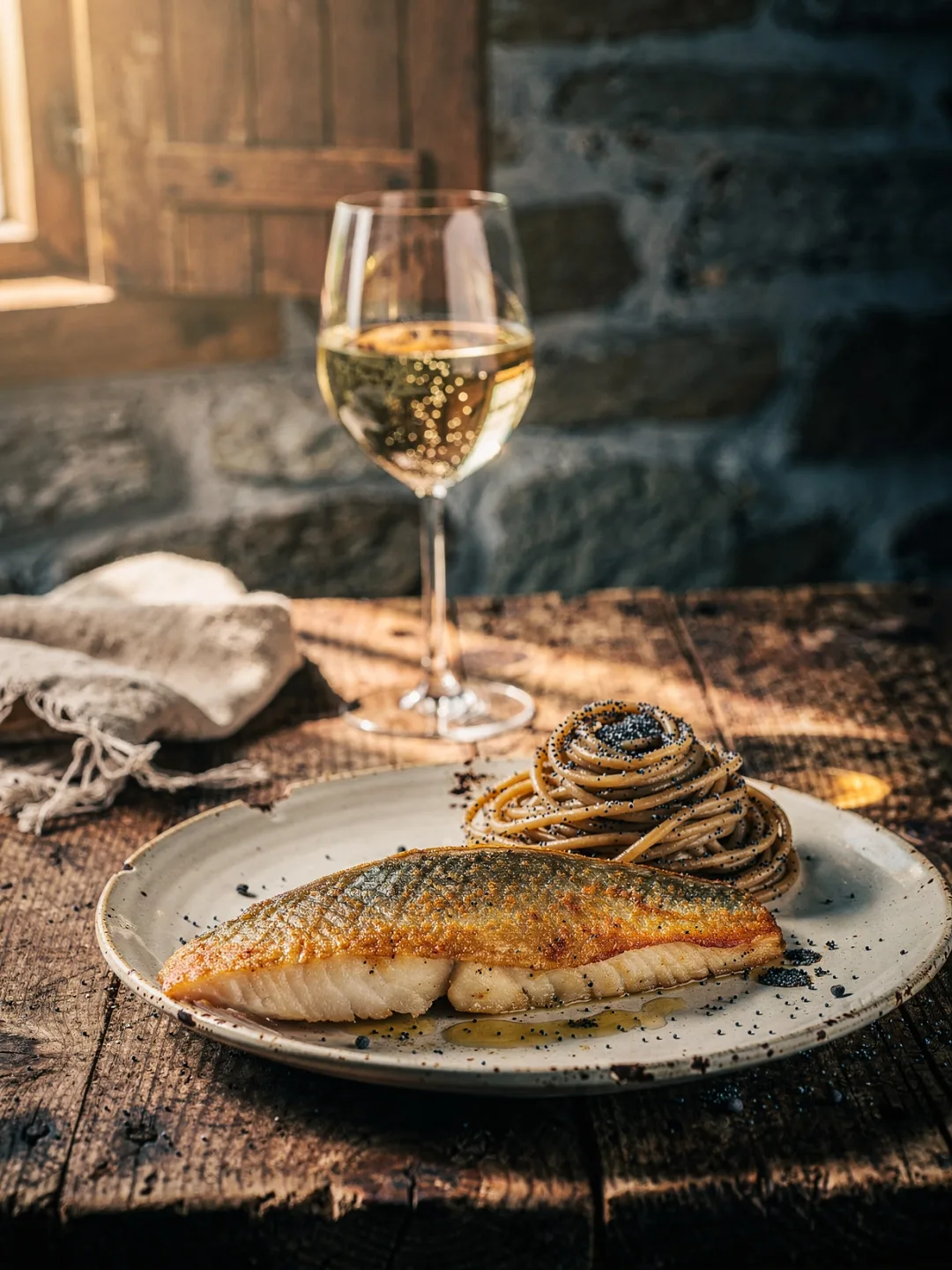
Carp and Poppy Seed
Wine & Food
The Kamptal borders directly on the southern edge of the Waldviertel, and that neighborhood is something you can taste at the table. What the Kamp carries down from the forest often ends up on the same plate as the wine grown just a few kilometers downstream.
Waldviertel carp is a case in point. The fish grow slowly in cool ponds, their flesh lean and firm, quite unlike quickly fattened farmed fish. Served baked or poached in the classic "blau" style, the acidity of a Kamptal Riesling cuts right through the mild fat, while smoked carp pairs well with a fuller-bodied village wine too, since smoke can handle a bit more body in the glass.
The second fixed point is poppy seed. Since the Middle Ages, it has grown across the Waldviertel in vast fields. In July the flowers bloom violet to white, and by autumn the seeds turn up ground into noodles, strudel, or cakes. Mohnnudeln — poppy seed noodles with roasted buttered breadcrumbs — can feel heavy without a wine to balance them. A concentrated Grüner Veltliner from a good Ried does exactly that. Its own spiciness doesn't shy away from the sweetness of the poppy seed, but holds its ground against it.
With roast pork in a caraway crust, the peppery note of the Veltliner meets a kindred spice in the dish. Caraway and the peppery tone in the glass reinforce one another. With most other white wines, they'd tend to clash instead. Hearty meat needs plenty of acidity anyway, or an oily sensation lingers in the mouth that no second sip can fix.
In autumn, the Kamptal has a third drink to offer: Sturm, the cloudy, still-fermenting grape must from the same harvest that will later become finished wine. It's enjoyed with Zwiebelkuchen — onion tart, warm from the oven and sprinkled with caraway. Sturm tastes sweet and prickles lightly on the tongue. Anyone who drinks it too fast only notices the alcohol once it's too late — a lesson that eventually catches up with everyone at a Heuriger along the Kamp.