Tasting a Veltliner
Tasting
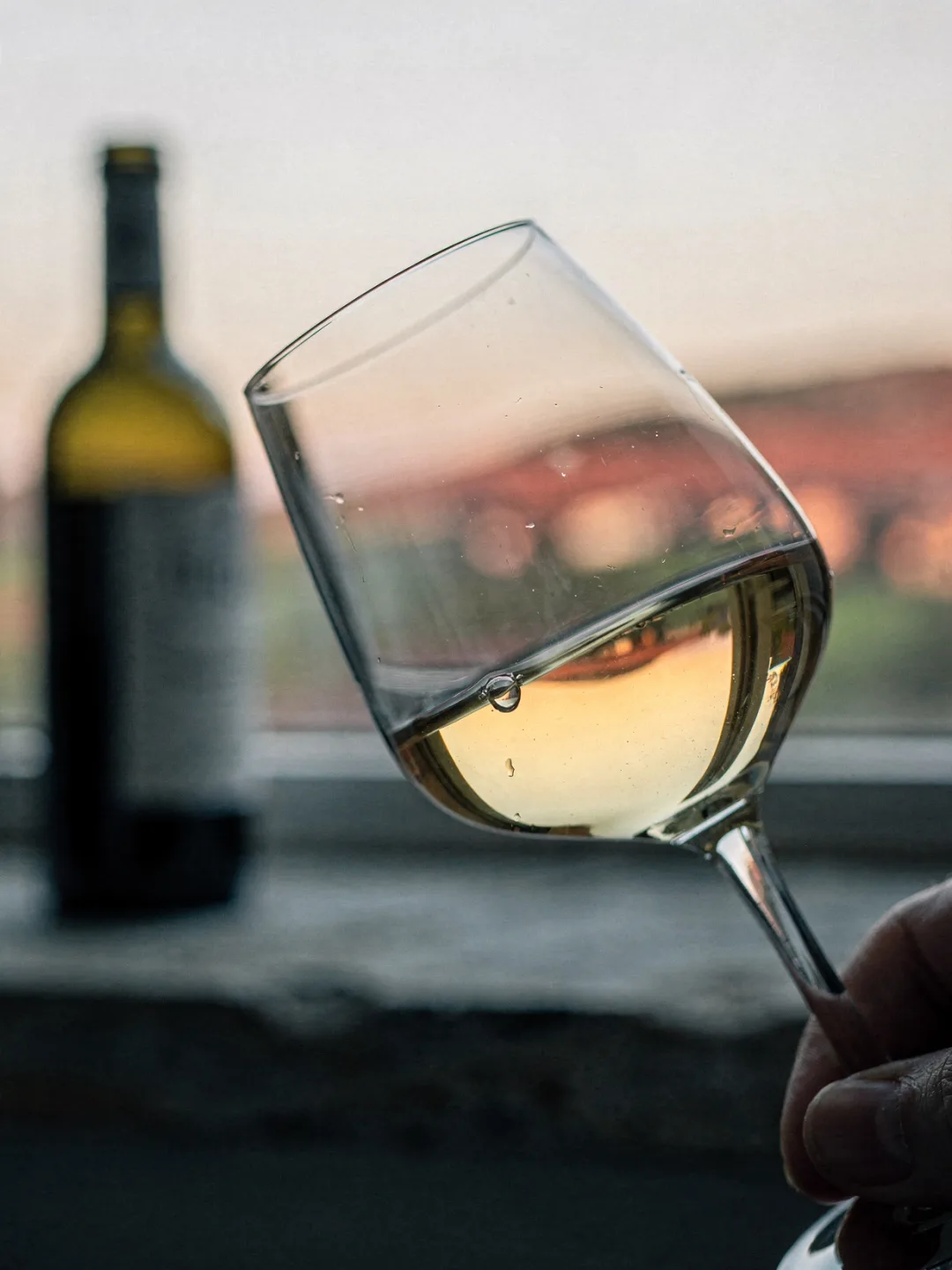
Set two glasses side by side, a Grüner Veltliner and a Riesling, both from the Heiligenstein. In color, they barely differ: pale straw yellow with a hint of green at the rim, almost like diluted apple juice. That's deceptive. What happens on the nose couldn't be more different.
Smell the Veltliner first, without swirling. Citrus usually comes first, sometimes a hint of green bean. Now swirl, and wait for what winegrowers call the peppery note: a touch of white pepper that tickles right at the back of the nose. Not everyone perceives it equally clearly, and some not at all — if you don't notice anything, it isn't the glass's fault.
With Riesling, the picture shifts completely. Stone fruit, peach above all, and beneath it a note that wine people call mineral, even though, strictly speaking, it has nothing to do with the rock itself. After a few years of bottle age, a third note often appears — smoky, almost like flint or petrol. This is a completely normal aging characteristic in Riesling, not a flaw, even if it sounds unusual.
On the palate, pay attention to the acidity first, since it's the true backbone in both wines. It runs along the sides of the tongue, gets the saliva flowing, and keeps the wine in balance even when alcohol sits at 12.5 or 13 percent. Without this acidity, the bold aromas would quickly turn heavy; with it, they stay precise. A single-vineyard wine from the Heiligenstein often still carries this tension after ten, fifteen years in the glass.
Finally, count the finish. How long does the flavor linger after you swallow? For a simple regional wine, it might be three or four seconds. For a single-vineyard wine from one of the top sites, that time can stretch well past twenty seconds — and that, in the end, is exactly what made Zöbing famous.