From Monastery to DAC
Region & History
On the terraces of Heiligenstein, Käferberg and Steinmassl, wine has been harvested for nearly a thousand years. As early as the eleventh century, farmers planted vines here, on the steep south-facing slopes above the Kamp. That was long before anyone knew the word Kamptal. The Heiligenstein itself first appears in 1280, in the property register of Stift Zwettl, as "Hellenstein" — bright stone, because the sun burned down on the bare rock as if in hell.
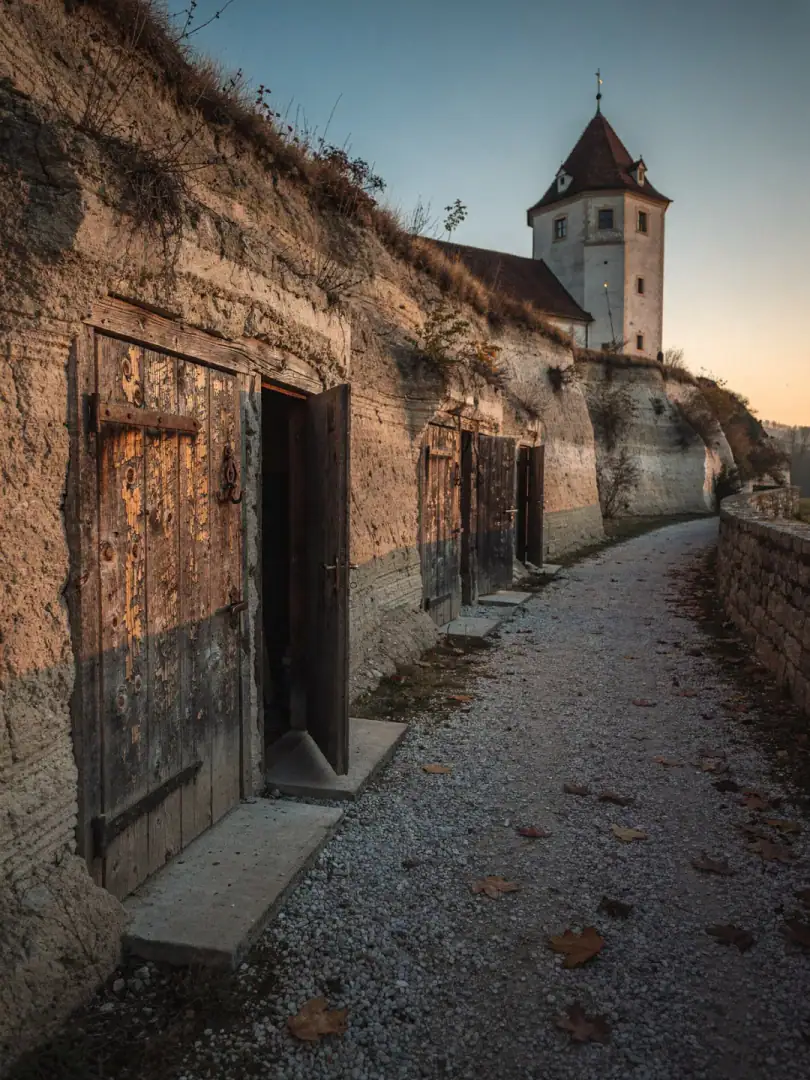
This monastic trail leads straight to Gobelsburg. In 1138, Hadmar the First of the Kuenring family founded the Cistercian monastery Stift Zwettl. As early as 1171, a Kuenring granted the monks, who originally came from Burgundy, a working estate with vineyards that are still cultivated today. Gobelsburg remained in the possession of the Kuenrings until 1314. After that, ownership passed several times to landed noble families, who transformed the building into a Renaissance four-wing complex in the sixteenth century and had it converted to the Baroque style in 1725 under the architect Joseph Munggenast.
The last secular owner was Otto Achaz Ehrenreich Graf Hohenfeld. His son Heinrich entered the monastery. In 1740, he sold the heavily indebted estate to his own monastery, Stift Zwettl, which set up its central winery there — a winery that still presses Kamptal wine to this day.
The area has only carried the name Kamptal since a wine law amendment in 1993; before that, it was grouped together with today's Kremstal under the name Kamptal-Donauland. More recent history moved faster. In 1991, ten winegrowers from Kamptal and Kremstal founded the Österreichische Traditionsweingüter, aiming to classify the best vineyard sites along the Danube. By 2010, the first fifty-three had been designated "Erste Lage." Since the 2008 vintage, Grüner Veltliner and Riesling from the Kamptal have been allowed to carry the DAC designation, and since 2024, Chardonnay, Weißburgunder and Grauburgunder as well. Starting with the 2025 harvest, this will only apply to organically or sustainably certified cultivation.
How closely old and new stand together in the Kamptal is shown by Langenlois. Since 2003, the Loisium has guided visitors through a cellar labyrinth stretching a mile and a half. Its oldest passages are estimated to be 900 years old, while the structure above ground was designed by New York architect Steven Holl, conceived as concrete root-work rising over real rock.