Pumpkin Seed Oil & Backhendl
Wine & Food
No ingredient defines Styrian cuisine quite like pumpkin seed oil. It's held protected status across the EU since 1996, and since 1998 it carries its own seal with a control number. It's pressed exclusively from the seeds of the Styrian Oil Pumpkin, in traditional oil mills of the region — a dark green, nutty oil that lands on almost every Styrian plate.
Styrian sausage salad shows how this works in practice. Extrawurst (a mild Austrian sausage), fresh bell peppers and Käferbohnen (giant runner beans) are marinated with pumpkin seed oil and apple vinegar. That same nutty, grassy note meets the green pepper character in the glass: a Sauvignon Blanc from Südsteiermark amplifies the aroma of the oil rather than fighting against it.
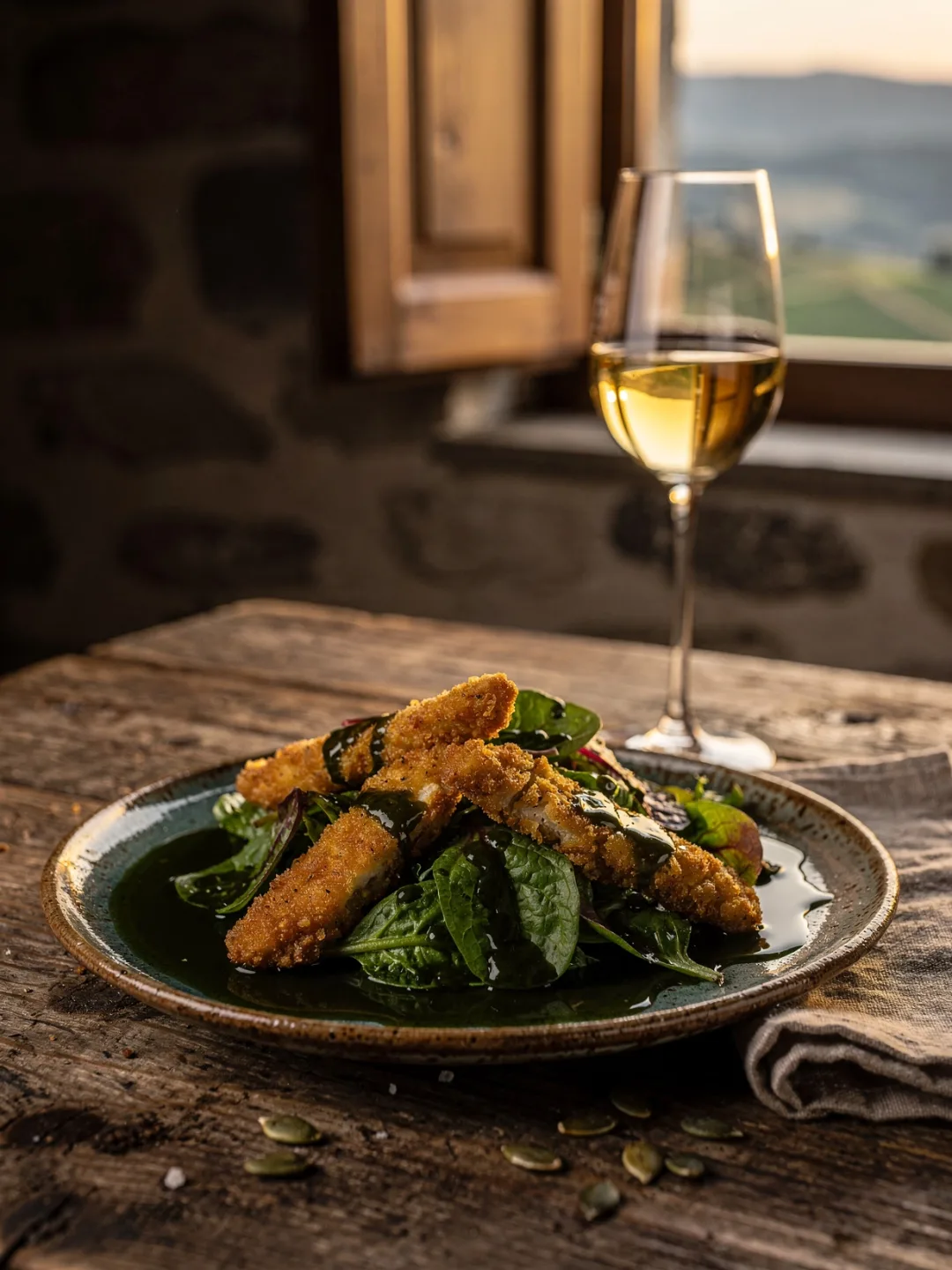
Backhendlsalat consists of crispy fried chicken served over lettuce, also dressed with pumpkin seed oil vinaigrette. Here, acidity is the key weapon against the richness of the breading. A young regional wine from Vulkanland or a chilled Schilcher cuts through more cleanly than any heavier white wine. Both bring minimal alcohol and plenty of freshness to the table.
The Buschenschank is where all of this comes together. Since the Patent of 1784, Styrian winegrowers have been allowed to serve their own wine alongside cold Brettljause platters without needing a full restaurant license. Around two hundred and ten such establishments still operate this way today—with speck, cheese, bread and a jug of Schilcher or Steirische Klassik on the table.
For those who prefer something richer, a Große STK Lage is the way to go. Its density and longer aging can stand up to heartier dishes like braised game from the Styrian forests. This proves that the same grape variety pairing beautifully with a light sausage salad in summer can hold its own in winter too—as long as the kitchen doesn't forget the pumpkin seed oil.