On a Sauvignon
Tasting
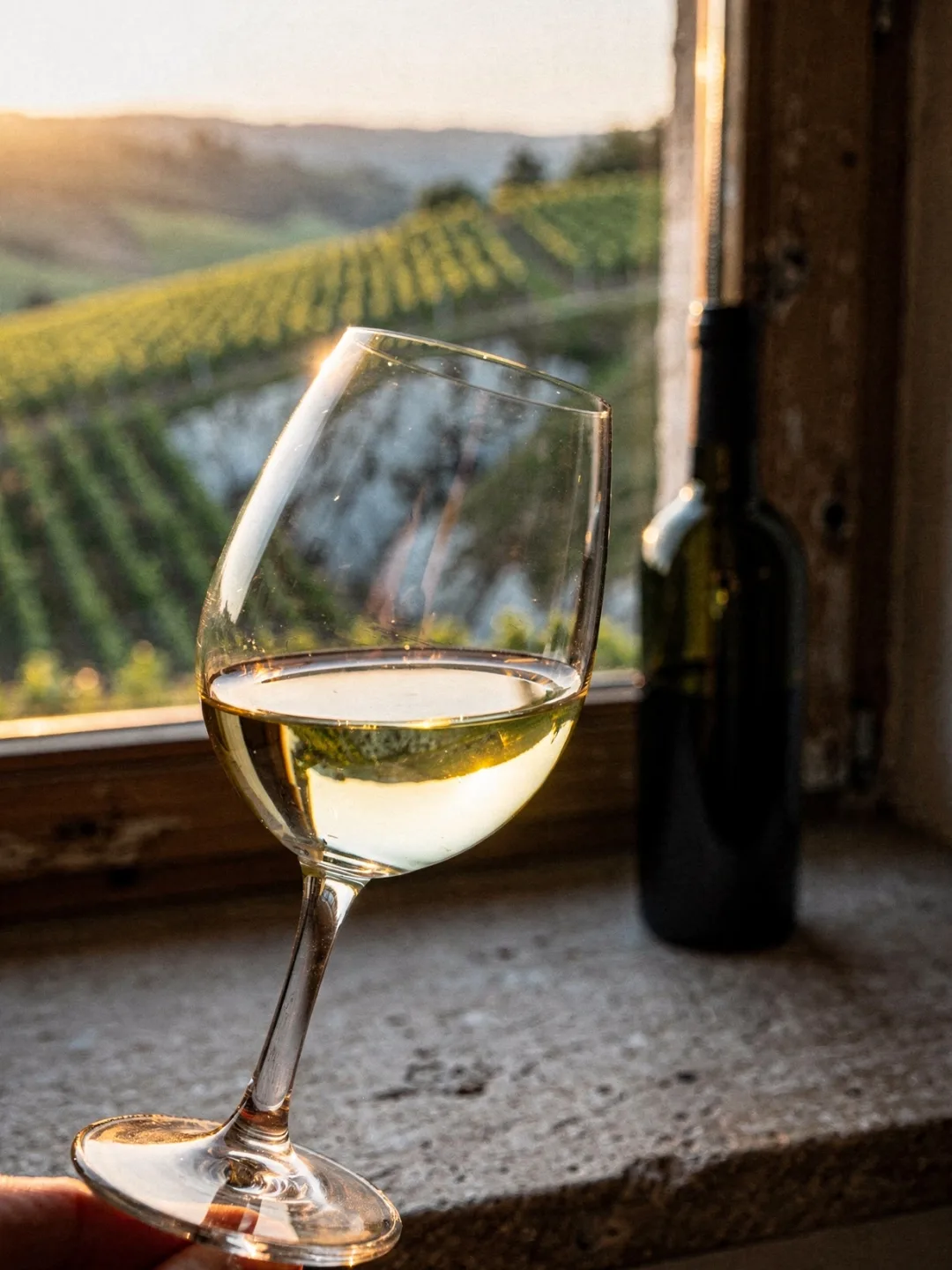
Take a young Sauvignon Blanc from South Styria and hold the glass up to the light. The color is pale green to straw yellow, often with an almost transparent shimmer at the rim — a sign of youth, and of the cool nights in which these grapes ripened.
Sniff twice, once calmly, once after swirling. Gooseberry usually comes first, then elderflower, and somewhere in between a hint of green bell pepper. Chemists trace this scent back to a compound class called methoxypyrazines, also found in real bell peppers. Some wines reveal a slightly saline, almost smoky note alongside this. Many tasters attribute it directly to the Opok soil the vines grow on.
In the mouth, acidity is the first thing you notice. It hits the sides of the tongue with a lively, sometimes almost biting energy. This freshness is exactly why Styrian Sauvignon Blanc is compared internationally with the best dry white wines in the world — not for its power, but for its precision.
Set a Schilcher beside it, and the contrast is immediate. The color ranges from delicate onion-skin to vivid pink, depending on how long the maceration lasted. On the palate follows an acidity that can make even experienced tasters wince, along with redcurrant, raspberry and a hint of rosehip — a wine that flatters nothing, and precisely because of that, has earned its fans.
Finally, count the seconds after swallowing. A simple Gebietswein might hold its flavor for five to ten seconds. A Große STK Lage from an estate like Tement or Sattlerhof holds it far longer, with a finish of ripe fruit and mineral spice. This is exactly how you recognize that this variety is also made for the cellar, not just for a quick summer sip.