From Pickern to DAC
Region & History
The Celts were already pressing wild grapes here some 2,400 years ago. One of those vines is believed to be an ancestor of Blauer Wildbacher, which still grows only in Styria today. The Romans turned this sideline into a proper trade. The first document to directly mention viticulture in Lower Styria dates to the year 890 — and from then on, the trail never goes cold.
In the Middle Ages, monasteries took over the business and spread the vineyards far beyond the borders of today's state. In 1784, Emperor Joseph II granted farmers a right that lives on to this day: the Buschenschank Patent allowed them to sell their own wine directly, without needing a tavern license. Around 210 Buschenschanken still do exactly that.
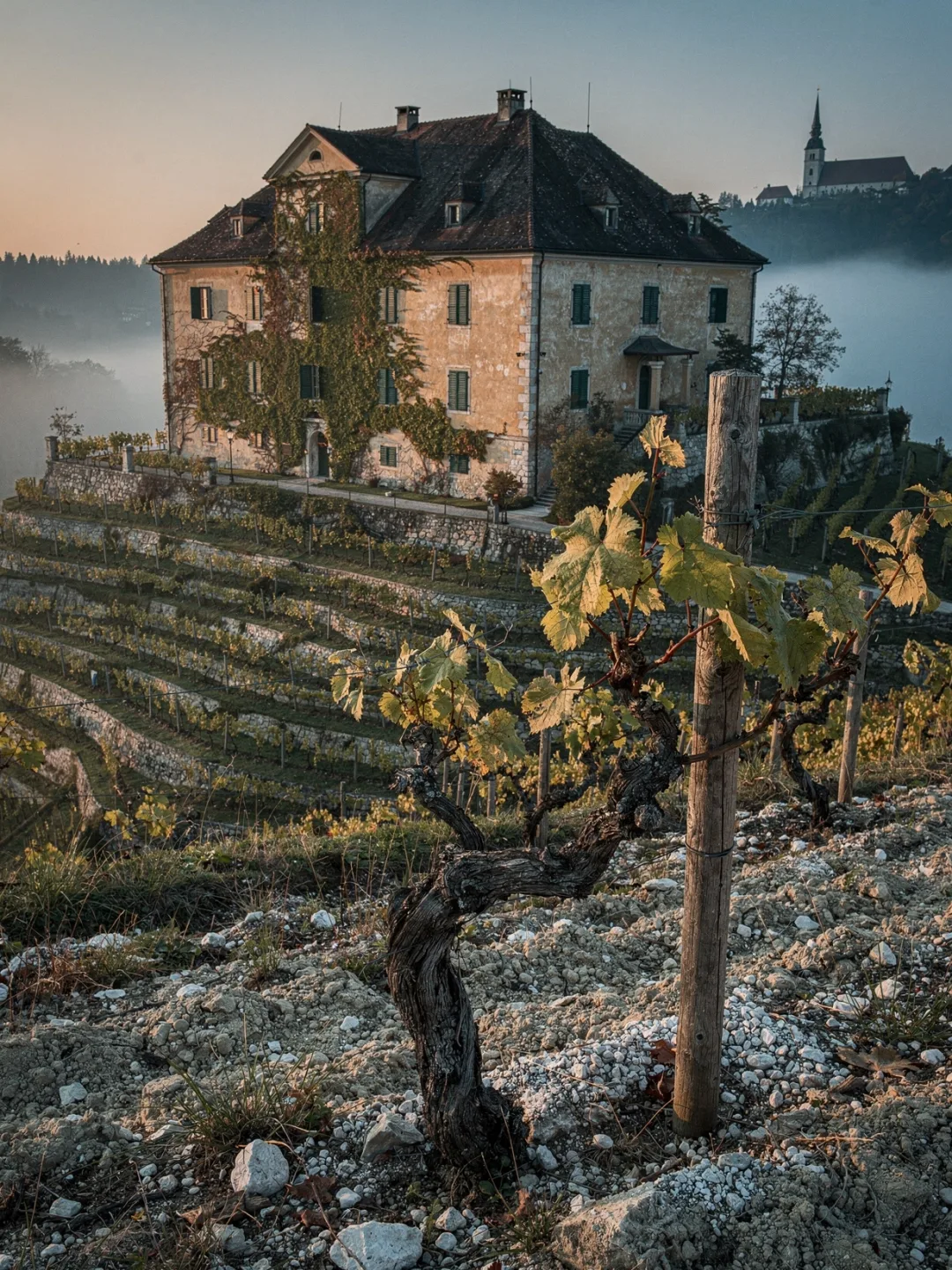
One man alone brought Styrian wine into the modern age. In 1819, Archduke Johann founded the Agricultural Society for Styria. In 1822, near Pickern by Marburg — today Pekre near Maribor, his estate now called Meranovo — he established a model estate where cellar masters from several countries trialed unfamiliar grape varieties from France and Germany. This is how Chardonnay and Sauvignon Blanc arrived in the region and stayed. Most of the 425 grape varieties counted in 1854, however, have long since been forgotten.
Then came catastrophe in three waves: powdery mildew in 1850, downy mildew in 1878, and around 1880 the phylloxera louse from America, which destroyed nearly all the roots. Hermann Göthe, director of the fruit and wine school founded in Marburg in 1872, bred the rootstock Rupestris Göthe No. 9 as the rescue — many Styrian vines still grow on it today, grafted against the louse's will.
Just as reconstruction succeeded, the Treaty of Saint-Germain in 1919 cost Styria a third of its territory: Lower Styria, home to most of the historic vineyards, fell to the Kingdom of Serbs, Croats and Slovenes. What remained was a small rump region that only found its footing again after 1945.
The real turning point came from seven cellars. In 1986, the estates Gross, Polz, Sattlerhof, Tement and Winkler-Hermaden, together with two other producers, founded an association dedicated to quality over quantity, making Sauvignon Blanc the flagship variety. In 1993, they coined the term Steirische Klassik for it. With the 2018 vintage, Südsteiermark, Vulkanland Steiermark and Weststeiermark each received their own DAC appellations. Since 2023, around 580 individual vineyard sites have also been legally defined.