Acidity Needs Confinement
Glassware
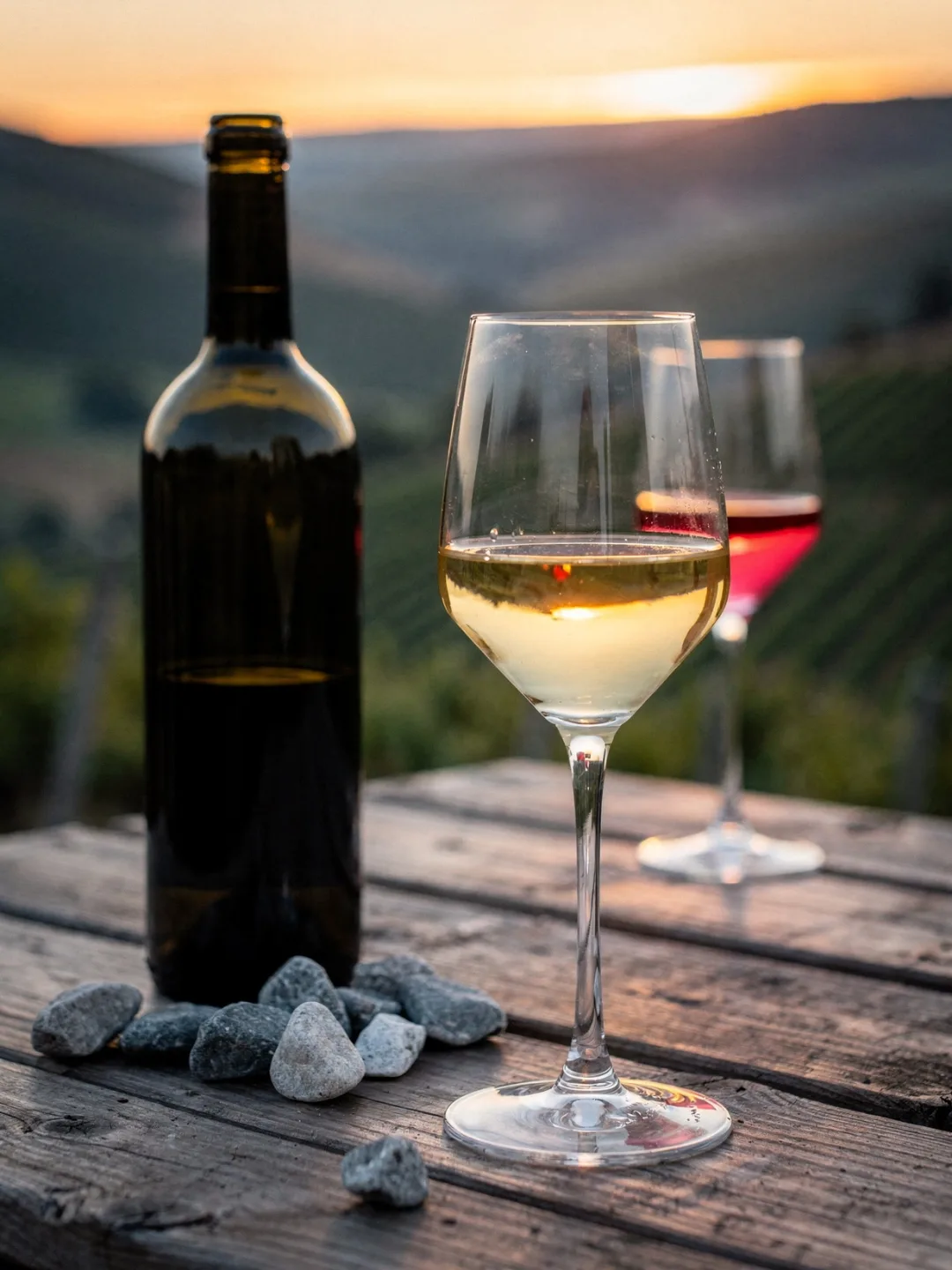
A glass determines how much aroma reaches you before the wine even touches your tongue — and with a wine as aromatic as South Styrian Sauvignon Blanc, that makes a real difference. Gooseberry, elderflower and green bell pepper are volatile aromas. A glass that's too wide lets them escape before you even get your nose in.
That's why many Styrian winemakers reach for a narrow, tall white wine glass. Austrian glassmakers developed this shape specifically for aromatic, cool-climate white wines like Riesling, Grüner Veltliner and Sauvignon Blanc. The narrow bowl concentrates the aroma on its way to the nose instead of letting it disperse into the room. At the same time, it emphasizes the wine's mineral character.
When it comes to temperature, restraint pays off. Eight to ten degrees Celsius (46–50°F) is right for a young Sauvignon Blanc, cooler than for most other white wines. Both the acidity and the grassy-green notes turn overbearing quickly if the wine is too warm. Served too warm, the very same wine suddenly tastes of alcohol instead of gooseberry.
Schilcher from West Styria demands even more chill. Six to eight degrees Celsius (43–46°F) is right, almost like a rosé straight from the fridge. Its acidity is so pronounced that at room temperature it turns cutting rather than lively. A slightly more open glass than for Sauvignon Blanc helps here: it gives the raspberry and redcurrant fruit room to register at all alongside the acidity.
And then there's the question of how long a wine can wait: most Styrian white wines are made for quick drinking, best enjoyed young and fresh. Only the Große STK Lage tolerates decanting and a few years in the cellar — made from vines at least fifteen years old, with an aging potential of ten years. Everything else belongs in the glass while it still smells like the harvest.