Platters and Roasts
Wine & Food
Around Gumpoldskirchen and Baden, a distinctive way of eating and drinking has endured: the Heurige, also known as Buschenschank. Here, winegrowers pour their own young wine, paired with cold and warm dishes from their own kitchen. What lands on the table is hearty and simple, and the wine alongside it usually comes from the winegrower's own vineyard.
The classic Brettljause brings speck (cured bacon), spread, farmhouse bread and a piece of cheese, all served on a wooden board. A young, dry Zierfandler suits it better than any Rotgipfler could. Its fine acidity cuts through the fat of the speck, while a heavier wine would simply seem sluggish next to the platter.
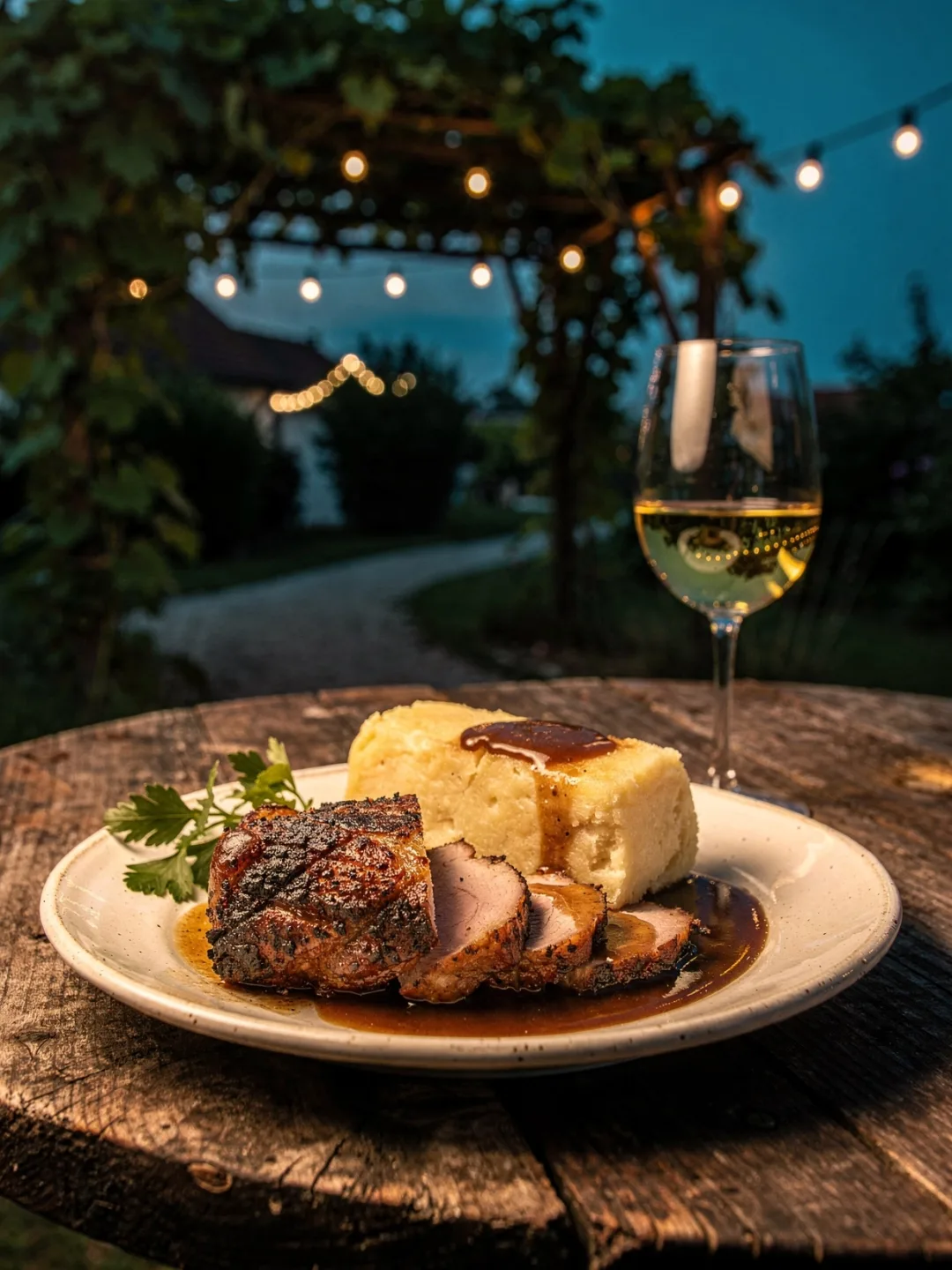
With Schweinsbraten (roast pork), the other classic of Heurigen cuisine, the balance shifts the other way. The crackling crust and juicy meat need a counterweight, which a powerful Rotgipfler or a Spätrot-Rotgipfler provides with its high alcohol and nutty richness. Anyone wanting red wine instead should reach for a young St. Laurent, whose fine tannin accompanies the meat rather than overpowering it.
Modern Heurigen, like that of Johanna Gebeshuber in Gumpoldskirchen, named Heurigenwirtin (Heuriger host) of the Year in 2021, have carried this tradition forward. Slow Food meets regional, organic ingredients there, and the glass still holds the same four varieties that have carried the region for decades: Zierfandler, Rotgipfler, St. Laurent and Blauburgunder.
One rule holds true across all cuisines. Fat and salt make a full-bodied wine more approachable, which is why Rotgipfler pairs so well with roast pork. Sweet dishes, on the other hand, call for a wine that brings its own residual sweetness to the table — otherwise a young, dry Zierfandler can taste thin and sour next to a sweet pastry dessert.