Nut, Acidity, Length
Tasting
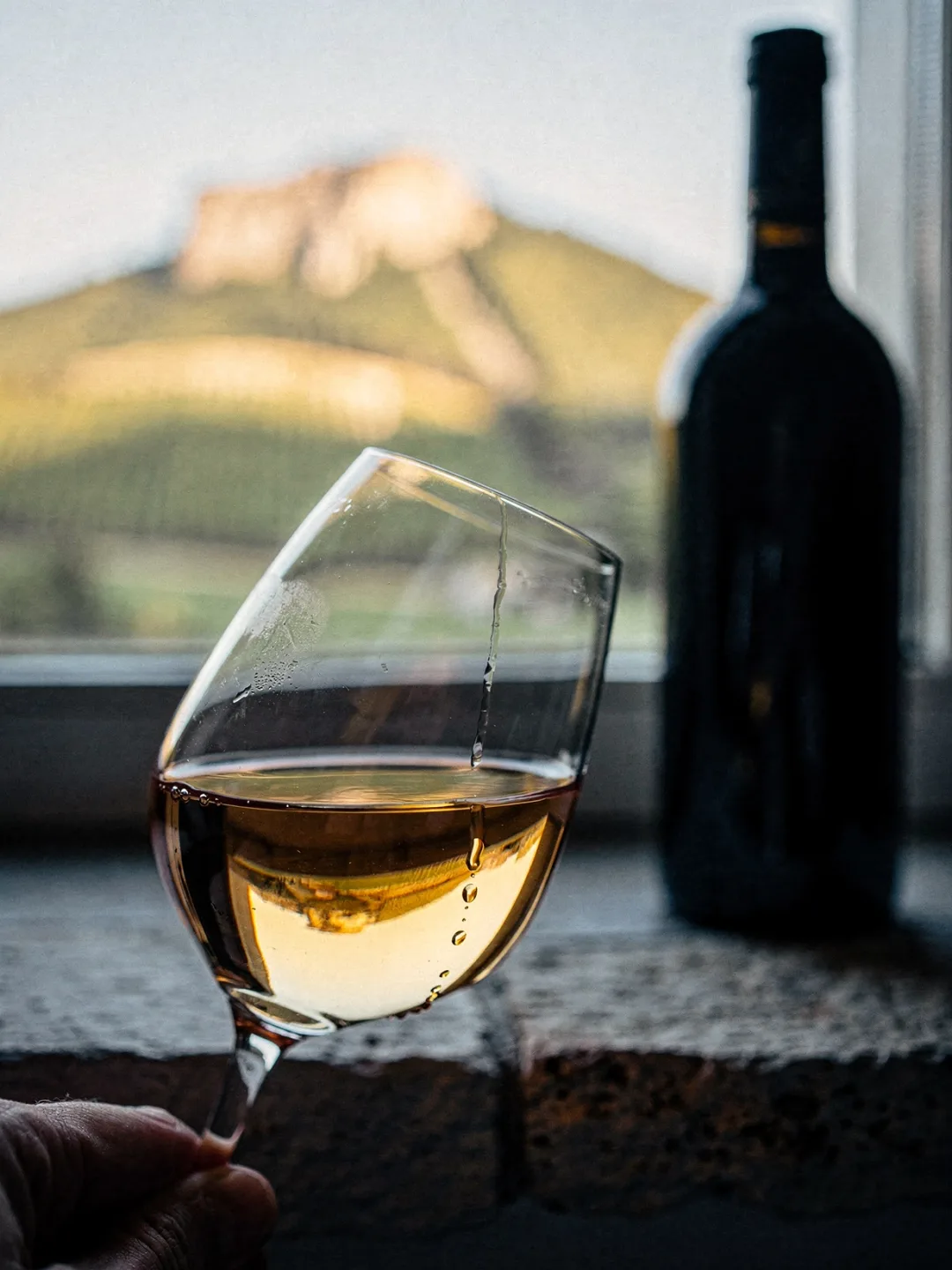
Take a glass of Spätrot-Rotgipfler and hold it against a white sheet of paper. Young, the wine glows a vivid yellow, almost with a greenish tinge at the rim, turning more golden with age. This depth of color comes from the Rotgipfler component: it brings extract and density, far more than an ordinary white wine would.
Smell it first without swirling. Usually, ripe pear or apple comes through first, sometimes a hint of honeydew melon. Only after swirling does the second layer open up: roasted nuts, pistachio, a touch of almond marzipan. This nutty note in particular is considered the signature mark of Zierfandler — once you've caught it in a glass, you'll recognize the variety everywhere afterward.
On the palate, the body stands out first. Rotgipfler brings plenty of alcohol and little acidity, while Zierfandler balances this out again with its own, finer acidity — which is why the blend tastes rounder yet still fresh, rather than simply heavy. A long, slightly salty finish lingers on the palate, which many tasters associate with the limestone soil of the site.
With St. Laurent, the tasting experience runs quite differently. The color is paler than most red wines, almost translucent, with a violet sheen in its youth. Dark cherry dominates the nose, sometimes accompanied by a floral note reminiscent of violets. The tannin is fine, barely perceptible on the gums, quite unlike the more robust red varieties.
Taste both Thermenregion wines side by side, and the difference becomes clear right away: the white Spätrot-Rotgipfler thrives on power and nuttiness, the red St. Laurent on finesse and fruit. Both nonetheless carry the same limestone soil in the glass, just expressed in entirely different ways.