Pepper, Acidity, Edge
Tasting
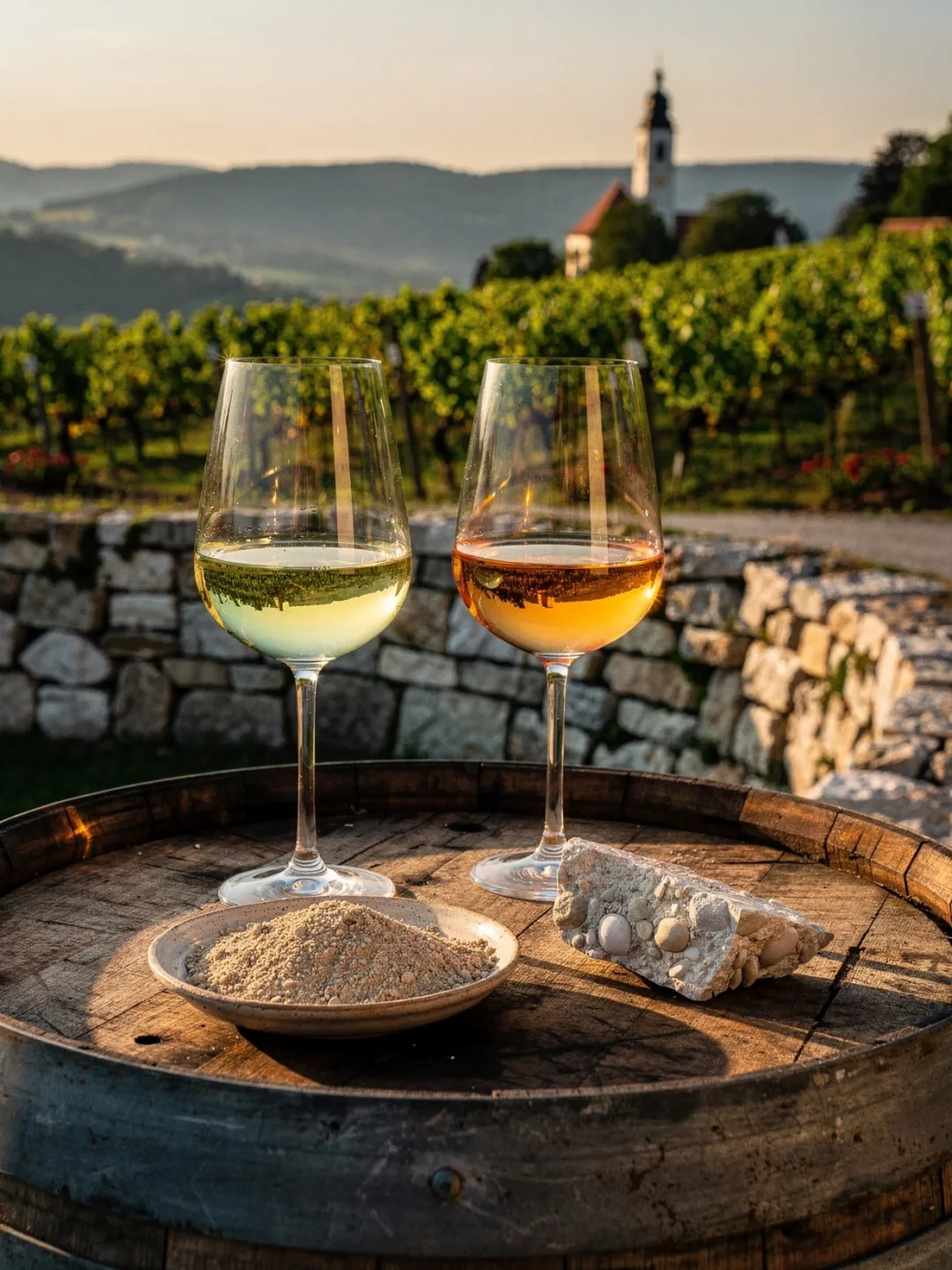
The color reveals something even before the first sip. A Traisental Grüner Veltliner appears pale, almost greenish-yellow, without the golden tones seen in warmer wine regions. This is an early sign of the cool nights that shaped this wine. You taste the coolness before you even understand it.
The first impression on the nose is almost always the same: white pepper, followed shortly by green apple and citrus zest; sometimes a hint of fennel slips in between. Swirl the glass, and you'll also pick up a slightly dusty note that many tasters in the valley attribute directly to the loess, even though, strictly speaking, that can never be proven.
On the palate, the structure that defines the Traisental comes through: pronounced acidity, a taut body, a finish that's more angular than soft. These wines aren't out to charm you. They want you to pay closer attention on the second sip than on the first.
With Riesling, the picture shifts a bit toward stone fruit, apricot, yellow apple, with at least as much acidity. The mineral note becomes more pronounced, almost salty, and often lingers on the finish for minutes, long after the sip has been swallowed.
Anyone tasting both varieties side by side quickly notices the difference in personality. The Veltliner is the direct one, spicy and quickly understood. The Riesling takes a bit longer to open up. But it also holds up longer, both in the glass and in the cellar.