Pikeperch and Apricot
Wine & Food
The Danube shapes the Wachau's vineyards, and it just as surely shapes what traditionally ends up on the table. Fishermen still pull pikeperch, catfish, and the rare Danube salmon (huchen) from the river today. All three appear on menus in the taverns between Melk and Krems. It's far from a rarity.
A delicately pan-fried pikeperch fillet pairs especially well with a Riesling Federspiel. Its crisp acidity cuts through the mild butter the fish is usually cooked in, without masking its subtle flavor. With heartier catfish, often served with a herb crust, a Grüner Veltliner Smaragd works just as well — its pepper meets the pepper in the crust, and two similar aromas merge into one seamless whole.
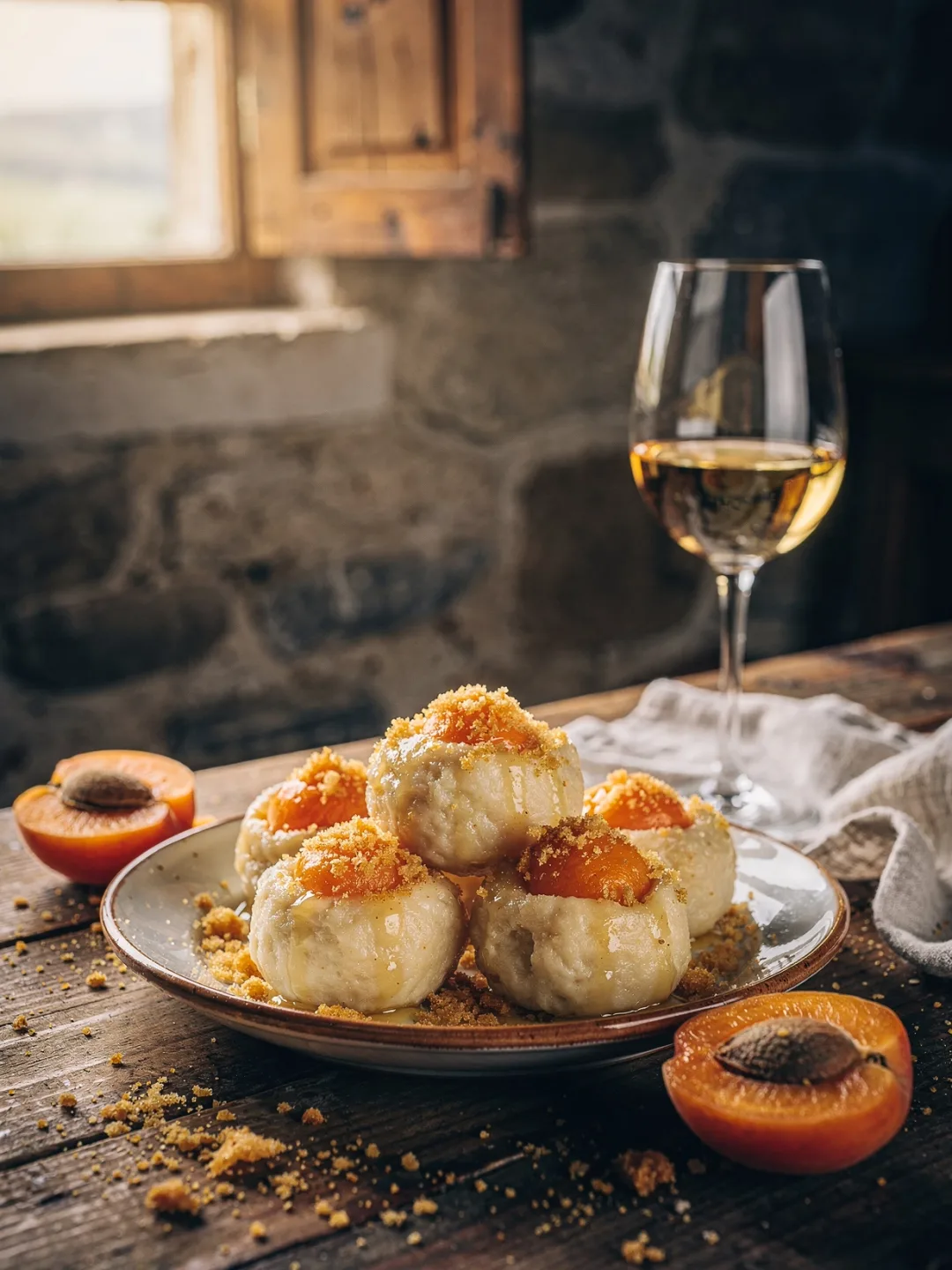
Beyond fish and wine, a third ingredient defines the Wachau: the apricot. Since 1996, the Wachauer Marille has carried the EU seal for protected designation of origin, awarded to a fruit found nowhere else with such intensity. Warm days ripen it, cool nights lock in its acidity, much like the wine grown alongside it. It's used to make Marillenknödel, soft curd-cheese dough wrapped around a whole fruit, often dusted with breadcrumbs and cinnamon. A classic dish of every high summer.
No dry Grüner Veltliner suits this sweet classic, however well it otherwise pairs with the region's cuisine. Sweetness in the dish will make a dry wine taste sour and thin by comparison. A Marillenbrand, apricot brandy made from the same fruit, is a far better match. Or, for those who prefer to stick with wine, a late-harvest Muskateller with its own residual sweetness, whose floral aroma embraces the apricot rather than fighting against it.