Hand-Harvested, No Oak
Winemaking
Every bottle begins with a promise that the Wachau takes more seriously than most other regions: hand-harvesting, without exception. No producer wanting to carry the Wachau DAC seal may use a mechanical harvester, no matter how steep or flat the vineyard. No exceptions, anywhere. Nearly all Wachau wines, moreover, are made dry — residual sweetness is the exception, not the rule.
How ripe the grapes are at harvest later determines their classification as Steinfeder, Federspiel or Smaragd. Because this ripeness must come purely from the sun, any addition of sugar is strictly forbidden the moment a wine is meant to carry the name of a single vineyard. This sets the Wachau apart from many other white wine regions, where chaptalization is permitted in weak vintages. No added sugar helps out here. The grape has to deliver whatever ends up in the glass.
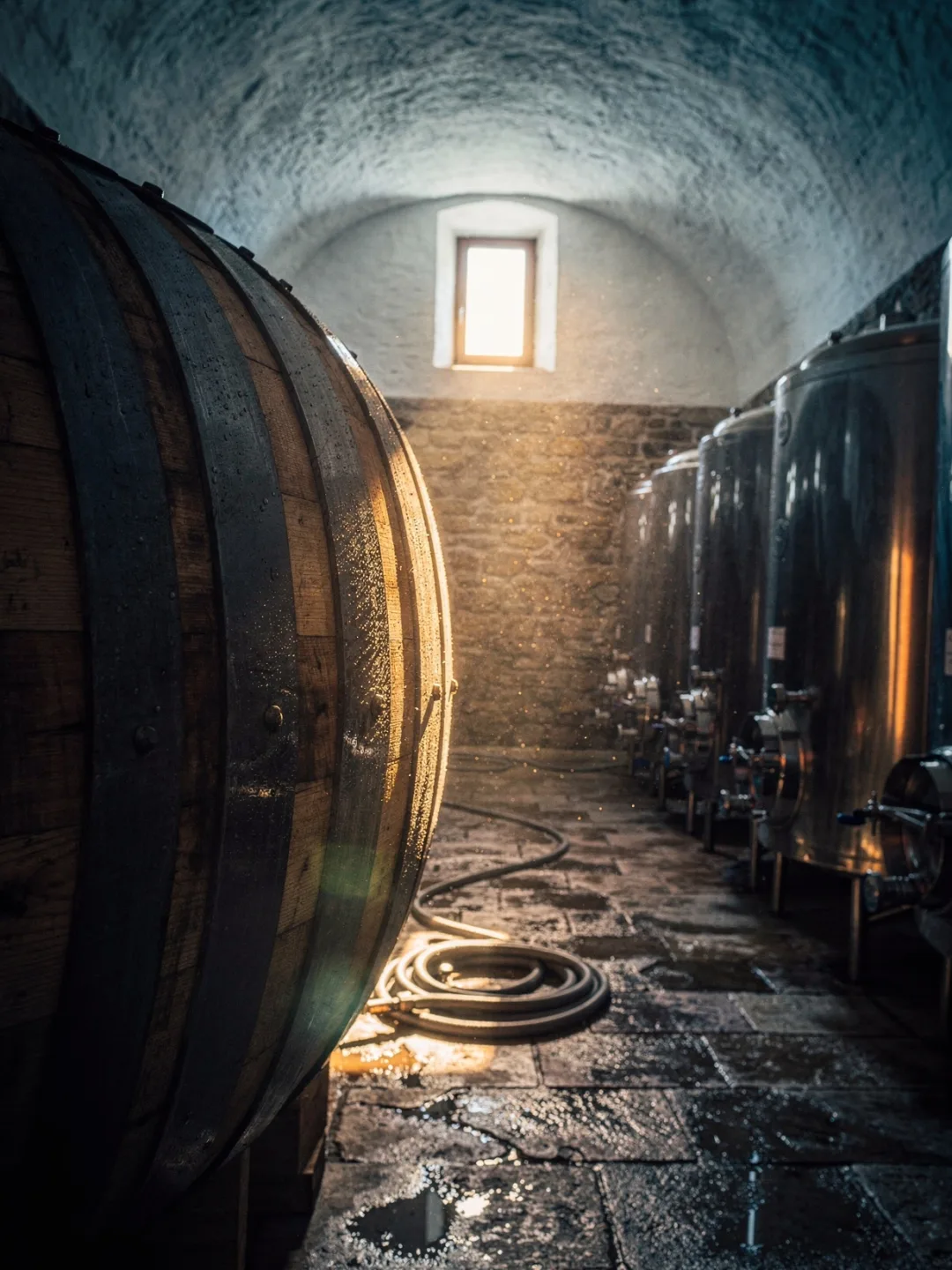
From there, paths diverge in the cellar. Most producers ferment in spotless stainless steel tanks at cool temperatures, to protect the delicate fruit and peppery aroma of Grüner Veltliner. Others, often the most tradition-steeped houses, still rely on large, old wooden casks known as Fuder, which impart almost no flavor and let the wine breathe only slowly. A new, small barrique, by contrast, remains the exception — its vanilla and toasty notes would simply overwhelm the delicate pepper.
For an Ortswein bearing the name of a village, the DAC rules even explicitly require that no oak character be detectable at all. The wine is meant to show its origin, not the barrel. Nothing else counts here. Only at the more permissive Gebietswein level is new barrique allowed at all — a deliberate contrast built into the same system.