Cool Meets Warm
Climate
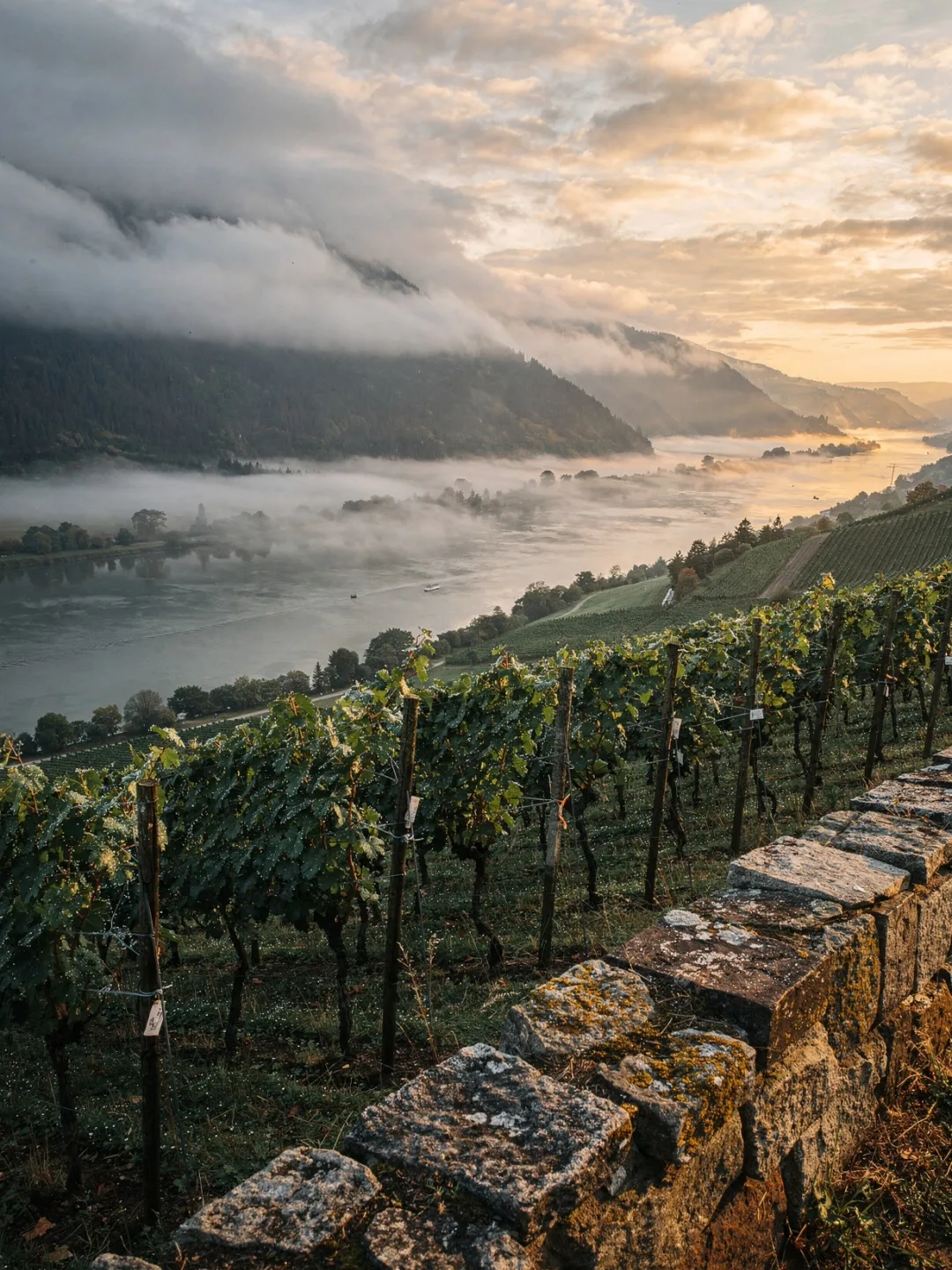
No other Austrian wine region sits at such a sharp weather divide as the Wachau. From the east, warm, dry Pannonian air pushes into the valley from the Hungarian plain. From the north, cool, often damp air spills down the steep side valleys from the Waldviertel plateau. The two meet above the narrow, 33-kilometer stretch of the Danube between Melk and Krems. Nowhere else does this exact clash of climates occur.
This is especially noticeable in the weeks before harvest, when the narrow valley traps Pannonian warmth by day while cool downslope wind from the Waldviertel pulls temperatures down at night. For the grape, this swing is a gift. By day it builds sugar and aroma; by night the cool air locks in acidity instead of letting it evaporate. Grüner Veltliner and Riesling owe their freshness to this rhythm, even in hot vintages. It's no accident.
The river itself acts as a buffer, its broad surface storing warmth in summer and releasing it slowly in autumn, which softens the worst frosts and extends the growing season. The vineyards climb to roughly 450 meters above sea level, some 250 meters above the water's surface. With every meter of elevation, the temperature drops a little further. Growers working the upper terraces therefore harvest later, and end up with lighter alcohol, than those down by the river.
It's precisely this interplay of warm days and cool nights that allows three quite different ripeness levels to be harvested in the same vintage, often from neighboring rows in the very same vineyard. The range runs from the light Steinfeder to the powerful Smaragd. Without this back-and-forth, the Wachau's three-tier classification simply wouldn't exist.