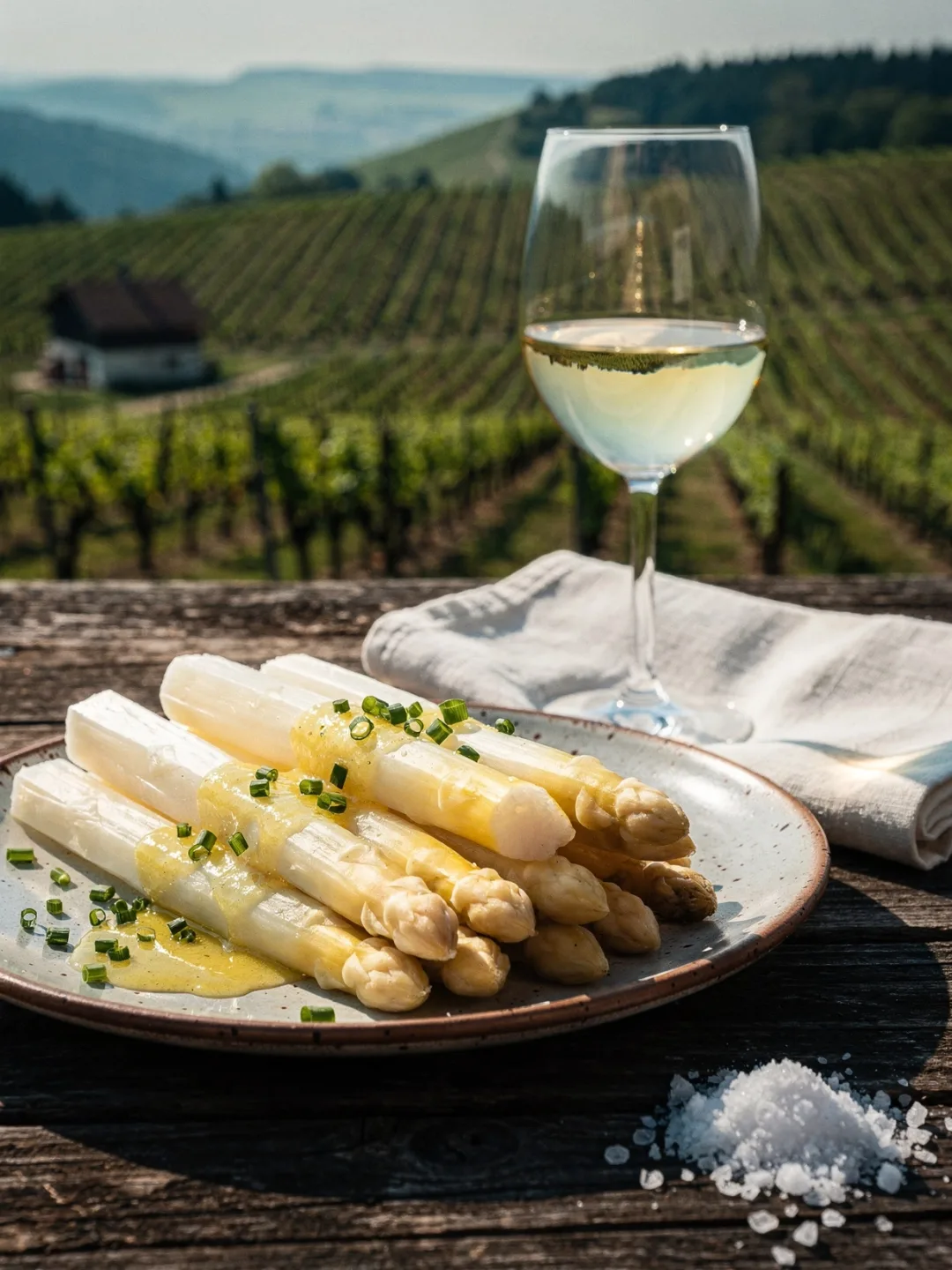
Asparagus meets the peppery note
Wine & Food
No vegetable is considered trickier to pair than asparagus among sommeliers — its slightly bitter, sulfurous edge throws many wines off balance. As it happens, Marchfeldspargel, registered as a protected geographical indication across the EU since 1996 and measuring precisely 22 centimeters, has its perfect match right on its doorstep. That match is Grüner Veltliner from the Weinviertel. Its green, faintly herbaceous aromatics meet the asparagus on equal footing, rather than fighting against it.
With Weinviertel game, the rule flips entirely. Venison or wild boar from the hills bring fat and robust seasoning, and a lean Klassik ends up feeling thin by comparison. This is where a Reserve comes into play, denser in structure and with noticeable alcohol. Or better yet, a Zweigelt from the western part of the region, around Retz and Haugsdorf.
Blunzn, the hearty blood sausage that's never missing from a Weinviertel Heuriger table, pairs surprisingly well with Grüner Veltliner too — provided it carries enough acidity. That acidity cuts through the fat, much like the mustard traditionally served alongside it. Niederösterreichischer Senf isn't just a footnote here; it's genuinely grown in the region, and its heat gets along with the peppery kick in the glass better than you'd expect.
To kick off an evening, rather than accompany a meal, a glass of Sekt is often the choice in the Weinviertel. Roughly three-quarters of Austria's base wines for sparkling wine production come from the area around Poysdorf. Many Heurigen pour it before the meal itself, to open up the palate.
In the end, it comes down to a simple rule of thumb. Richer, spicier food calls for more structure in the glass — Reserve rather than Klassik, red rather than white. Delicate vegetables, on the other hand, like asparagus, need freshness above all and should never be overwhelmed by the wine.