Chasing a peppery note
Tasting
Hold a glass of Weinviertel DAC against a sheet of white paper. The color is even prescribed by regulation: pale yellow to green-yellow, never golden, since gold would betray ripeness or oak contact that the Klassik tier isn't entitled to. Only a mature Reserve moves toward gold over years in the cellar.
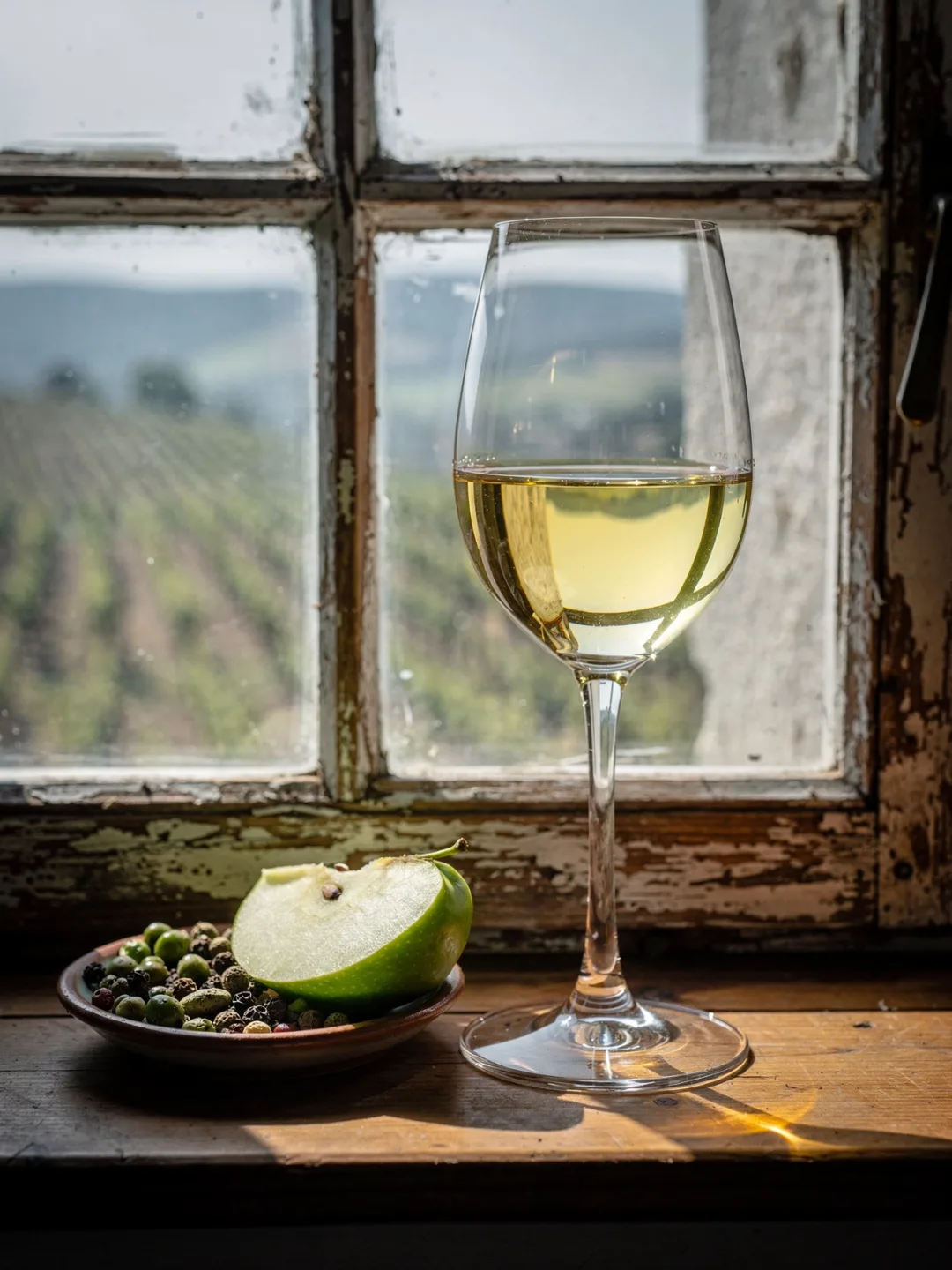
Smell twice — once with the glass still, once after swirling. In the still glass, citrus fruit and green apple arrive first, sometimes a hint of white blossom. Only after swirling comes what makes this variety so unmistakable: a spicy, almost sharp note. Many recognize it instantly as the peppery note — green in a young wine, sometimes black in more powerful vintages.
This is caused by the aroma compound rotundone, the very same one that gives Syrah its peppery character. Grüner Veltliner from the Weinviertel can contain up to seventeen times the perception threshold of it — enough that almost no one misses it. Almost no one: around twenty percent of people simply lack the olfactory receptor for it. They taste the same wine nonetheless, just without any of that sharpness. So if you find nothing in the same glass, it's not a poor palate — just a different nose.
In the mouth, pay attention to the acidity, felt along the sides of the tongue, fresh and direct, while tannin is absent from this white wine, since its structure comes from acidity and extract alone. Alongside this there's often a slightly oily, almost bean-like sensation on the palate, which connoisseurs liken to fresh green string beans — a second, lesser-known marker of the variety.
Finally, count the finish. A simple Klassik fades out after a few seconds. A Große Reserve, allowed a full year to mature in the cellar, often carries its fruit and peppery note for half a minute longer. That's a difference the regulation doesn't require, but anyone can verify it in the glass.