Loess, Phylloxera, Pepper Spice
Region & History
Dig deep enough in a cellar lane near Stillfried, and you'll hit a find older than any written record. In a Bronze Age settlement pit, archaeologists discovered grape seeds clearly identified as belonging to the cultivated vine Vitis vinifera, dated to around 800 BC — the oldest evidence of winegrowing in Austria. Wine, it turns out, was no stranger here long before the Romans arrived.
The Romans brought more order to winegrowing, even though what is now the Weinviertel was merely borderland back then, north of the Danube, on the edge of free Germania. It wasn't until the Middle Ages, when settlers established themselves permanently in the fertile loess hills, that something lasting took shape. Evidence of this survives in Poysdorf: the Hermannschachern vineyard is first documented in 1338 and is considered Austria's oldest named vineyard site. In 1582, Emperor Rudolf II elevated the up-and-coming town to market status.
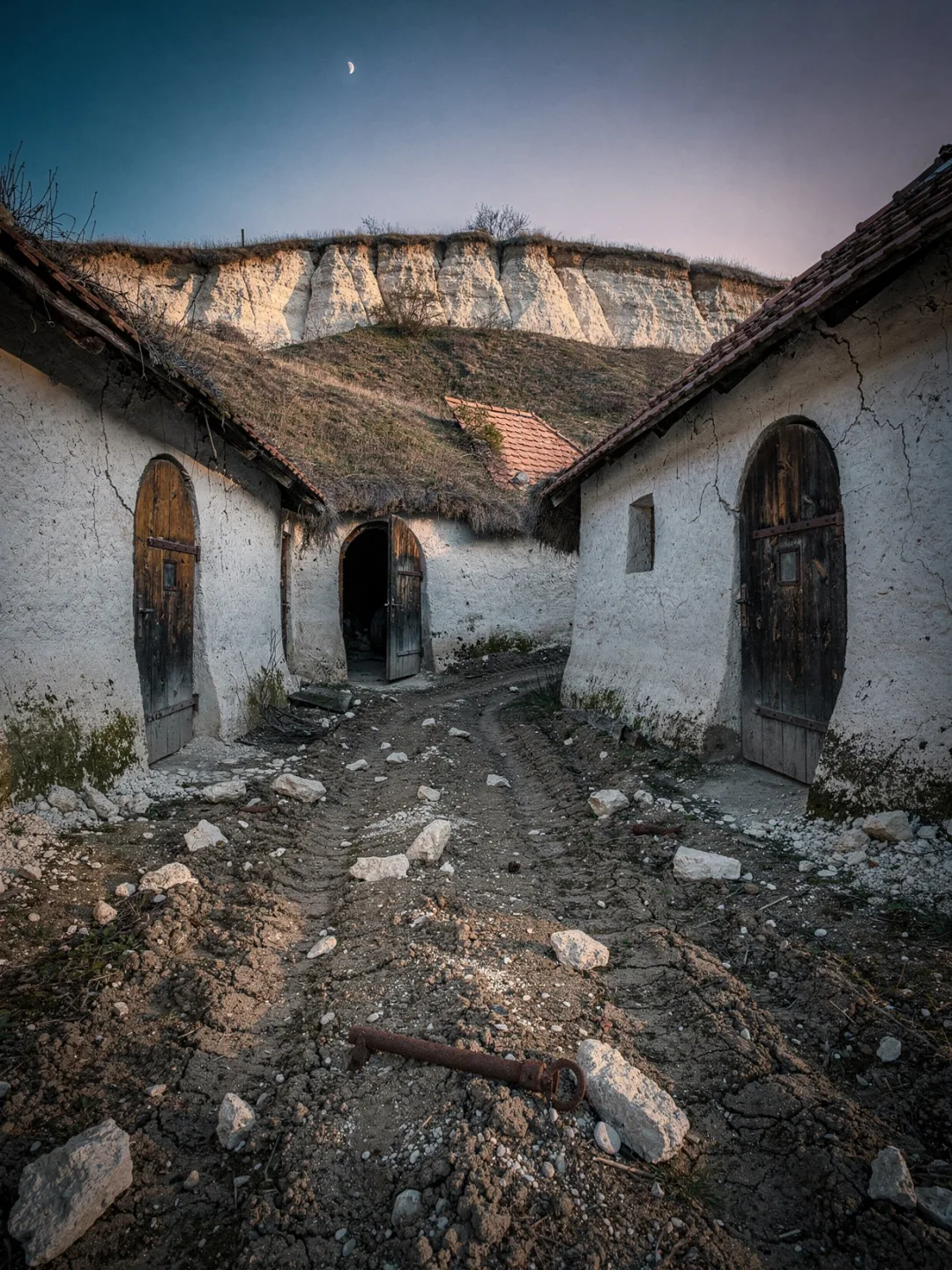
This era also gave rise to the first cellars carved not beneath the house, but directly into the hillside. Loess is easy to work with simple tools, holds its shape without supporting walls, and stays cool year-round. So the press houses migrated to the edge of the villages, row by row, until entire lanes formed. The oldest sections date back to the seventeenth century. But most of the roughly 1,100 cellar lanes found in the Weinviertel today were built in the second half of the nineteenth century, during a tremendous boom in winegrowing.
That boom ended abruptly. Starting in 1872, phylloxera — a louse introduced from America — ate its way through Europe's vineyards, laying waste to entire stretches of the Weinviertel as well. Reconstruction was only possible using grafted vines on resistant American rootstock — a technique without which European winegrowing simply wouldn't exist today.
The next deep rupture was homemade. In 1985, it came to light that several Austrian winemakers and wine merchants had been adding sweet, toxic diethylene glycol to their wines to pass off weak vintages as premium Prädikatswein. Lower Austria, home to the Weinviertel, was among the hardest-hit regions alongside Burgenland. Exports collapsed by roughly 95 percent. Out of this crisis came a new law — one of the strictest in the world, complete with a numbered seal on every bottle of quality wine.
And it was from this very same new ambition that the Weinviertel DAC emerged in 2002. This made the Weinviertel the first Austrian region to have its typical wine officially safeguarded by its own dedicated commission. From the cellar pit in Stillfried to the state certification number lies a span of nearly 2,800 years. The vine remained. Only the law around it kept changing.