Buffet, not menu
Wine & Food
At a Heuriger, nobody orders from a waiter. You help yourself at the buffet, filling a plate with cold spreads and meat. Only afterward do you sit down to the wine, which is already waiting on the table in a bottle or carafe. This order — wine first, then the food to match — is typical of Vienna and found in hardly any other wine region.
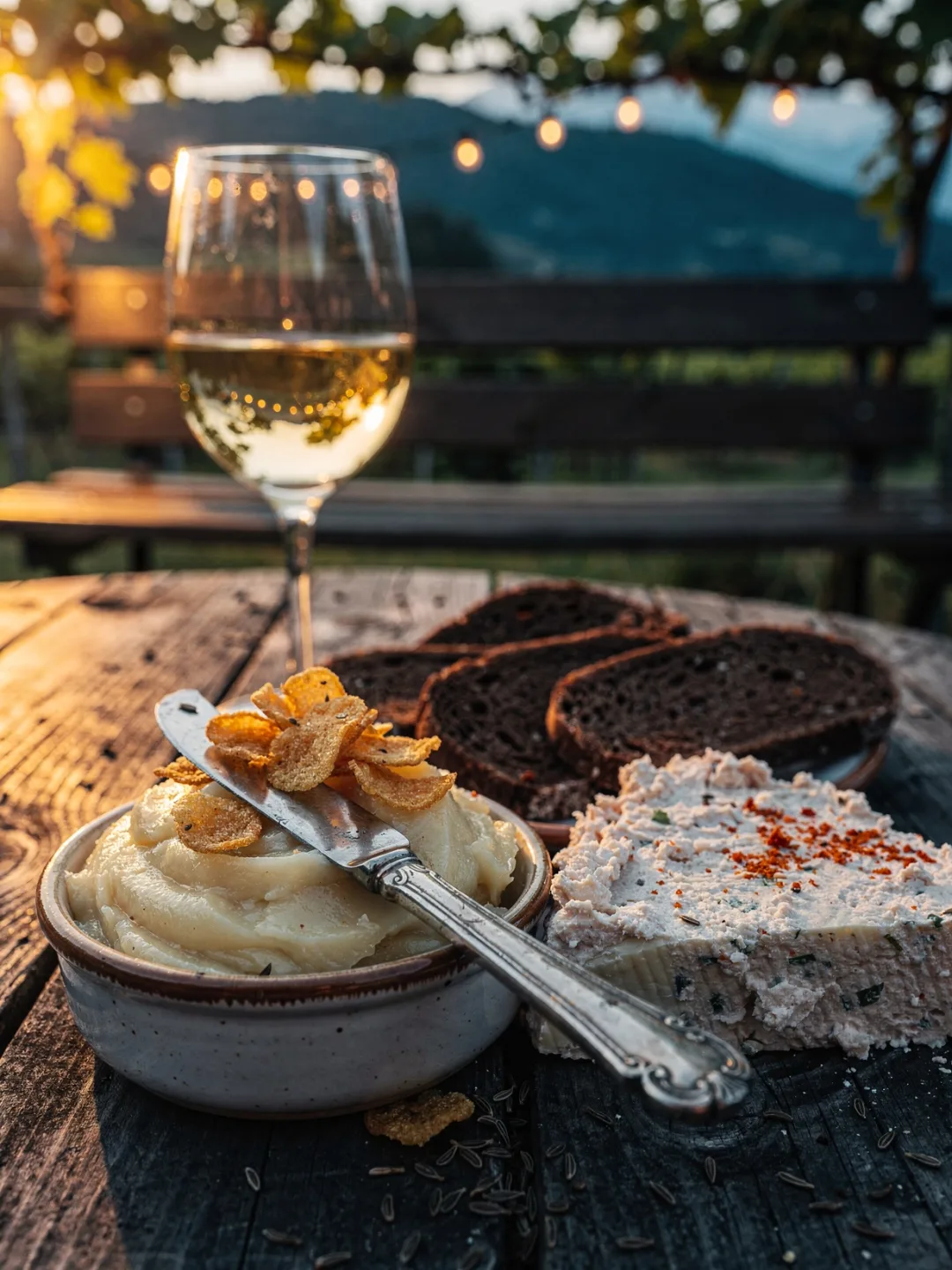
Grammelschmalz and Verhackertes are the classics among the spreads. The first is rendered pork fat studded with crispy cracklings, the second a mixture of finely chopped bacon, lard, and plenty of garlic. Both are rich, salty, and hearty. That's exactly why the crisp acidity of a Gemischter Satz works so well alongside them — it cuts through the fat, much like a splash of vinegar lifts a heavy sauce.
With the milder Liptauer, a paprika-and-curd-cheese spread, a similar rule applies, just more gently. It's less fatty than Grammelschmalz, but spiced with paprika and sometimes caraway. A Grüner Veltliner, with its own peppery note, doesn't clash but rather plays along. Warm Heuriger dishes like meat patties or a classic pork roast, on the other hand, call for more wine: an Ortswein with a bit more body, one that can carry the roast better than the lean entry-level bottling.
Red wine plays a smaller role at the Viennese table, but not an unimportant one. Zweigelt from the vineyards of Mauer or Oberlaa, served lightly chilled, pairs with a Wiener Rostbraten topped with roasted onions better than many a heavy import. Its fruit stays bright, its tannins mild, and it handles onions without turning bitter.
Still, one rule remains the most important: whatever comes fatty and salty off the Heuriger buffet wants acidity in the glass, not sweetness and not much oak. That's why you'll rarely find a wine with noticeable barrique character there — next to bacon and garlic, it would only seem clumsy. A clear, cool Gemischter Satz, on the other hand, does exactly what it's been made for over the centuries.