On Gemischter Satz
Tasting
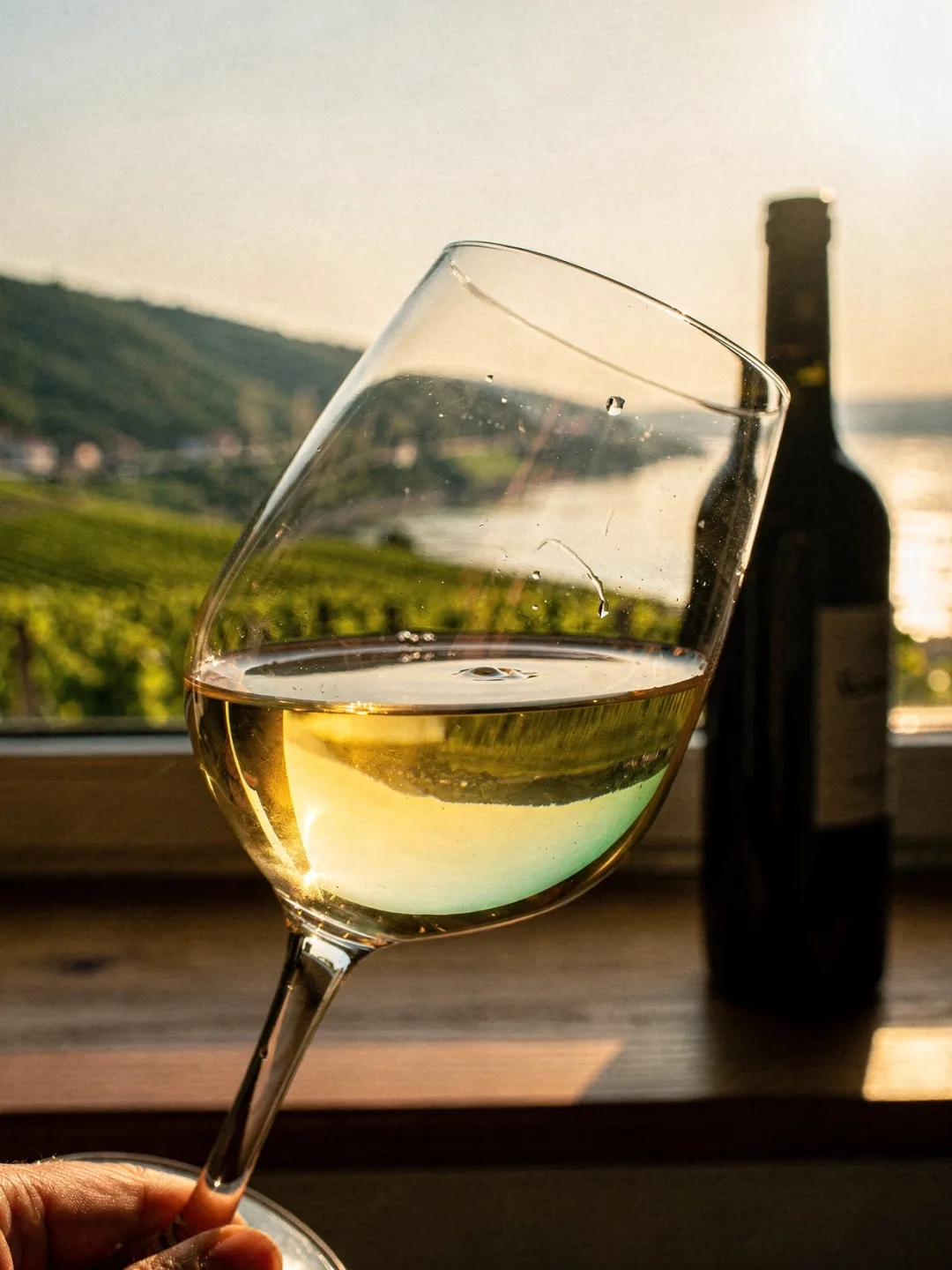
Hold a glass of Wiener Gemischter Satz up to the light, ideally against something white. The color ranges from pale straw yellow to a yellow with a faint greenish tinge, depending on how much Grüner Veltliner is in the blend. A deeper gold, on the other hand, points to more Neuburger or a year or two of bottle age.
Smell it first, without swirling. Because several varieties were fermented together, the wine doesn't smell of a single fruit but of several things at once: green apple and citrus peel from the Riesling, a touch of white pepper from the Grüner Veltliner. There's often a nutty undertone too, contributed by older varieties like Neuburger. This fuzziness isn't a flaw in the nose — it's the whole point of the exercise.
After swirling, a floral note usually joins in, sometimes a hint of honeydew melon — depending on which third or fourth variety is planted in that particular vineyard. That's exactly why the same producer's wine from the Nussberg never tastes quite the same as the same wine from the Kahlenberg. A cuvée can be picked apart with a bit of practice. A true field blend hardly can, because its components have grown together since flowering.
On the palate, pay attention to the acidity first. It sits along the sides of the tongue, gets the saliva flowing, and carries the wine forward without needing much alcohol behind it — the basic tier is capped at twelve and a half percent. Behind that often comes a slightly salty, mineral note. Many Viennese drinkers attribute it to the loess beneath the vines, even though the truth is more complicated than that simple explanation.
Finally, count the finish. With a basic Wien DAC, the flavor often lasts only a few seconds after swallowing — fresh and uncomplicated. An Ortswein from one of the seven named districts lingers noticeably longer, sometimes twenty seconds or more. It's exactly this length that reveals in the glass what the label doesn't yet say: how much work went into that particular vineyard.