Migas and Cheese
Wine & Food
The cuisine of the Alentejo arose out of poverty, built on bread, pork, and olive oil. Precisely for this reason, it pairs so well with the region's robust wines. Where little was available, nothing was thrown away. Bread from the day before was reused so often that it now underpins an entire cuisine.
Açorda alentejana consists of little more than stale bread, plenty of garlic, coriander, olive oil, and a poached egg on top; migas turns the same ingredients into a drier, pan-fried side dish, usually served alongside crisply fried pork. A simple, fruity regional wine made from Aragonez accompanies this without overpowering the dish's restrained flavors.
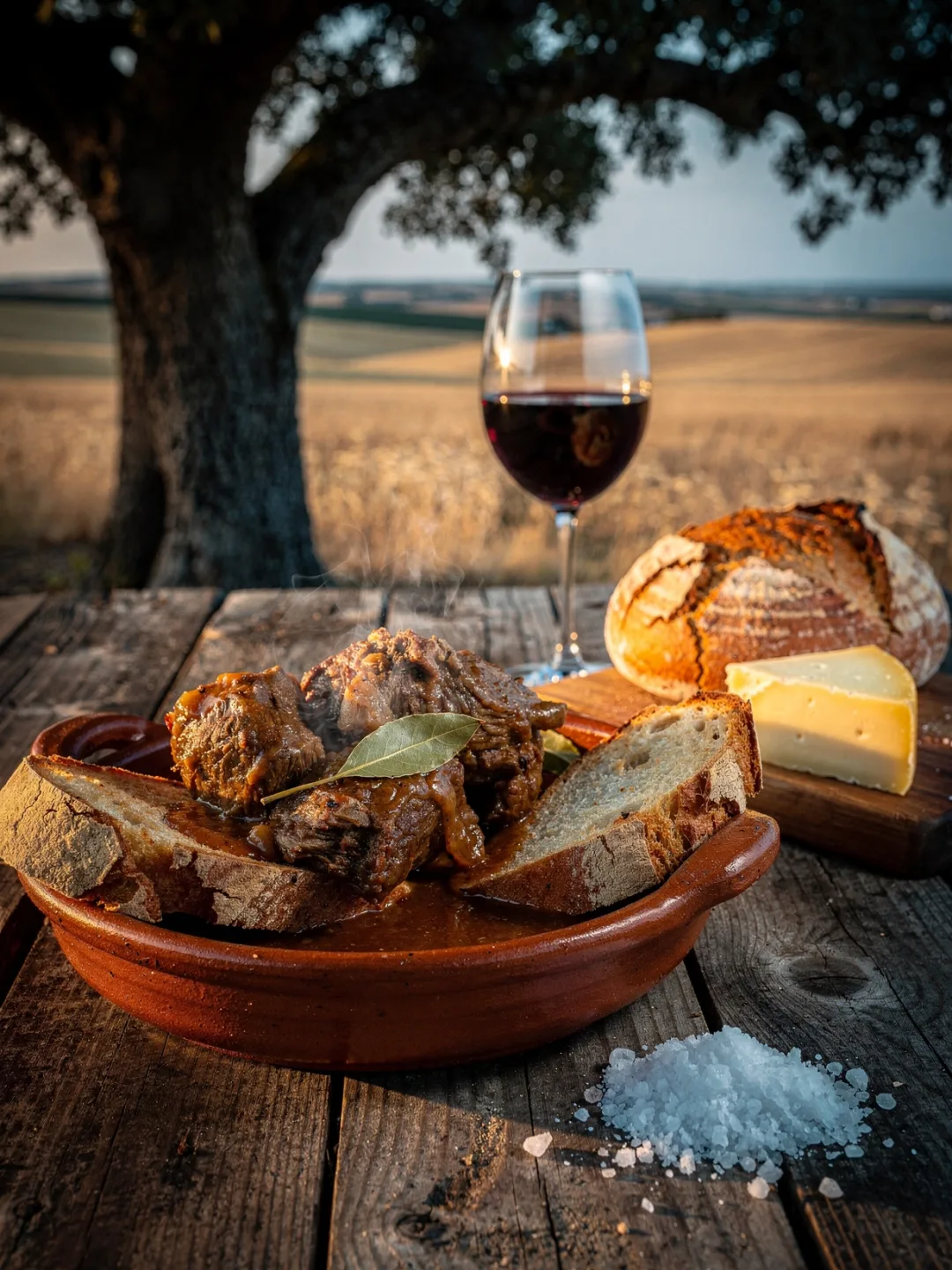
The pig roasted for this dish is called porco preto, a black-coated breed. It lives in the montado, the open woodland of cork and holm oaks, half-wild, fattening itself on acorns in autumn. Its meat is heavily marbled and calls for tannin to cut through the fat. Ensopado de borrego, the lamb stew with white wine, bay leaf, and bread soaked in the sauce, pairs better with a wine that's seen less oak aging, so the tender meat isn't overwhelmed.
When it comes to cheese, sheep reign supreme. Queijo Serpa, Queijo Évora, and Queijo Nisa all carry the DOP seal of quality. They're coagulated with an infusion of cardoon thistle rather than rennet, a technique documented since at least 1797. Serpa cheese ripens for about a month into a creamy, slightly sharp mass. Salt in this texture instantly makes even a young, somewhat harsh tannin more approachable.
To finish, there's sericaia, an airy cinnamon-spiced egg cake from Elvas, traditionally served with dried Elvas plums. No dry red wine works here anymore—at most, a glass enjoyed on its own. Fat and salt soften a hard wine. Sweetness, on the other hand, makes that same wine taste thin and sour, and it's precisely at this boundary that every wine pairing in the Alentejo comes to an end.