On a Talha Wine
Tasting
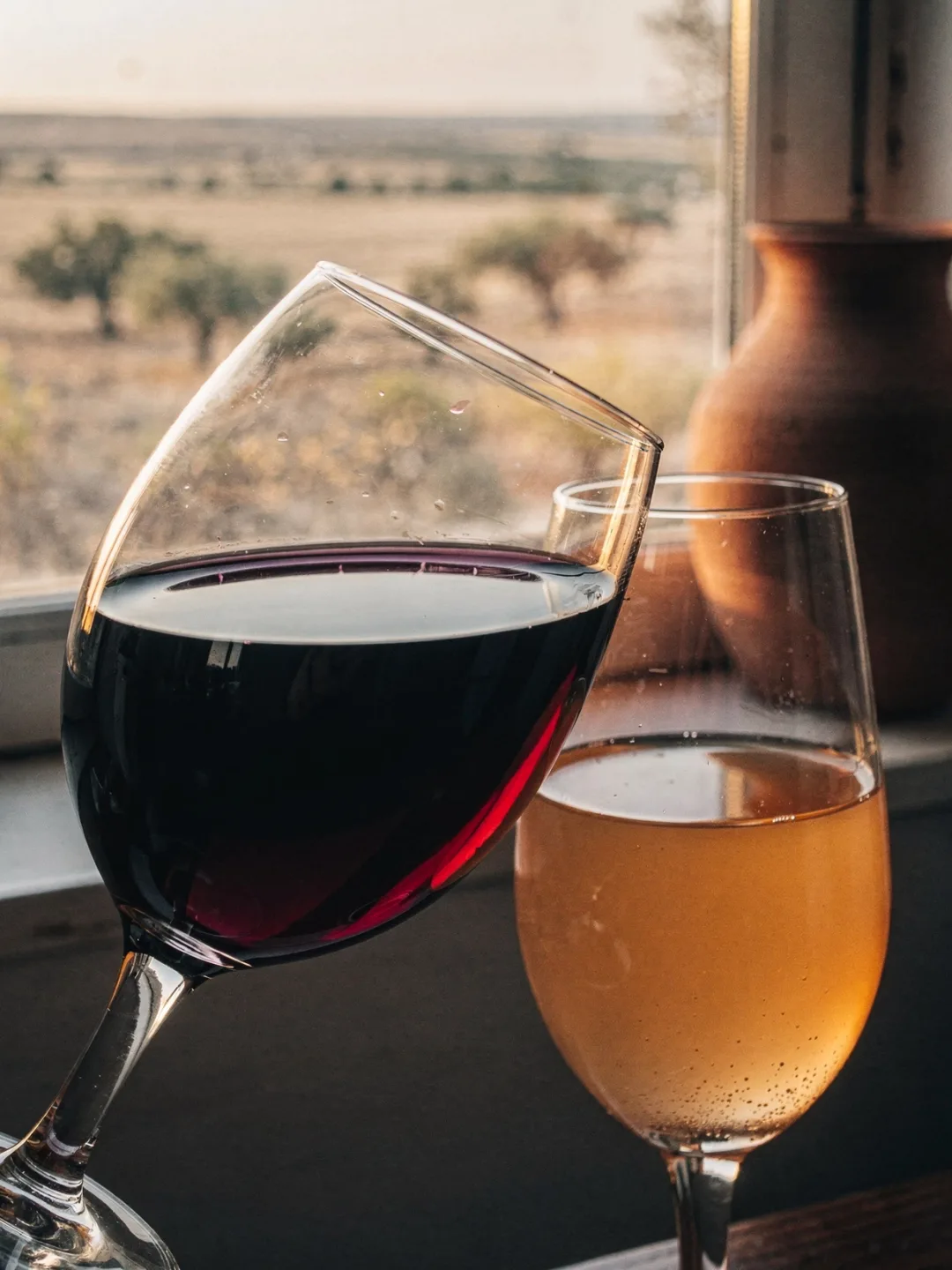
Hold an Alentejo red wine up to the light. The color immediately reveals how much Alicante Bouschet it contains. Most grape varieties only color through the skin, leaving the flesh pale. Alicante Bouschet, by contrast, is red right through to its core, and even a small proportion turns a wine into an almost opaque, dark violet. A pure vinho de talha, on the other hand, appears cloudy, since it comes unfiltered straight from the clay vessel. That's intentional.
On the nose, ripe, almost concentrated fruit comes first: blackberry, plum, sometimes a hint of fig. Only after swirling does what comes from Trincadeira follow: a touch of black pepper and dried Mediterranean herbs, like those you'd smell at the edge of a field on a hot afternoon. A barrel-aged wine adds vanilla and toasted wood on top of that. A vinho de talha, by contrast, stays dry, dusty, and without any sweetness on the nose.
On the palate, pay attention to the alcohol first, then to the fruit; at fifteen percent, a sip noticeably warms the throat, a sensation easily mistaken for fruit sweetness. The tannin itself is usually soft, since the grapes fully ripen in the heat. Anyone used to an angular, hard red wine from a cool climate will be surprised how quickly the wine feels rounded here.
Finally, count the seconds the flavor lingers after you swallow. With a simple regional wine, it's just a few. With an old reserva from Borba or Redondo, it's often twenty seconds or more. It's precisely this length that separates a cheap blend from one that was worth the effort of barrel aging.